• 文献检索
  • 文档翻译
  • 深度研究
  • 学术资讯
  • Suppr Zotero 插件Zotero 插件
  • 邀请有礼
  • 套餐&价格
  • 历史记录
应用&插件
Suppr Zotero 插件Zotero 插件浏览器插件Mac 客户端Windows 客户端微信小程序
定价
高级版会员购买积分包购买API积分包
服务
文献检索文档翻译深度研究API 文档MCP 服务
关于我们
关于 Suppr公司介绍联系我们用户协议隐私条款
关注我们

Suppr 超能文献

核心技术专利:CN118964589B侵权必究
粤ICP备2023148730 号-1Suppr @ 2026

文献检索

告别复杂PubMed语法,用中文像聊天一样搜索,搜遍4000万医学文献。AI智能推荐,让科研检索更轻松。

立即免费搜索

文件翻译

保留排版,准确专业,支持PDF/Word/PPT等文件格式,支持 12+语言互译。

免费翻译文档

深度研究

AI帮你快速写综述,25分钟生成高质量综述,智能提取关键信息,辅助科研写作。

立即免费体验

弱势群体对电子健康工具的依从性:系统文献综述与荟萃分析

Adherence to Electronic Health Tools Among Vulnerable Groups: Systematic Literature Review and Meta-Analysis.

作者信息

Arsenijevic Jelena, Tummers Lars, Bosma Niels

机构信息

Utrecht University School of Governance, Faculty of Law Economics and Governance, Utrecht, Netherlands.

Utrecht University School of Economics, Faculty of Law Economics and Governance, Utrecht, Netherlands.

出版信息

J Med Internet Res. 2020 Feb 6;22(2):e11613. doi: 10.2196/11613.

DOI:10.2196/11613
PMID:32027311
原文链接:https://pmc.ncbi.nlm.nih.gov/articles/PMC7055852/
Abstract

BACKGROUND

Electronic health (eHealth) tools are increasingly being applied in health care. They are expected to improve access to health care, quality of health care, and health outcomes. Although the advantages of using these tools in health care are well described, it is unknown to what extent eHealth tools are effective when used by vulnerable population groups, such as the elderly, people with low socioeconomic status, single parents, minorities, or immigrants.

OBJECTIVE

This study aimed to examine whether the design and implementation characteristics of eHealth tools contribute to better use of these tools among vulnerable groups.

METHODS

In this systematic review, we assessed the design and implementation characteristics of eHealth tools that are used by vulnerable groups. In the meta-analysis, we used the adherence rate as an effect size measure. The adherence rate is defined as the number of people who are repetitive users (ie, use the eHealth tool more than once). We also performed a meta-regression analysis to examine how different design and implementation characteristics influenced the adherence rate.

RESULTS

Currently, eHealth tools are continuously used by vulnerable groups but to a small extent. eHealth tools that use multimodal content (such as videos) and have the possibility for direct communication with providers show improved adherence among vulnerable groups.

CONCLUSIONS

eHealth tools that use multimodal content and provide the possibility for direct communication with providers have a higher adherence among vulnerable groups. However, most of the eHealth tools are not embedded within the health care system. They are usually focused on specific problems, such as diabetes or obesity. Hence, they do not provide comprehensive services for patients. This limits the use of eHealth tools as a replacement for existing health care services.

摘要

背景

电子健康(eHealth)工具在医疗保健领域的应用日益广泛。人们期望这些工具能改善医疗保健的可及性、质量以及健康结局。尽管在医疗保健中使用这些工具的优势已得到充分描述,但对于弱势群体(如老年人、社会经济地位较低者、单亲父母、少数族裔或移民)使用eHealth工具的有效性程度尚不清楚。

目的

本研究旨在探讨eHealth工具的设计和实施特征是否有助于弱势群体更好地使用这些工具。

方法

在这项系统评价中,我们评估了弱势群体使用的eHealth工具的设计和实施特征。在荟萃分析中,我们将依从率作为效应量指标。依从率定义为重复使用者(即使用eHealth工具不止一次)的人数。我们还进行了荟萃回归分析,以研究不同的设计和实施特征如何影响依从率。

结果

目前,弱势群体持续使用eHealth工具,但使用程度较低。使用多模态内容(如视频)且有可能与提供者直接沟通的eHealth工具在弱势群体中的依从性有所提高。

结论

使用多模态内容并提供与提供者直接沟通可能性的eHealth工具在弱势群体中的依从性较高。然而,大多数eHealth工具并未嵌入医疗保健系统。它们通常专注于特定问题,如糖尿病或肥胖症。因此,它们无法为患者提供全面的服务。这限制了eHealth工具替代现有医疗保健服务的使用。
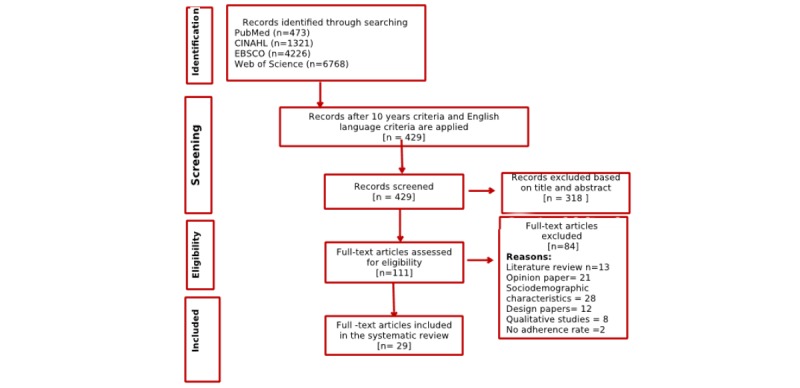
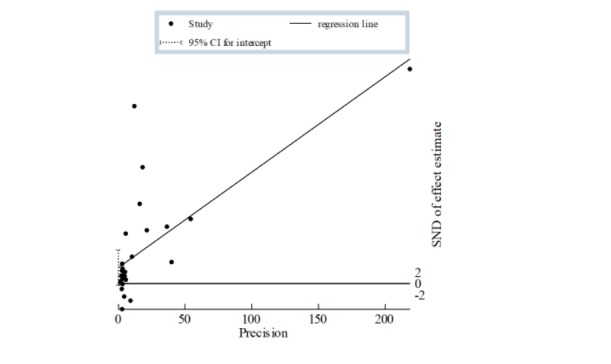
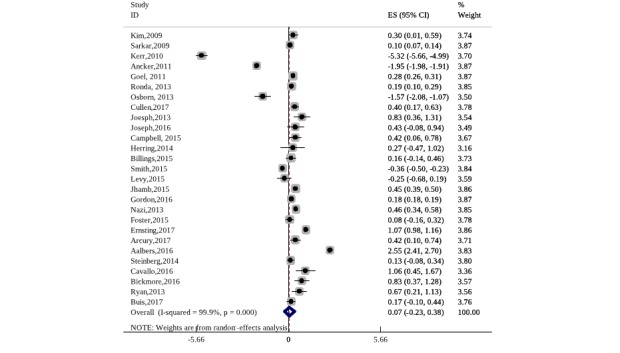
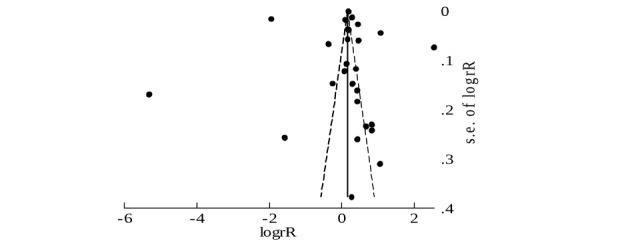
https://cdn.ncbi.nlm.nih.gov/pmc/blobs/4f76/7055852/dc28d2552951/jmir_v22i2e11613_fig4.jpg
https://cdn.ncbi.nlm.nih.gov/pmc/blobs/4f76/7055852/ccd1a8356290/jmir_v22i2e11613_fig1.jpg
https://cdn.ncbi.nlm.nih.gov/pmc/blobs/4f76/7055852/f2fd7784da72/jmir_v22i2e11613_fig2.jpg
https://cdn.ncbi.nlm.nih.gov/pmc/blobs/4f76/7055852/b9065632ed9d/jmir_v22i2e11613_fig3.jpg
https://cdn.ncbi.nlm.nih.gov/pmc/blobs/4f76/7055852/dc28d2552951/jmir_v22i2e11613_fig4.jpg
https://cdn.ncbi.nlm.nih.gov/pmc/blobs/4f76/7055852/ccd1a8356290/jmir_v22i2e11613_fig1.jpg
https://cdn.ncbi.nlm.nih.gov/pmc/blobs/4f76/7055852/f2fd7784da72/jmir_v22i2e11613_fig2.jpg
https://cdn.ncbi.nlm.nih.gov/pmc/blobs/4f76/7055852/b9065632ed9d/jmir_v22i2e11613_fig3.jpg
https://cdn.ncbi.nlm.nih.gov/pmc/blobs/4f76/7055852/dc28d2552951/jmir_v22i2e11613_fig4.jpg

相似文献

1
Adherence to Electronic Health Tools Among Vulnerable Groups: Systematic Literature Review and Meta-Analysis.弱势群体对电子健康工具的依从性:系统文献综述与荟萃分析
J Med Internet Res. 2020 Feb 6;22(2):e11613. doi: 10.2196/11613.
2
The Use and Effects of Electronic Health Tools for Patient Self-Monitoring and Reporting of Outcomes Following Medication Use: Systematic Review.电子健康工具在患者用药后自我监测及结果报告中的应用与效果:系统评价
J Med Internet Res. 2018 Dec 18;20(12):e294. doi: 10.2196/jmir.9284.
3
Applying the Electronic Health Literacy Lens: Systematic Review of Electronic Health Interventions Targeted at Socially Disadvantaged Groups.运用电子健康素养视角:针对社会弱势群体的电子健康干预措施的系统评价。
J Med Internet Res. 2020 Aug 13;22(8):e18476. doi: 10.2196/18476.
4
Impact of the Use of Electronic Health Tools on the Psychological and Emotional Well-Being of Electronic Health Service Users (The Seventh Tromsø Study - Part 3): Population-Based Questionnaire Study.电子健康工具的使用对电子健康服务使用者心理和情绪健康的影响(第七次特罗姆瑟研究 - 第3部分):基于人群的问卷调查研究
J Med Internet Res. 2020 Mar 5;22(3):e13118. doi: 10.2196/13118.
5
Electronic Health Use in the European Union and the Effect of Multimorbidity: Cross-Sectional Survey.欧盟电子健康的使用及多重疾病的影响:横断面调查
J Med Internet Res. 2018 May 3;20(5):e165. doi: 10.2196/jmir.7299.
6
Persuasive System Design Principles and Behavior Change Techniques to Stimulate Motivation and Adherence in Electronic Health Interventions to Support Weight Loss Maintenance: Scoping Review.用于激发动机并促进电子健康干预措施中支持体重维持的依从性的说服性系统设计原则和行为改变技术:范围综述
J Med Internet Res. 2019 Jun 21;21(6):e14265. doi: 10.2196/14265.
7
The Efficacy of Electronic Health-Supported Home Exercise Interventions for Patients With Osteoarthritis of the Knee: Systematic Review.电子健康支持的家庭锻炼干预对膝骨关节炎患者的疗效:系统评价
J Med Internet Res. 2018 Apr 26;20(4):e152. doi: 10.2196/jmir.9465.
8
Using eHealth to engage and retain priority populations in the HIV treatment and care cascade in the Asia-Pacific region: a systematic review of literature.利用电子健康技术吸引和留住亚太地区艾滋病毒治疗和护理环节中的重点人群:文献系统综述。
BMC Infect Dis. 2018 Feb 17;18(1):82. doi: 10.1186/s12879-018-2972-5.
9
Electronic, mobile and telehealth tools for vulnerable patients with chronic disease: a systematic review and realist synthesis.针对慢性病弱势患者的电子、移动和远程医疗工具:系统评价与实在论综合分析
BMJ Open. 2018 Aug 29;8(8):e019192. doi: 10.1136/bmjopen-2017-019192.
10
Offerings and User Demands of eHealth Services in Spain: National Survey.西班牙电子健康服务的提供与用户需求:全国性调查。
J Med Internet Res. 2023 May 18;25:e42304. doi: 10.2196/42304.

引用本文的文献

1
Understanding Dermatologists' Acceptance of Digital Health Interventions: Cross-Sectional Survey and Cluster Analysis.了解皮肤科医生对数字健康干预措施的接受程度:横断面调查与聚类分析
JMIR Hum Factors. 2025 May 21;12:e59757. doi: 10.2196/59757.
2
Virtually delivered lifestyle interventions for overweight and obese pregnant people: A systematic review.针对超重和肥胖孕妇的虚拟交付式生活方式干预措施:一项系统综述。
Womens Health (Lond). 2025 Jan-Dec;21:17455057251336292. doi: 10.1177/17455057251336292. Epub 2025 May 19.
3
Factors Affecting the Adoption of Electronic Prescription by Physicians and Pharmacists.

本文引用的文献

1
Adherence Reporting in Randomized Controlled Trials Examining Manualized Multisession Online Interventions: Systematic Review of Practices and Proposal for Reporting Standards.在检验多阶段在线干预手册化的随机对照试验中的依从性报告:实践的系统评价及报告标准建议
J Med Internet Res. 2019 Aug 15;21(8):e14181. doi: 10.2196/14181.
2
Mobile health applications for chronic diseases: A systematic review of features for lifestyle improvement.用于慢性病的移动健康应用程序:对改善生活方式功能的系统评价。
Diabetes Metab Syndr. 2019 Jul-Aug;13(4):2507-2512. doi: 10.1016/j.dsx.2019.07.016. Epub 2019 Jul 9.
3
Evaluating Digital Health Tools-Prospective, Experimental, and Real World.
影响医生和药剂师采用电子处方的因素。
Health Sci Rep. 2025 May 5;8(5):e70805. doi: 10.1002/hsr2.70805. eCollection 2025 May.
4
Improving Digital Cancer Care for Older Black Adults: Qualitative Study.改善老年黑人成年人的数字癌症护理:定性研究
J Med Internet Res. 2025 Feb 19;27:e63324. doi: 10.2196/63324.
5
The impact of internet use on physical activity among Chinese older adults: the mediating role of social support.互联网使用对中国老年人身体活动的影响:社会支持的中介作用。
Front Public Health. 2025 Jan 23;13:1492188. doi: 10.3389/fpubh.2025.1492188. eCollection 2025.
6
An eHealth intervention for patients with a low socioeconomic position during their waiting period preceding cardiac rehabilitation: a randomized feasibility study.一项针对社会经济地位较低的患者在心脏康复前等待期的电子健康干预措施:一项随机可行性研究。
Eur Heart J Digit Health. 2024 Nov 14;6(1):115-125. doi: 10.1093/ehjdh/ztae084. eCollection 2025 Jan.
7
Multi-Level Factors Influencing eHealth Literacy Among Chinese Older Adults: A Longitudinal Study.影响中国老年人电子健康素养的多层次因素:一项纵向研究。
J Adv Nurs. 2025 Jan 4. doi: 10.1111/jan.16702.
8
Genetics Adviser: The development and usability testing of a new patient digital health application to support clinical genomic testing.遗传学顾问:一款支持临床基因组检测的新型患者数字健康应用程序的开发与可用性测试。
Genet Med Open. 2024 Jan 23;2:101814. doi: 10.1016/j.gimo.2024.101814. eCollection 2024.
9
A study to assess the efficacy of print and digital health communication media tools (HCMT) in rural and urban communities.一项评估印刷和数字健康传播媒体工具(HCMT)在农村和城市社区中的效果的研究。
F1000Res. 2023 Oct 11;12:1314. doi: 10.12688/f1000research.139997.1. eCollection 2023.
10
A preventive integrated eHealth approach for individuals with a low socioeconomic position: protocol for a realist evaluation.预防为主的综合电子健康方法在社会经济地位较低个体中的应用:一项实际评价研究方案。
BMC Public Health. 2024 Oct 3;24(1):2700. doi: 10.1186/s12889-024-20113-8.
评估数字健康工具——前瞻性、实验性和现实世界的研究
JAMA Intern Med. 2019 Jun 1;179(6):840-841. doi: 10.1001/jamainternmed.2018.7229.
4
Beyond the Trial: Systematic Review of Real-World Uptake and Engagement With Digital Self-Help Interventions for Depression, Low Mood, or Anxiety.试验之外:对抑郁症、情绪低落或焦虑症数字自助干预措施的现实世界采用情况和参与度的系统评价
J Med Internet Res. 2018 Jun 6;20(6):e199. doi: 10.2196/jmir.9275.
5
Clarifying the Concept of Adherence to eHealth Technology: Systematic Review on When Usage Becomes Adherence.厘清电子健康技术依从性的概念:关于使用何时转变为依从性的系统评价
J Med Internet Res. 2017 Dec 6;19(12):e402. doi: 10.2196/jmir.8578.
6
Patient Portal Utilization Among Ethnically Diverse Low Income Older Adults: Observational Study.不同种族低收入老年人对患者门户网站的使用情况:观察性研究
JMIR Med Inform. 2017 Nov 14;5(4):e47. doi: 10.2196/medinform.8026.
7
The Time Is Now for eHealth Research With Latinos.现在是开展针对拉丁裔的电子健康研究的时候了。
Am J Public Health. 2017 Nov;107(11):1705-1707. doi: 10.2105/AJPH.2017.304055.
8
Promoting Engagement With a Digital Health Intervention (HeLP-Diabetes) Using Email and Text Message Prompts: Mixed-Methods Study.使用电子邮件和短信提示促进对数字健康干预措施(HeLP-糖尿病)的参与:混合方法研究
Interact J Med Res. 2017 Aug 22;6(2):e14. doi: 10.2196/ijmr.6952.
9
Legal, Practical, and Ethical Considerations for Making Online Patient Portals Accessible for All.使在线患者门户对所有人都可访问的法律、实践和伦理考量。
Am J Public Health. 2017 Oct;107(10):1608-1611. doi: 10.2105/AJPH.2017.303933. Epub 2017 Aug 17.
10
Listening to Communities: Mixed-Method Study of the Engagement of Disadvantaged Mothers and Pregnant Women With Digital Health Technologies.倾听社区声音:对弱势母亲和孕妇参与数字健康技术情况的混合方法研究
J Med Internet Res. 2017 Jul 5;19(7):e240. doi: 10.2196/jmir.7736.