Emerg Infect Dis. 2020 May;26(5):967-975. doi: 10.3201/eid2605.190994. Epub 2020 May 17.
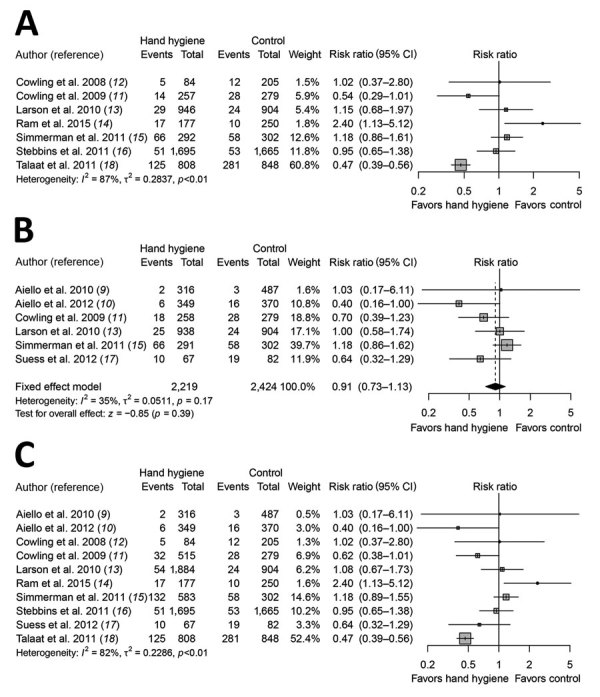
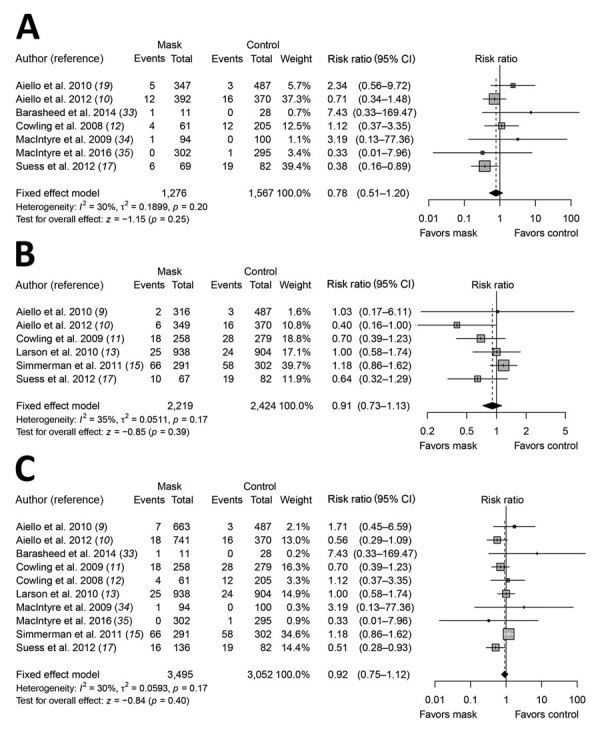
There were 3 influenza pandemics in the 20th century, and there has been 1 so far in the 21st century. Local, national, and international health authorities regularly update their plans for mitigating the next influenza pandemic in light of the latest available evidence on the effectiveness of various control measures in reducing transmission. Here, we review the evidence base on the effectiveness of nonpharmaceutical personal protective measures and environmental hygiene measures in nonhealthcare settings and discuss their potential inclusion in pandemic plans. Although mechanistic studies support the potential effect of hand hygiene or face masks, evidence from 14 randomized controlled trials of these measures did not support a substantial effect on transmission of laboratory-confirmed influenza. We similarly found limited evidence on the effectiveness of improved hygiene and environmental cleaning. We identified several major knowledge gaps requiring further research, most fundamentally an improved characterization of the modes of person-to-person transmission.
20 世纪发生了 3 次流感大流行,21 世纪迄今已发生了 1 次。地方、国家和国际卫生当局根据最新的关于各种控制措施在降低传播方面的有效性的证据,定期更新其减轻下一次流感大流行的计划。在这里,我们回顾了非医疗环境中非药物性个人保护措施和环境卫生措施的有效性证据,并讨论了将这些措施纳入大流行计划的可能性。尽管机制研究支持手部卫生或口罩的潜在效果,但对这些措施的 14 项随机对照试验的证据并不支持它们对实验室确诊的流感传播有实质性影响。我们同样发现,改善卫生和环境清洁的有效性的证据有限。我们确定了几个需要进一步研究的重大知识空白,最根本的是需要更好地描述人与人之间的传播模式。