Sakaridis Ioannis, Ellis Richard J, Cawthraw Shaun A, van Vliet Arnoud H M, Stekel Dov J, Penell Johanna, Chambers Mark, La Ragione Roberto M, Cook Alasdair J
School of Veterinary Medicine, University of Surrey, Guildford, United Kingdom.
Animal & Plant Health Agency, Weybridge, United Kingdom.
Front Microbiol. 2018 May 22;9:927. doi: 10.3389/fmicb.2018.00927. eCollection 2018.
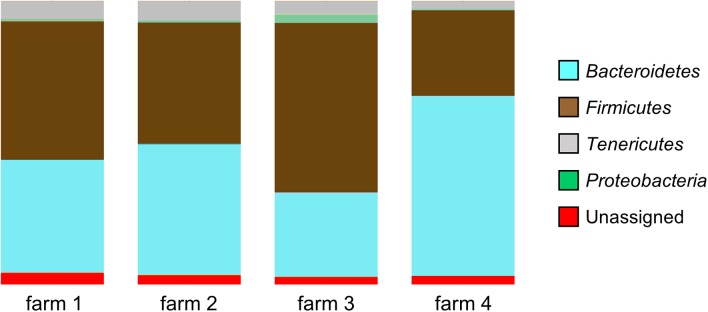
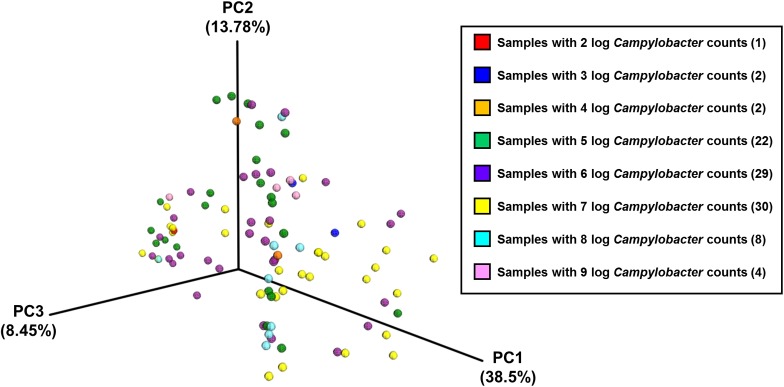
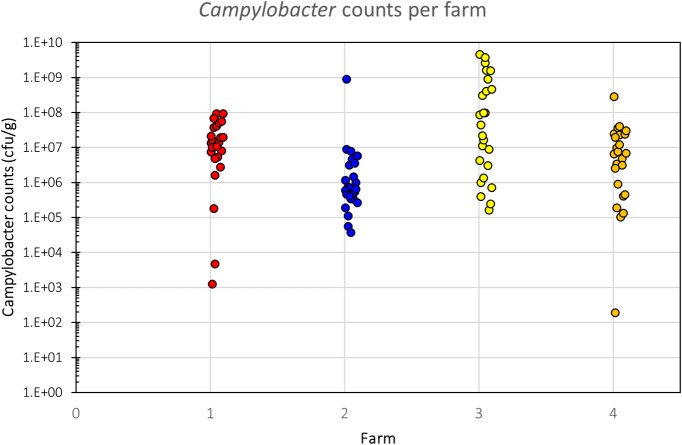
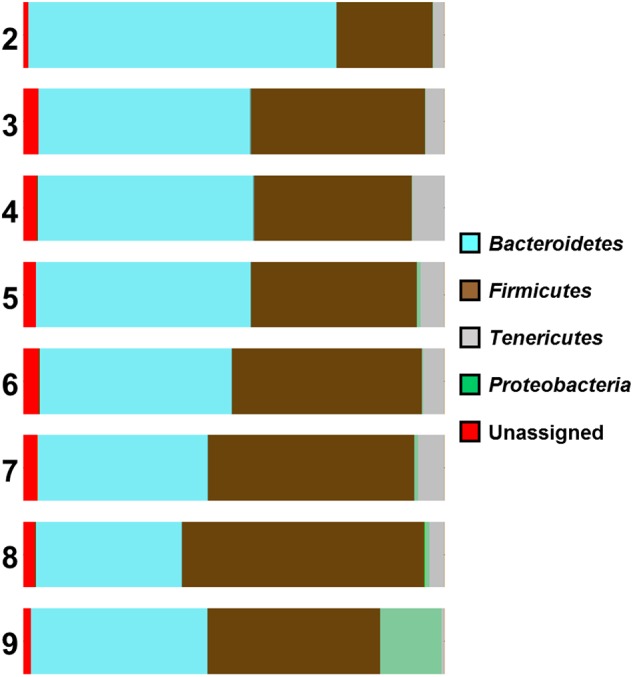
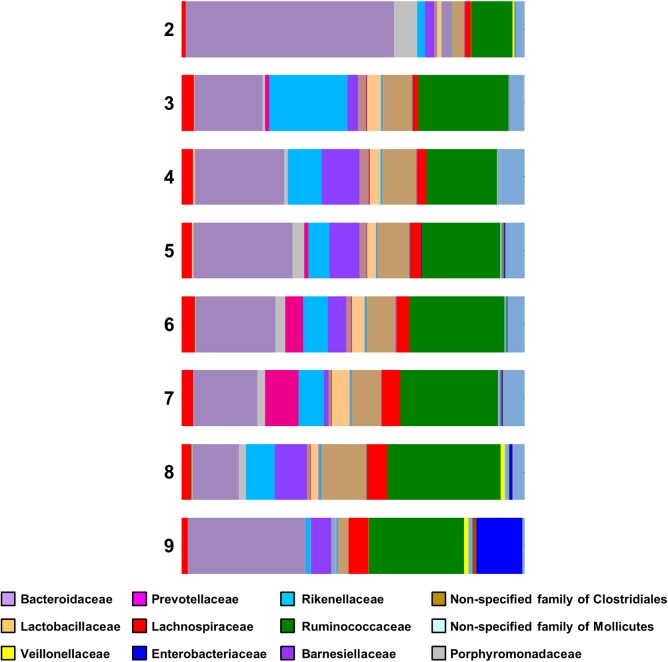
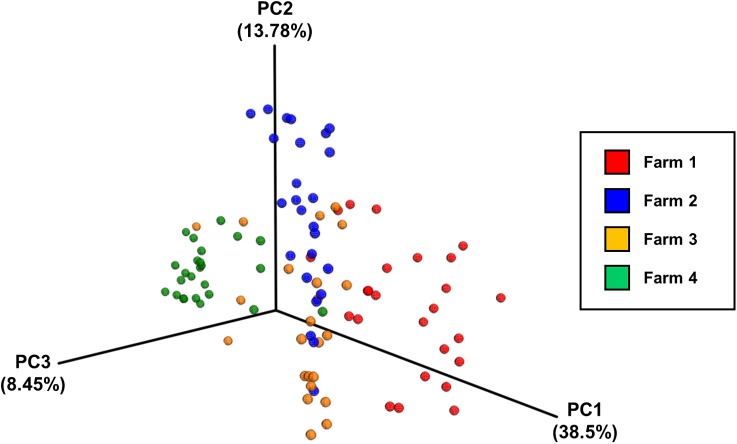
One of the major transmission routes for the foodborne bacterial pathogen is undercooked poultry meat, contaminated from intestinal contents during processing. In broilers, can grow to very high densities in the caeca, and is often considered to be a commensal or an opportunistic pathogen in poultry. Reduction of caecal loads of may assist in lowering incidence rates of food poisoning. To achieve this, there needs to be a better understanding of the dynamics of colonization in its natural niche, and the effect of the local microbiome on colonization. Previous studies have shown that the microbiome differed between colonized and non-colonized chicken intestinal samples. To characterize the microbiome of -colonized broilers, caecal samples of 100 randomly selected birds from four farms were analyzed using amplified 16S rRNA gene sequences. Bacterial taxonomic analysis indicated that inter-farm variation was greater than intra-farm variation. The two most common bacterial groups were Bacteroidetes and Firmicutes which were present in all samples and constituted 29.7-63.5 and 30.2-59.8% of the bacteria present, respectively. was cultured from all samples, ranging from 2 to 9 log CFU g. There was no clear link between counts and Firmicutes, Bacteroidetes, or Tenericutes levels in the 16S rRNA operational taxonomic unit (OTU)-based analysis of the caecal microbiome, but samples with high counts (>9 log CFU g) contained increased levels of . A decrease in abundance in chicken caeca was also associated with high loads. The reported associations with and Enterobacteriaceae match changes in the intestinal microbiome of chickens and mice previously reported for infection, and raises the question about temporality and causation; as to whether increases in loads create conditions adverse to Lactobacilli and/or beneficial to Enterobacteriaceae, or that changes in Lactobacilli and Enterobacteriaceae levels created conditions beneficial for colonization. If these changes can be controlled, this may open opportunities for modulation of chicken microbiota to reduce levels for improved food safety.
食源性病原体的主要传播途径之一是未煮熟的禽肉,这些禽肉在加工过程中被肠道内容物污染。在肉鸡中,[病原体名称]可在盲肠中大量繁殖,通常被认为是家禽的共生菌或机会致病菌。降低盲肠中[病原体名称]的载量可能有助于降低[病原体名称]食物中毒的发病率。要实现这一点,需要更好地了解[病原体名称]在其自然生态位中的定殖动态,以及局部微生物群对定殖的影响。先前的研究表明,定殖和未定殖的鸡肠道样本中的微生物群存在差异。为了表征[病原体名称]定殖肉鸡的微生物群,对从四个农场随机选取的100只鸡的盲肠样本进行了16S rRNA基因序列扩增分析。细菌分类分析表明,农场间的差异大于农场内的差异。两个最常见的细菌类群是拟杆菌门和厚壁菌门,它们存在于所有样本中,分别占细菌总数的29.7 - 63.5%和30.2 - 59.8%。所有样本中均培养出[病原体名称],含量范围为2至9 log CFU/g。在基于16S rRNA操作分类单元(OTU)的盲肠微生物群分析中,[病原体名称]数量与厚壁菌门、拟杆菌门或柔膜菌门水平之间没有明显联系,但[病原体名称]数量高(>9 log CFU/g)的样本中[相关细菌名称]水平升高。鸡盲肠中[相关细菌名称]丰度的降低也与[病原体名称]高载量有关。报道的[病原体名称]与肠杆菌科的关联与先前报道的鸡和小鼠感染[病原体名称]时肠道微生物群的变化相符,并引发了关于时间顺序和因果关系的问题;即[病原体名称]载量的增加是否会创造不利于乳酸杆菌和/或有利于肠杆菌科的条件,或者乳酸杆菌和肠杆菌科水平的变化是否会创造有利于[病原体名称]定殖的条件。如果这些变化能够得到控制,这可能为调节鸡的微生物群以降低[病原体名称]水平从而提高食品安全创造机会。