Liebau Arne, Schilp Sören, Mugridge Kenneth, Schön Ilona, Kather Michel, Kammerer Bernd, Tillein Jochen, Braun Susanne, Plontke Stefan K
Department of Otorhinolaryngology, Head and Neck Surgery, Martin Luther University Halle-Wittenberg, Halle, Germany.
MED-EL Headquarters, Innsbruck, Austria.
Front Neurol. 2020 Jan 22;10:1377. doi: 10.3389/fneur.2019.01377. eCollection 2019.
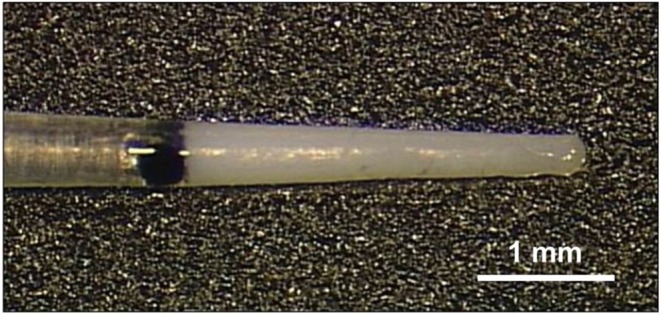
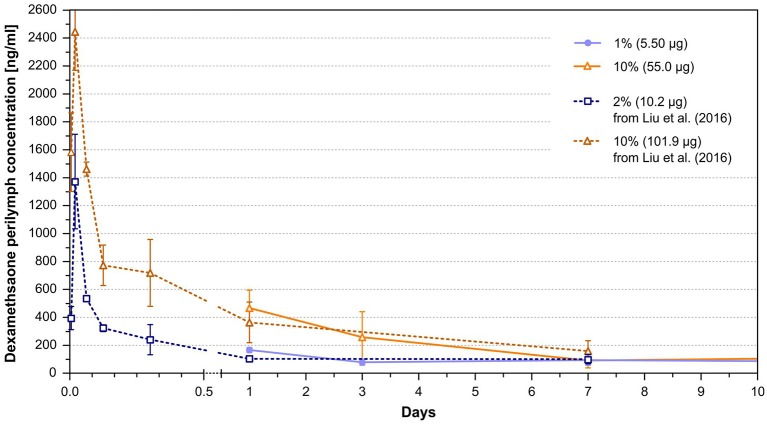
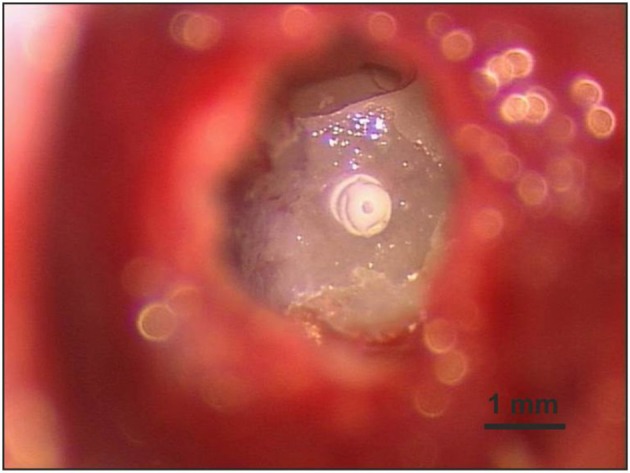
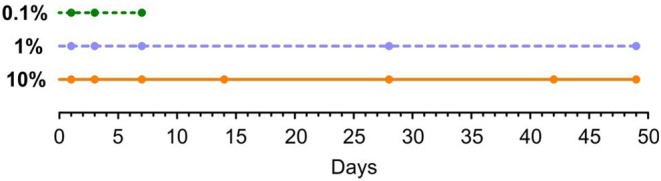
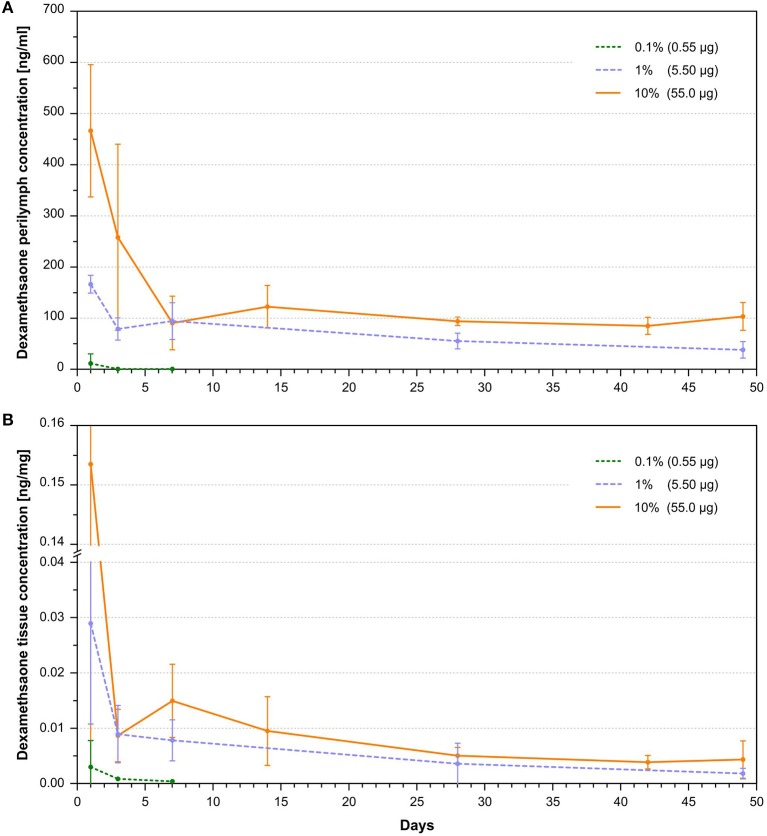
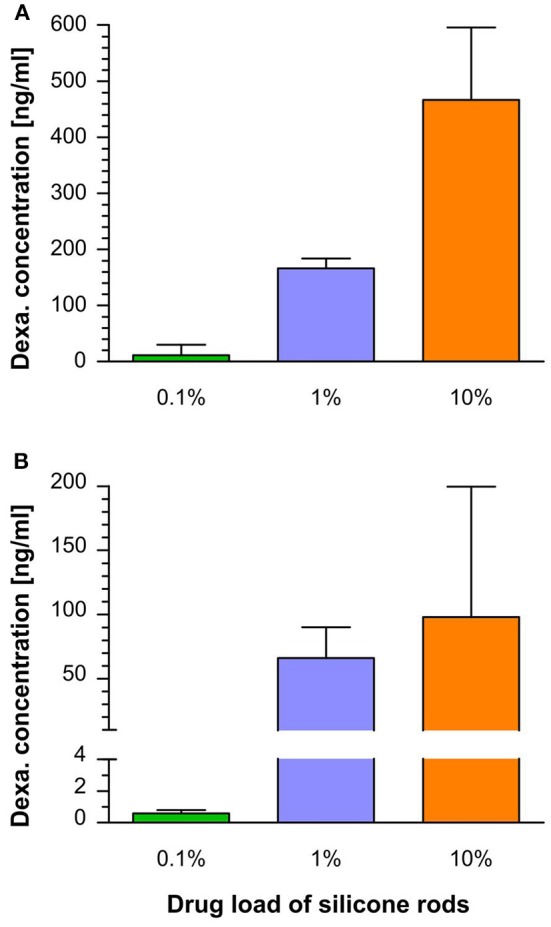
Glucocorticoids are used intra-operatively in cochlear implant surgeries to reduce the inflammatory reaction caused by insertion trauma and the foreign body response against the electrode carrier after cochlear implantation. To prevent higher systemic concentrations of glucocorticoids that might cause undesirable systemic side effects, the drug should be applied locally. Since rapid clearance of glucocorticoids occurs in the inner ear fluid spaces, sustained application is supposedly more effective in suppressing foreign body and tissue reactions and in preserving neuronal structures. Embedding of the glucocorticoid dexamethasone into the cochlear implant electrode carrier and its continuous release may solve this problem. The aim of the present study was to examine how dexamethasone concentrations in the electrode carrier influence drug levels in the perilymph at different time points. Silicone rods were implanted through a cochleostomy into the basal turn of the scala tympani of guinea pigs. The silicone rods were loaded homogeneously with 0.1, 1, and 10% concentrations of dexamethasone. After implantation, dexamethasone concentrations in perilymph and cochlear tissue were measured at several time points over a period of up to 7 weeks. The kinetic was concentration-dependent and showed an initial burst release in the 10%- and the 1%-dexamethasone-loaded electrode carrier dummies. The 10%-loaded electrode carrier resulted in a more elevated and longer lasting burst release than the 1%-loaded carrier. Following this initial burst release phase, sustained dexamethasone levels of about 60 and 100 ng/ml were observed in the perilymph for the 1 and 10% loaded rods, respectively, during the remainder of the observation time. The 0.1% loaded carrier dummy achieved very low perilymph drug levels of about 0.5 ng/ml. The cochlear tissue drug concentration shows a similar dynamic to the perilymph drug concentration, but only reaches about 0.005-0.05% of the perilymph drug concentration. Dexamethasone can be released from silicone electrode carrier dummies in a controlled and sustained way over a period of several weeks, leading to constant drug concentrations in the scala tympani perilymph. No accumulation of dexamethasone was observed in the cochlear tissue. In consideration of experimental studies using similar drug depots and investigating physiological effects, an effective dose range between 50 and 100 ng/ml after burst release is suggested for the CI insertion trauma model.
糖皮质激素在人工耳蜗植入手术中用于减轻植入创伤引起的炎症反应以及人工耳蜗植入后针对电极载体的异物反应。为避免糖皮质激素在全身产生较高浓度而引发不良的全身副作用,该药物应局部应用。由于内耳液腔中糖皮质激素清除迅速,持续给药在抑制异物和组织反应以及保护神经元结构方面可能更有效。将糖皮质激素地塞米松嵌入人工耳蜗电极载体并持续释放或许可以解决这个问题。本研究的目的是考察电极载体中的地塞米松浓度如何在不同时间点影响外淋巴中的药物水平。通过蜗窗将硅胶棒植入豚鼠鼓阶底转。硅胶棒均匀负载0.1%、1%和10%浓度的地塞米松。植入后,在长达7周的时间内的多个时间点测量外淋巴和耳蜗组织中的地塞米松浓度。其动力学呈浓度依赖性,在负载10%和1%地塞米松的电极载体模型中出现初始突释。负载10%的电极载体比负载1%的载体产生更高且持续时间更长的突释。在这个初始突释阶段之后,在观察期的剩余时间里,负载1%和10%的硅胶棒在外淋巴中分别观察到约60和100 ng/ml的持续地塞米松水平。负载0.1%的载体模型在外淋巴中的药物水平非常低,约为0.5 ng/ml。耳蜗组织药物浓度与外淋巴药物浓度呈现相似的动态变化,但仅达到外淋巴药物浓度的约0.005 - 0.05%。地塞米松可以从硅胶电极载体模型中以可控且持续的方式释放数周,导致鼓阶外淋巴中药物浓度恒定。在耳蜗组织中未观察到地塞米松的蓄积。考虑到使用类似药物储库并研究生理效应的实验研究,对于人工耳蜗植入创伤模型,建议突释后有效剂量范围为50至100 ng/ml。