State Key Laboratory for Conservation and Utilization of Subtropical Agro-bioresources, Guangdong Province Key Laboratory of Microbial Signals and Disease Control, Integrative Microbiology Research Centre, South China Agricultural University, Guangzhou 510642, China.
Guangdong Laboratory of Lingnan Modern Agriculture, Guangzhou 510642, China.
Molecules. 2020 Feb 8;25(3):738. doi: 10.3390/molecules25030738.
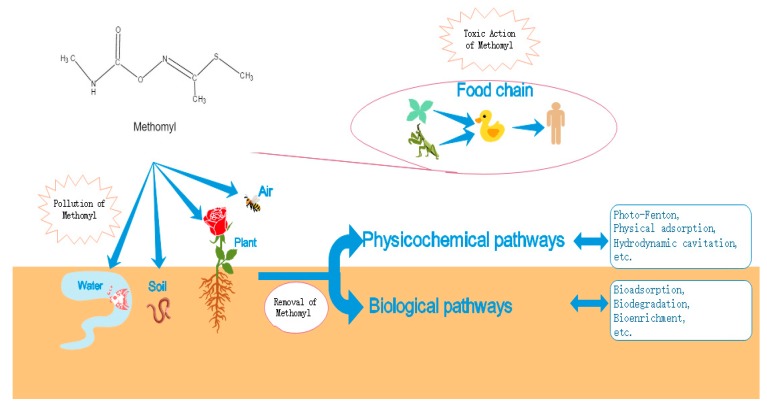
Methomyl is a broad-spectrum oxime carbamate commonly used to control arthropods, nematodes, flies, and crop pests. However, extensive use of this pesticide in agricultural practices has led to environmental toxicity and human health issues. Oxidation, incineration, adsorption, and microbial degradation methods have been developed to remove insecticidal residues from soil/water environments. Compared with physicochemical methods, biodegradation is considered to be a cost-effective and ecofriendly approach to the removal of pesticide residues. Therefore, micro-organisms have become a key component of the degradation and detoxification of methomyl through catabolic pathways and genetic determinants. Several species of methomyl-degrading bacteria have been isolated and characterized, including , , , , , , , , and . The degradation pathways of methomyl and the fate of several metabolites have been investigated. Further in-depth studies based on molecular biology and genetics are needed to elaborate their role in the evolution of novel catabolic pathways and the microbial degradation of methomyl. In this review, we highlight the mechanism of microbial degradation of methomyl along with metabolic pathways and genes/enzymes of different genera.
灭多威是一种广谱肟基氨基甲酸酯类杀虫剂,通常用于防治节肢动物、线虫、蝇类和农作物害虫。然而,这种杀虫剂在农业生产中的大量使用导致了环境毒性和人类健康问题。目前已经开发了氧化、焚烧、吸附和微生物降解等方法来去除土壤/水中的杀虫残留物。与物理化学方法相比,生物降解被认为是去除农药残留的一种具有成本效益和环保效益的方法。因此,微生物通过分解代谢途径和遗传决定因素成为灭多威降解和解毒的关键组成部分。已经分离和鉴定了几种能够降解灭多威的细菌,包括 、 、 、 、 、 、 、 和 。已经研究了灭多威的降解途径和几种代谢物的命运。需要进一步深入开展基于分子生物学和遗传学的研究,以阐述它们在新型降解途径的进化和微生物降解灭多威中的作用。在这篇综述中,我们重点介绍了微生物降解灭多威的机制以及不同属的代谢途径和基因/酶。