Ryu Dong Jin, Ban Hun Yeong, Jung Eui Yub, Sonn Chung-Hee, Hong Da Hee, Ahmad Shakra, Gweon Bomi, Lim Dohyung, Wang Joon Ho
Department of Orthopedic Surgery, Samsung Medical Center, Sungkyunkwan University School of Medicine, Seoul 06351, Korea.
Department of Mechanical Engineering, Sejong University, Seoul 05006, Korea.
J Clin Med. 2020 Feb 9;9(2):478. doi: 10.3390/jcm9020478.
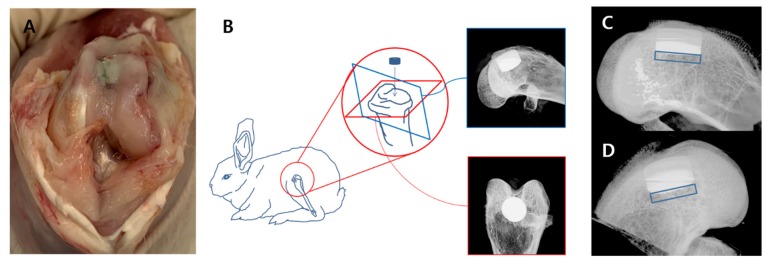
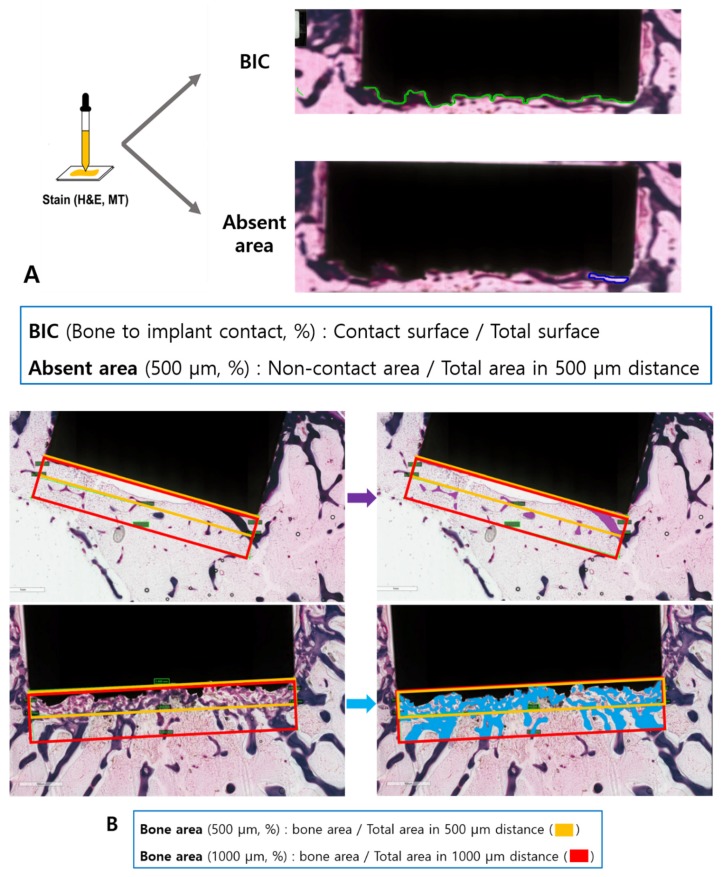
Direct energy deposition (DED) technology has gained increasing attention as a new implant surface technology that replicates the porous structure of natural bones facilitating osteoblast colonization and bone ingrowth. However, concerns have arisen over osteolysis or chronic inflammation that could be caused by Cobalt-chrome (CoCr) alloy and Titanium (Ti) nanoparticles produced during the fabrication process. Here, we evaluated whether a DED Ti-coated on CoCr alloy could improve osteoblast colonization and osseointegration in vitro and in vivo without causing any significant side effects. Three types of implant CoCr surfaces (smooth, sand-blasted and DED Ti-coated) were tested and compared. Three cell proliferation markers and six inflammatory cytokine markers were measured using SaOS2 osteoblast cells. Subsequently, X-ray and bone histomorphometric analyses were performed after implantation into rabbit femur. There were no differences between the DED group and positive control in cytokine assays. However, in the 5-bromo-2'-deoxyuridine (BrdU) assay the DED group exhibited even higher values than the positive control. For bone histomorphometry, DED was significantly superior within the 1000 µm bone area. The results suggest that DED Ti-coated metal printing does not affect the osteoblast viability or impair osseointegration in vitro and in vivo. Thus, this technology is biocompatible for coating the surfaces of cementless total knee arthroplasty (TKA) implants.
直接能量沉积(DED)技术作为一种新型植入物表面技术,因能复制天然骨的多孔结构以促进成骨细胞定植和骨长入而受到越来越多的关注。然而,人们对制造过程中产生的钴铬(CoCr)合金和钛(Ti)纳米颗粒可能引发的骨溶解或慢性炎症产生了担忧。在此,我们评估了在CoCr合金上进行DED钛涂层是否能在体外和体内改善成骨细胞定植和骨整合,且不引起任何显著的副作用。对三种类型的植入物CoCr表面(光滑、喷砂和DED钛涂层)进行了测试和比较。使用SaOS2成骨细胞测量了三种细胞增殖标志物和六种炎性细胞因子标志物。随后,将其植入兔股骨后进行X射线和骨组织形态计量学分析。在细胞因子检测中,DED组与阳性对照组之间没有差异。然而,在5-溴-2'-脱氧尿苷(BrdU)检测中,DED组的值甚至高于阳性对照组。对于骨组织形态计量学,在1000µm骨区域内,DED明显更优。结果表明,DED钛涂层金属打印在体外和体内均不影响成骨细胞活力或损害骨整合。因此,该技术对于非骨水泥全膝关节置换(TKA)植入物表面涂层具有生物相容性。