Friedl Nadine, Krieger Tobias, Chevreul Karine, Hazo Jean Baptiste, Holtzmann Jérôme, Hoogendoorn Mark, Kleiboer Annet, Mathiasen Kim, Urech Antoine, Riper Heleen, Berger Thomas
Department of Clinical Psychology, University of Bern, 3012 Bern, Switzerland.
URC Eco Ile-de-France (AP-HP), Hotel Dieu, 1, Place du Parvis Notre Dame,75004 Paris, France.
J Clin Med. 2020 Feb 11;9(2):490. doi: 10.3390/jcm9020490.
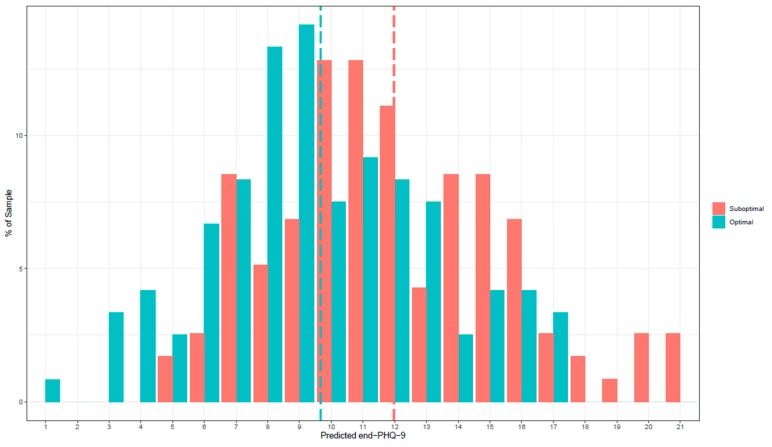
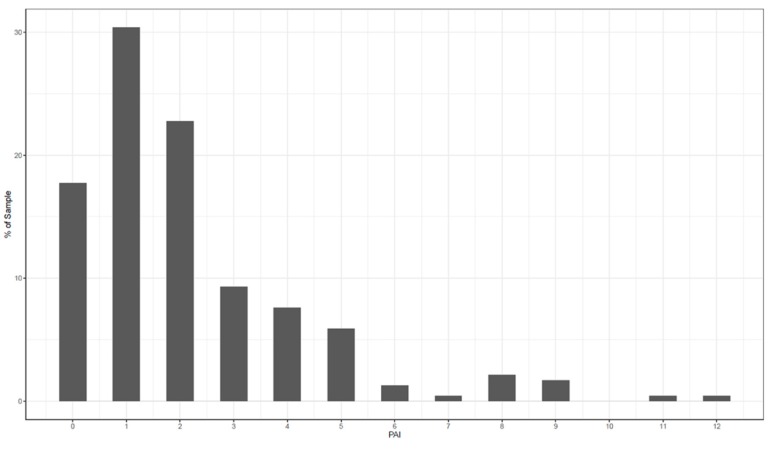
A variety of effective psychotherapies for depression are available, but patients who suffer from depression vary in their treatment response. Combining face-to-face therapies with internet-based elements in the sense of blended treatment is a new approach to treatment for depression. The goal of this study was to answer the following research questions: (1) What are the most important predictors determining optimal treatment allocation to treatment as usual or blended treatment? and (2) Would model-determined treatment allocation using this predictive information and the personalized advantage index (PAI)-approach result in better treatment outcomes? Bayesian model averaging (BMA) was applied to the data of a randomized controlled trial (RCT) comparing the efficacy of treatment as usual and blended treatment in depressive outpatients. Pre-treatment symptomatology and treatment expectancy predicted outcomes irrespective of treatment condition, whereas different prescriptive predictors were found. A PAI of 2.33 PHQ-9 points was found, meaning that patients who would have received the treatment that is optimal for them would have had a post-treatment PHQ-9 score that is two points lower than if they had received the treatment that is suboptimal for them. For 29% of the sample, the PAI was five or greater, which means that a substantial difference between the two treatments was predicted. The use of the PAI approach for clinical practice must be further confirmed in prospective research; the current study supports the identification of specific interventions favorable for specific patients.
目前有多种治疗抑郁症的有效心理疗法,但抑郁症患者的治疗反应各不相同。将面对面治疗与基于互联网的元素相结合进行混合治疗,是一种治疗抑郁症的新方法。本研究的目的是回答以下研究问题:(1)决定常规治疗或混合治疗最佳治疗分配的最重要预测因素是什么?(2)使用这种预测信息和个性化优势指数(PAI)方法的模型确定治疗分配是否会带来更好的治疗效果?将贝叶斯模型平均法(BMA)应用于一项随机对照试验(RCT)的数据,该试验比较了常规治疗和混合治疗对抑郁症门诊患者的疗效。治疗前症状和治疗期望可预测治疗结果,而与治疗条件无关,不过发现了不同处方预测因素。发现PAI为2.33个PHQ-9评分点,这意味着接受最适合自己治疗的患者,其治疗后PHQ-9评分将比接受不适合自己治疗的患者低两分。对于29%的样本,PAI为5或更高,这意味着预测两种治疗之间存在显著差异。PAI方法在临床实践中的应用必须在前瞻性研究中进一步得到证实;本研究支持识别对特定患者有利的特定干预措施。