Department of Molecular and Cellular Biology, University of Arizona, Tucson, Arizona.
Department of Earth System Science, Stanford University, Stanford, California.
Geobiology. 2020 May;18(3):394-411. doi: 10.1111/gbi.12381. Epub 2020 Feb 17.
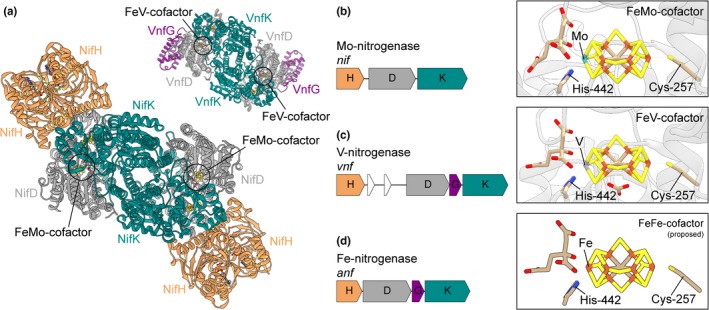
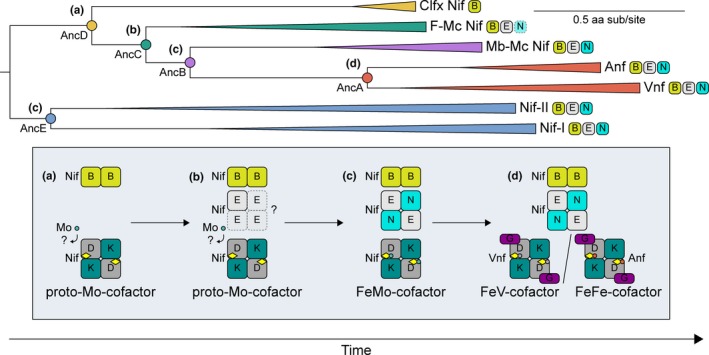
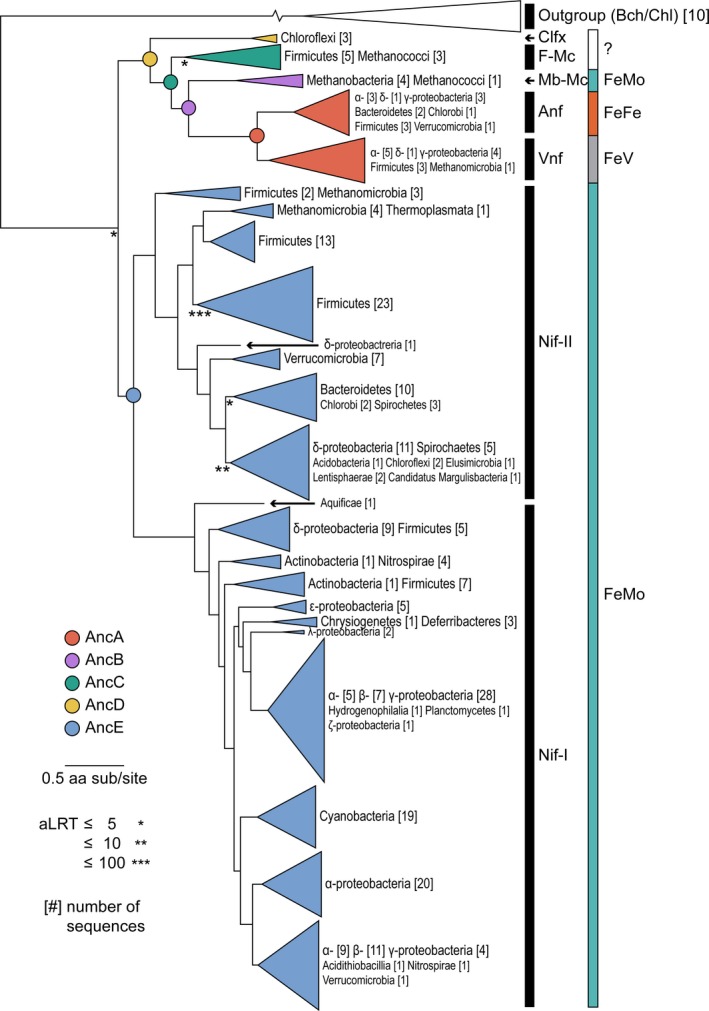
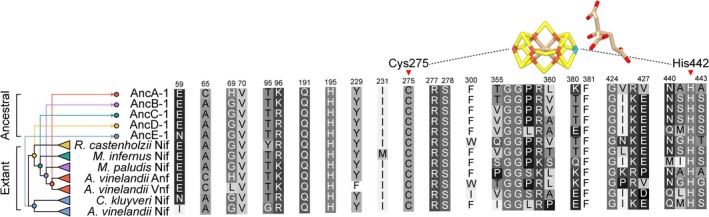
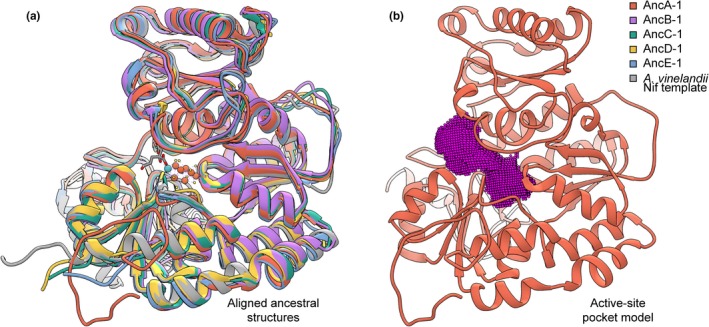
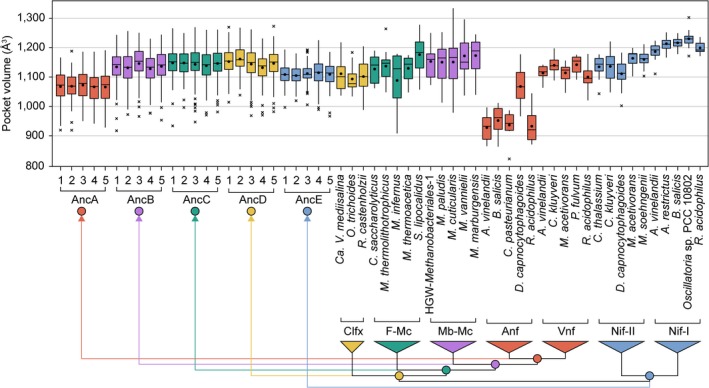
The nitrogenase metalloenzyme family, essential for supplying fixed nitrogen to the biosphere, is one of life's key biogeochemical innovations. The three forms of nitrogenase differ in their metal dependence, each binding either a FeMo-, FeV-, or FeFe-cofactor where the reduction of dinitrogen takes place. The history of nitrogenase metal dependence has been of particular interest due to the possible implication that ancient marine metal availabilities have significantly constrained nitrogenase evolution over geologic time. Here, we reconstructed the evolutionary history of nitrogenases, and combined phylogenetic reconstruction, ancestral sequence inference, and structural homology modeling to evaluate the potential metal dependence of ancient nitrogenases. We find that active-site sequence features can reliably distinguish extant Mo-nitrogenases from V- and Fe-nitrogenases and that inferred ancestral sequences at the deepest nodes of the phylogeny suggest these ancient proteins most resemble modern Mo-nitrogenases. Taxa representing early-branching nitrogenase lineages lack one or more biosynthetic nifE and nifN genes that both contribute to the assembly of the FeMo-cofactor in studied organisms, suggesting that early Mo-nitrogenases may have utilized an alternate and/or simplified pathway for cofactor biosynthesis. Our results underscore the profound impacts that protein-level innovations likely had on shaping global biogeochemical cycles throughout the Precambrian, in contrast to organism-level innovations that characterize the Phanerozoic Eon.
固氮酶金属酶家族对于向生物圈提供固定氮至关重要,是生命关键的生物地球化学创新之一。三种形式的固氮酶在金属依赖性方面有所不同,每种都结合 FeMo-、FeV- 或 FeFe 辅因子,其中二氮的还原发生。由于古代海洋金属的可用性可能极大地限制了地质时间内固氮酶的进化,因此固氮酶金属依赖性的历史一直引起特别关注。在这里,我们重建了固氮酶的进化历史,并结合系统发育重建、祖先序列推断和结构同源建模来评估古代固氮酶的潜在金属依赖性。我们发现,活性位点序列特征可以可靠地区分现存的 Mo 固氮酶与 V- 和 Fe- 固氮酶,并且在系统发育树的最深处推断出的祖先序列表明这些古老的蛋白质最类似于现代 Mo 固氮酶。代表早期分枝固氮酶谱系的分类群缺乏一个或多个生物合成 nifE 和 nifN 基因,这些基因都有助于在研究的生物中组装 FeMo 辅因子,这表明早期 Mo 固氮酶可能利用了替代的和/或简化的辅因子生物合成途径。我们的结果强调了蛋白质水平的创新可能对塑造整个前寒武纪全球生物地球化学循环产生的深远影响,而不是以生物体水平的创新为特征的显生宙。