Eye and Brain Mapping Laboratory, Department of Psychology, University of Fribourg, Fribourg, Switzerland.
Applied Face Cognition Lab, Department of Psychology, University of Fribourg, Fribourg, Switzerland.
Cogn Res Princ Implic. 2020 Feb 19;5(1):8. doi: 10.1186/s41235-019-0205-0.
Unfamiliar face processing is an ability that varies considerably between individuals. Numerous studies have aimed to identify its underlying determinants using controlled experimental procedures. While such tests can isolate variables that influence face processing, they usually involve somewhat unrealistic situations and optimized face images as stimulus material. As a consequence, the extent to which the performance observed under laboratory settings is informative for predicting real-life proficiency remains unclear.
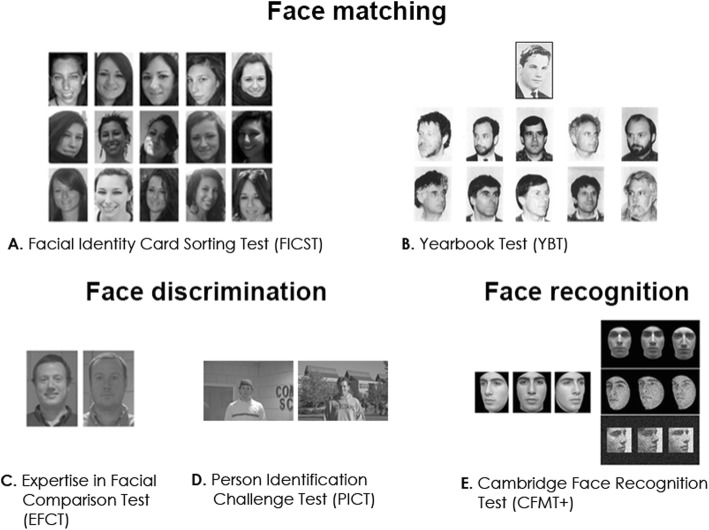
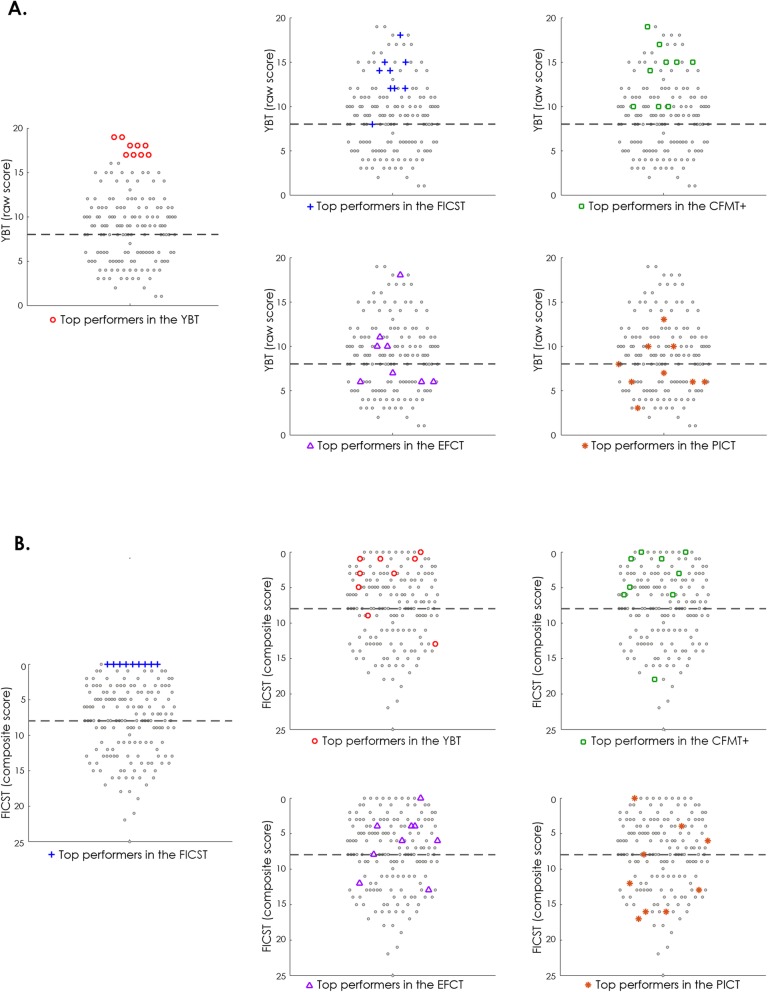
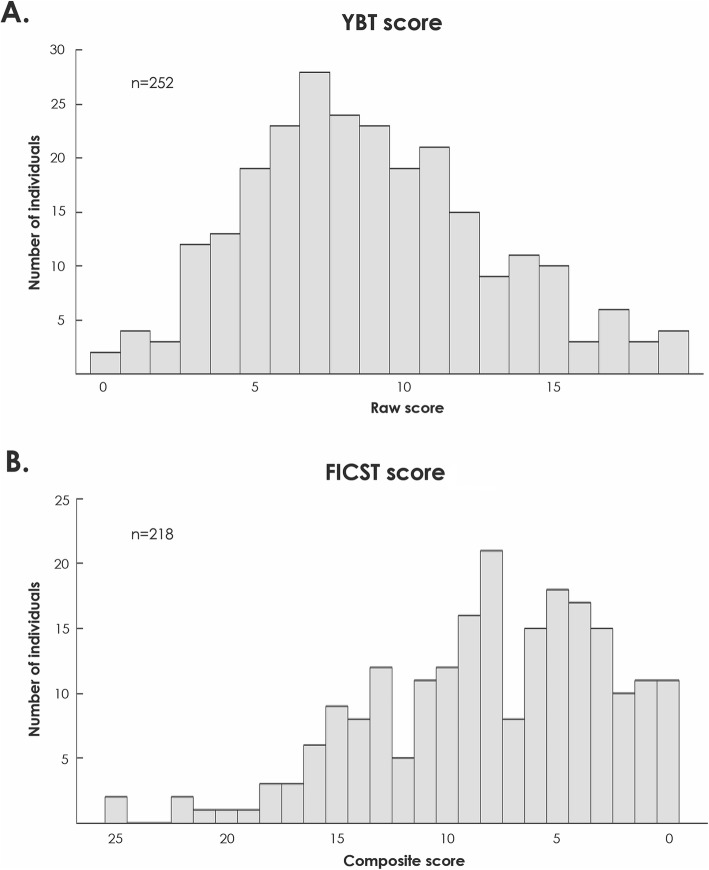
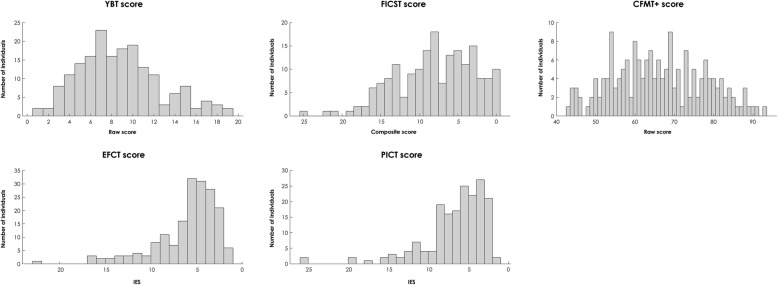
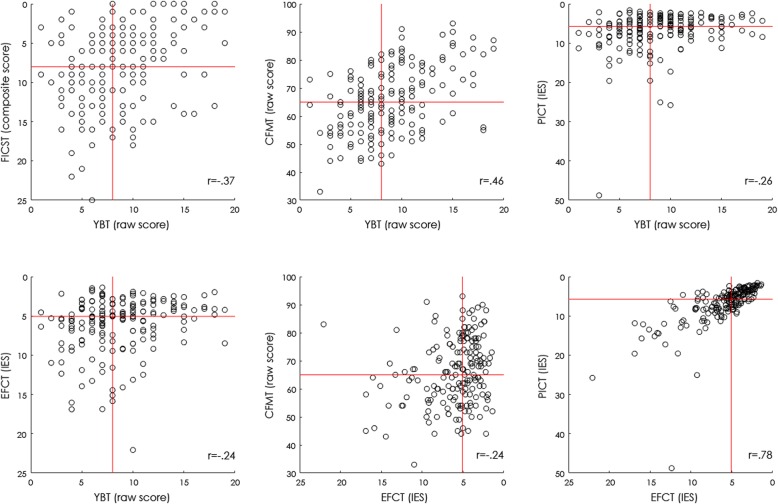
We present normative data for two ecologically valid but underused tests of face matching: the Yearbook Test (YBT) and the Facial Identity Card Sorting Test (FICST). The YBT (n = 252) measures identity matching across substantial age-related changes in facial appearance, while the FICST (n = 218) assesses the ability to process unfamiliar facial identity despite superficial image variations. To determine the predictive value of both tests, a subsample of our cohort (n = 181) also completed a commonly used test of face recognition and two tests of face perception (the long form of the Cambridge Face Memory Test (CFMT+), the Expertise in Facial Comparison Test (EFCT) and the Person Identification Challenge Test (PICT)).
Focusing on the top performers identified independently per test, we made two important observations: 1) YBT and FICST performance can predict CFMT+ scores and vice versa; and 2) EFCT and PICT scores neither reliably predict superior performance in ecologically meaningful and challenging tests of face matching, nor in the most commonly used test of face recognition. These findings emphasize the necessity for using challenging and ecologically relevant, and thus highly sensitive, tasks of unfamiliar face processing to identify high-performing individuals in the normal population.
不熟悉的面孔处理能力在个体之间差异很大。许多研究旨在使用控制实验程序来确定其潜在决定因素。虽然这些测试可以分离影响面孔处理的变量,但它们通常涉及到不切实际的情况和优化的面孔图像作为刺激材料。因此,在实验室环境下观察到的表现对于预测现实生活中的能力程度尚不清楚。
我们提供了两种生态有效但使用较少的面孔匹配测试的规范数据:年鉴测试(YBT)和面部身份证分类测试(FICST)。YBT(n=252)测量了在面部外观发生显著年龄相关变化时的身份匹配,而 FICST(n=218)评估了尽管存在表面图像变化,但仍能处理不熟悉的面孔身份的能力。为了确定这两种测试的预测价值,我们的队列的一个子样本(n=181)还完成了一项常用的面孔识别测试和两项面孔感知测试(剑桥面孔记忆测试的长式(CFMT+)、面部比较专家测试(EFCT)和人物识别挑战测试(PICT))。
专注于每个测试中独立确定的表现最佳者,我们有两个重要发现:1)YBT 和 FICST 的表现可以预测 CFMT+的分数,反之亦然;2)EFCT 和 PICT 的分数既不能可靠地预测在具有生态意义和挑战性的面孔匹配测试中的优异表现,也不能预测在最常用的面孔识别测试中的优异表现。这些发现强调了使用具有挑战性和生态相关性的、因此高度敏感的不熟悉面孔处理任务来识别正常人群中的高表现个体的必要性。