Ogawa Akiko, Takakura Keito, Hirai Nobumitsu, Kanematsu Hideyuki, Kuroda Daisuke, Kougo Takeshi, Sano Katsuhiko, Terada Satoshi
Department of Chemistry and Biochemistry, National Institute of Technology (KOSEN), Suzuka College, Suzuka 510-0294, Japan.
Department of Material Science and Engineering, National Institute of Technology (KOSEN), Suzuka College, Suzuka 510-0294, Japan.
Materials (Basel). 2020 Feb 19;13(4):923. doi: 10.3390/ma13040923.
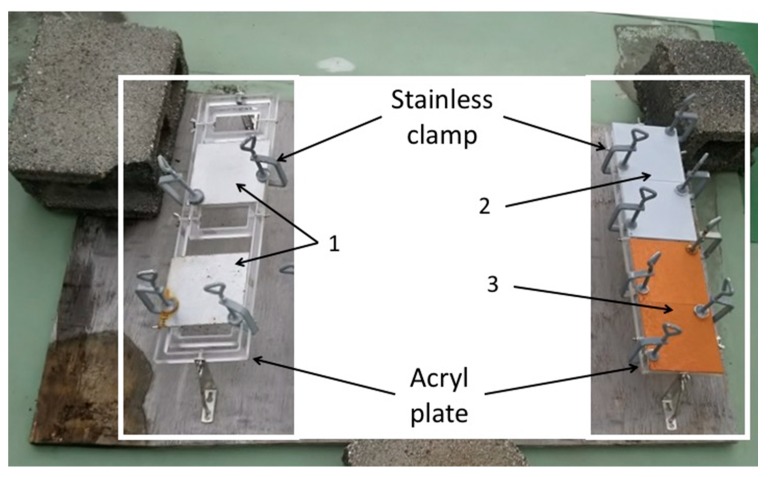
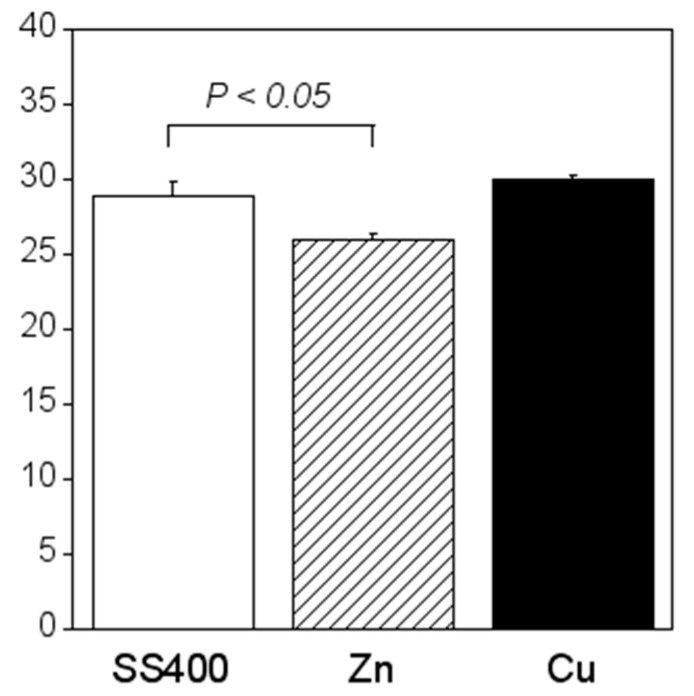
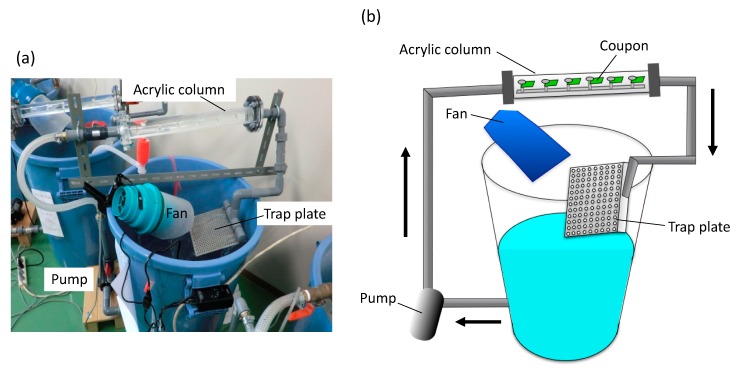
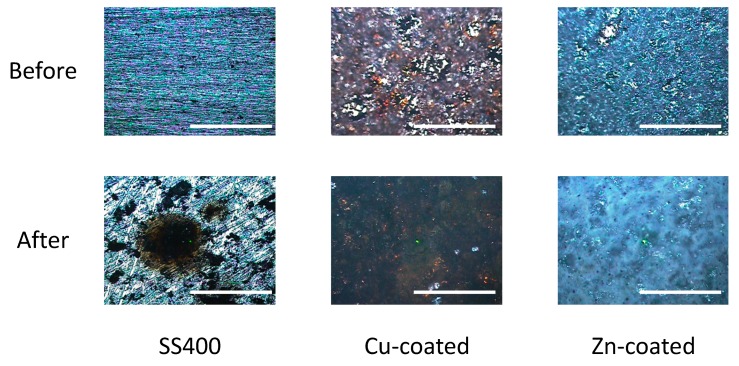
In this study, we examined the relationship between the effect of a zinc coating on protecting carbon steel against biofilm formation in both air and water environments. SS400 carbon steel coupons were covered with a zinc thermal spray coating or copper thermal spray coating. Coated coupons were exposed to either air or water conditions. Following exposure, the surface conditions of each coupon were observed using optical microscopy, and quantitatively analyzed using an x-ray fluorescence analyzer. Debris on the surface of the coupons was used for biofilm analysis including crystal violet staining for quantification, Raman spectroscopic analysis for qualification, and microbiome analysis. The results showed that the zinc thermal spray coating significantly inhibited iron corrosion as well as biofilm formation in both air and water environments. The copper thermal spray coating, however, accelerated iron corrosion in both air and water environments, but accelerated biofilm formation only in a water environment. microbially-influenced-corrosion-related bacteria were barely detected on any coupons, whereas biofilms were detected on all coupons. To summarize these results, electrochemical corrosion is dominant in an air environment and microbially influenced corrosion is strongly involved in water corrosion. Additionally, biofilm formation plays a crucial rule in carbon steel corrosion in both air and water, even though microbially-influenced-corrosion-related bacteria are barely involved in this corrosion.
在本研究中,我们考察了锌涂层在空气和水环境中对碳钢防生物膜形成的保护作用之间的关系。SS400碳钢试片覆盖有锌热喷涂涂层或铜热喷涂涂层。将涂覆的试片暴露于空气或水条件下。暴露后,使用光学显微镜观察每个试片的表面状况,并使用X射线荧光分析仪进行定量分析。试片表面的碎片用于生物膜分析,包括用于定量的结晶紫染色、用于定性的拉曼光谱分析和微生物群落分析。结果表明,锌热喷涂涂层在空气和水环境中均能显著抑制铁腐蚀以及生物膜形成。然而,铜热喷涂涂层在空气和水环境中均加速了铁腐蚀,但仅在水环境中加速了生物膜形成。在任何试片上几乎都未检测到与微生物影响腐蚀相关的细菌,而在所有试片上均检测到了生物膜。总结这些结果,电化学腐蚀在空气环境中占主导地位,而微生物影响腐蚀在水腐蚀中密切相关。此外,生物膜形成在空气和水中的碳钢腐蚀中都起着关键作用,尽管与微生物影响腐蚀相关的细菌几乎未参与这种腐蚀。