Pinho Andreia G, Cibrão Jorge R, Silva Nuno A, Monteiro Susana, Salgado António J
Life and Health Sciences Research Institute (ICVS), School of Medicine, University of Minho, Braga 4710-057, Portugal.
ICVS/3B's PT Government Associate Laboratory, Braga/Guimarães 4710-057, Portugal.
Pharmaceuticals (Basel). 2020 Feb 20;13(2):31. doi: 10.3390/ph13020031.
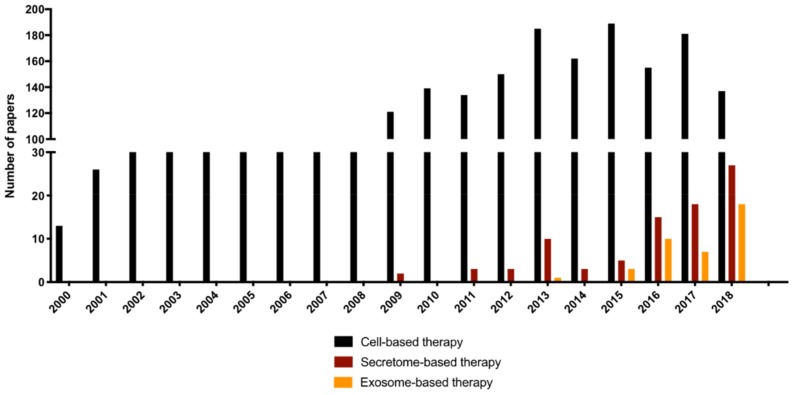
Transplantation of stem cells, in particular mesenchymal stem cells (MSCs), stands as a promising therapy for trauma, stroke or neurodegenerative conditions such as spinal cord or traumatic brain injuries (SCI or TBI), ischemic stroke (IS), or Parkinson's disease (PD). Over the last few years, cell transplantation-based approaches have started to focus on the use of cell byproducts, with a strong emphasis on cell secretome. Having this in mind, the present review discusses the current state of the art of secretome-based therapy applications in different central nervous system (CNS) pathologies. For this purpose, the following topics are discussed: (1) What are the main cell secretome sources, composition, and associated collection techniques; (2) Possible differences of the therapeutic potential of the protein and vesicular fraction of the secretome; and (3) Impact of the cell secretome on CNS-related problems such as SCI, TBI, IS, and PD. With this, we aim to clarify some of the main questions that currently exist in the field of secretome-based therapies and consequently gain new knowledge that may help in the clinical application of secretome in CNS disorders.
干细胞移植,尤其是间充质干细胞(MSC)移植,是治疗创伤、中风或神经退行性疾病(如脊髓损伤或创伤性脑损伤(SCI或TBI)、缺血性中风(IS)或帕金森病(PD))的一种有前景的疗法。在过去几年中,基于细胞移植的方法已开始侧重于使用细胞副产物,尤其强调细胞分泌组。考虑到这一点,本综述讨论了基于分泌组的治疗应用在不同中枢神经系统(CNS)疾病中的当前技术水平。为此,讨论了以下主题:(1)主要的细胞分泌组来源、组成及相关收集技术;(2)分泌组中蛋白质和囊泡部分治疗潜力的可能差异;(3)细胞分泌组对诸如SCI、TBI、IS和PD等中枢神经系统相关问题的影响。通过这样做,我们旨在阐明基于分泌组的治疗领域目前存在的一些主要问题,并因此获得可能有助于分泌组在中枢神经系统疾病临床应用的新知识。