From the Department of Anaesthesiology and Intensive Care, Klinikum rechts der Isar, Technical University Munich, Munich, Germany (M.K., S.B., G.S.) the Department of Anesthesiology (M.K., M.A.S., P.S.G.) the Medical Scientist Training Program (M.A.S.), Emory University School of Medicine, Atlanta, Georgia the Anesthesiology and Research Divisions, Atlanta Veterans Affairs Medical Center, (M.K., M.A.S., P.S.G.) Atlanta, Georgia the Department of Anaesthesia, Waikato Clinical School, University of Auckland, Hamilton, New Zealand (D.H., J.W.S.) the Waikato District Health Board, Hamilton, New Zealand (D.H., J.W.S.) the Department of Anaesthesiology and Pain Medicine, Inselspital, Bern University Hospital, University of Bern, Bern, Switzerland (D.H.) the Department of Anesthesiology, Columbia University Irving Medical Center, New York, New York (P.S.G.).
Anesthesiology. 2020 May;132(5):1003-1016. doi: 10.1097/ALN.0000000000003182.
Preexisting factors such as age and cognitive performance can influence the electroencephalogram (EEG) during general anesthesia. Specifically, spectral EEG power is lower in elderly, compared to younger, subjects. Here, the authors investigate age-related changes in EEG architecture in patients undergoing general anesthesia through a detailed examination of spectral and entropic measures.
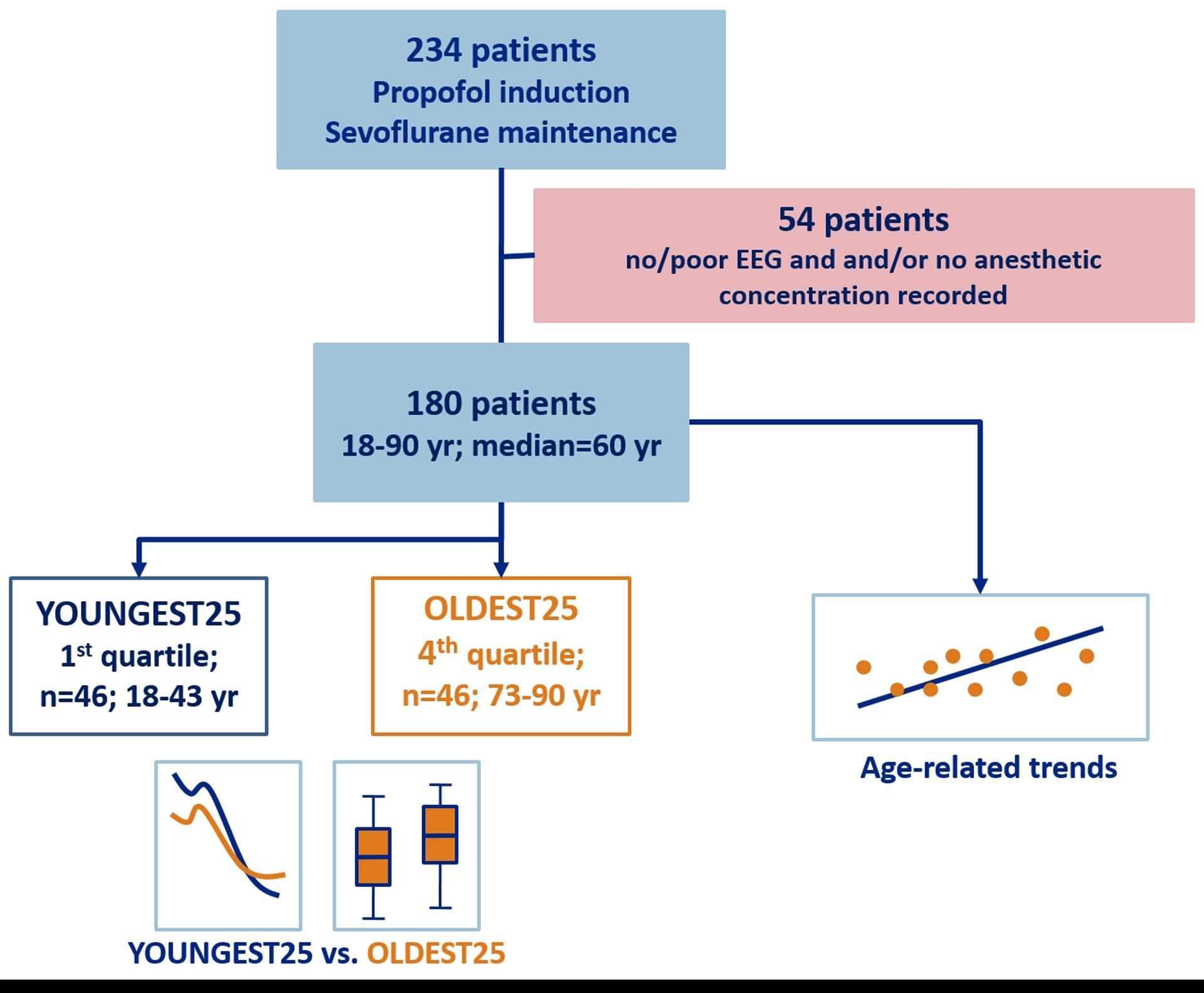
The authors retrospectively studied 180 frontal EEG recordings from patients undergoing general anesthesia, induced with propofol/fentanyl and maintained by sevoflurane at the Waikato Hospital in Hamilton, New Zealand. The authors calculated power spectral density and normalized power spectral density, the entropic measures approximate and permutation entropy, as well as the beta ratio and spectral entropy as exemplary parameters used in current monitoring systems from segments of EEG obtained before the onset of surgery (i.e., with no noxious stimulation).
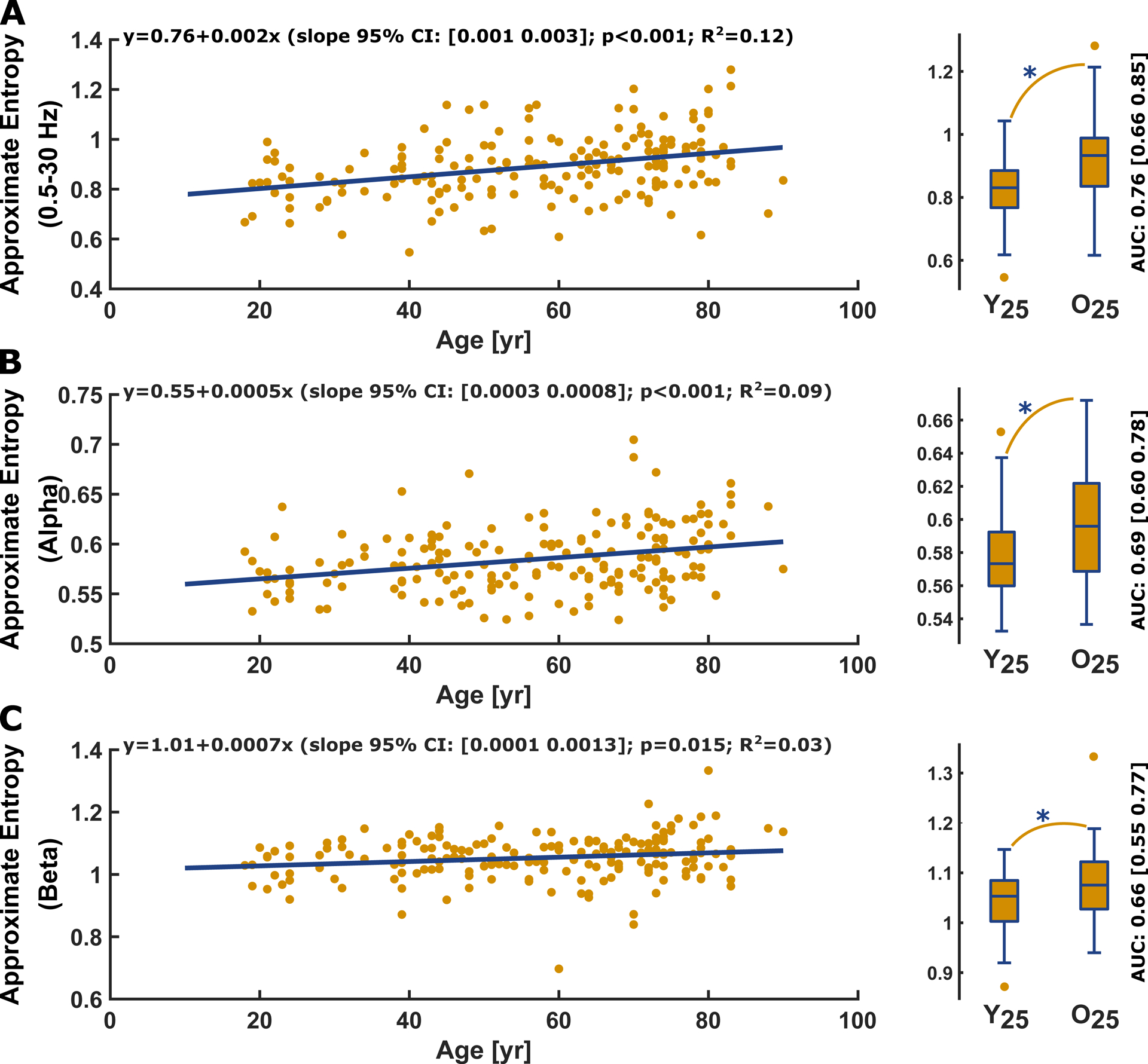
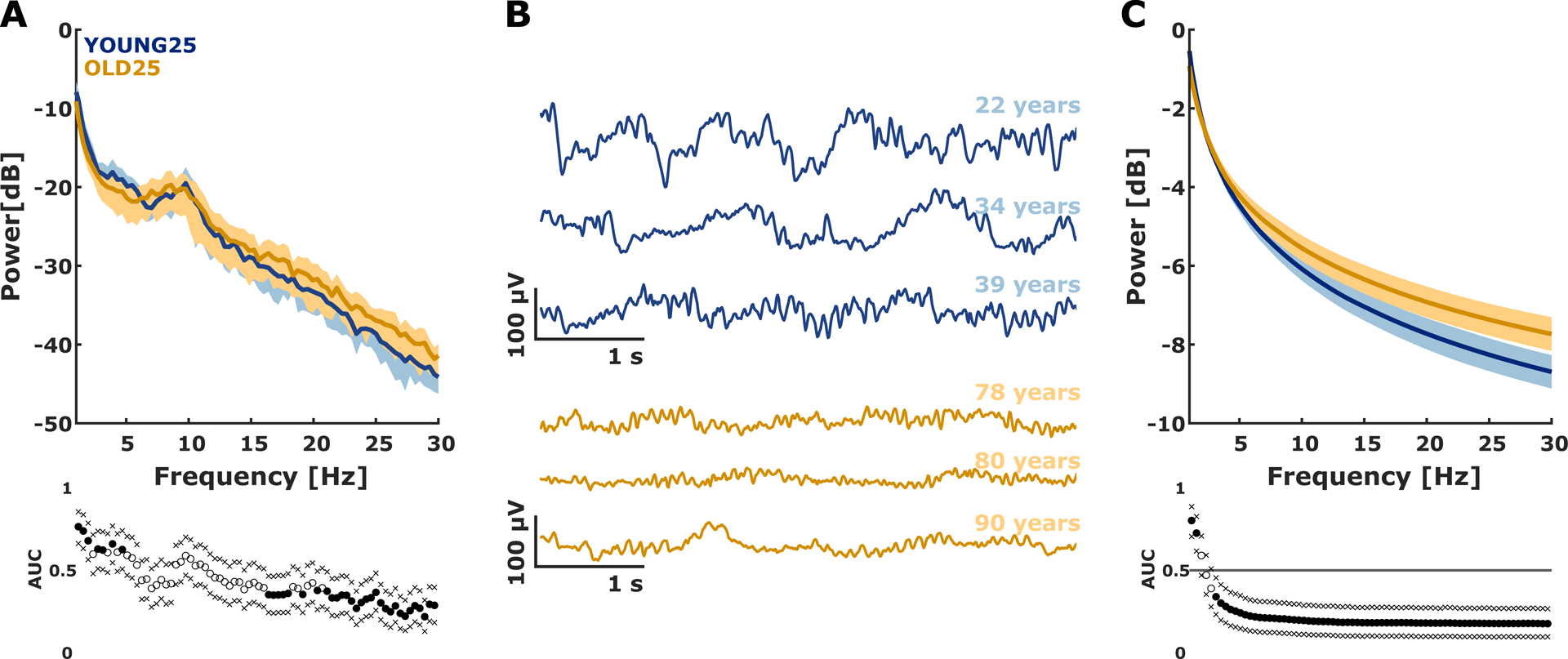
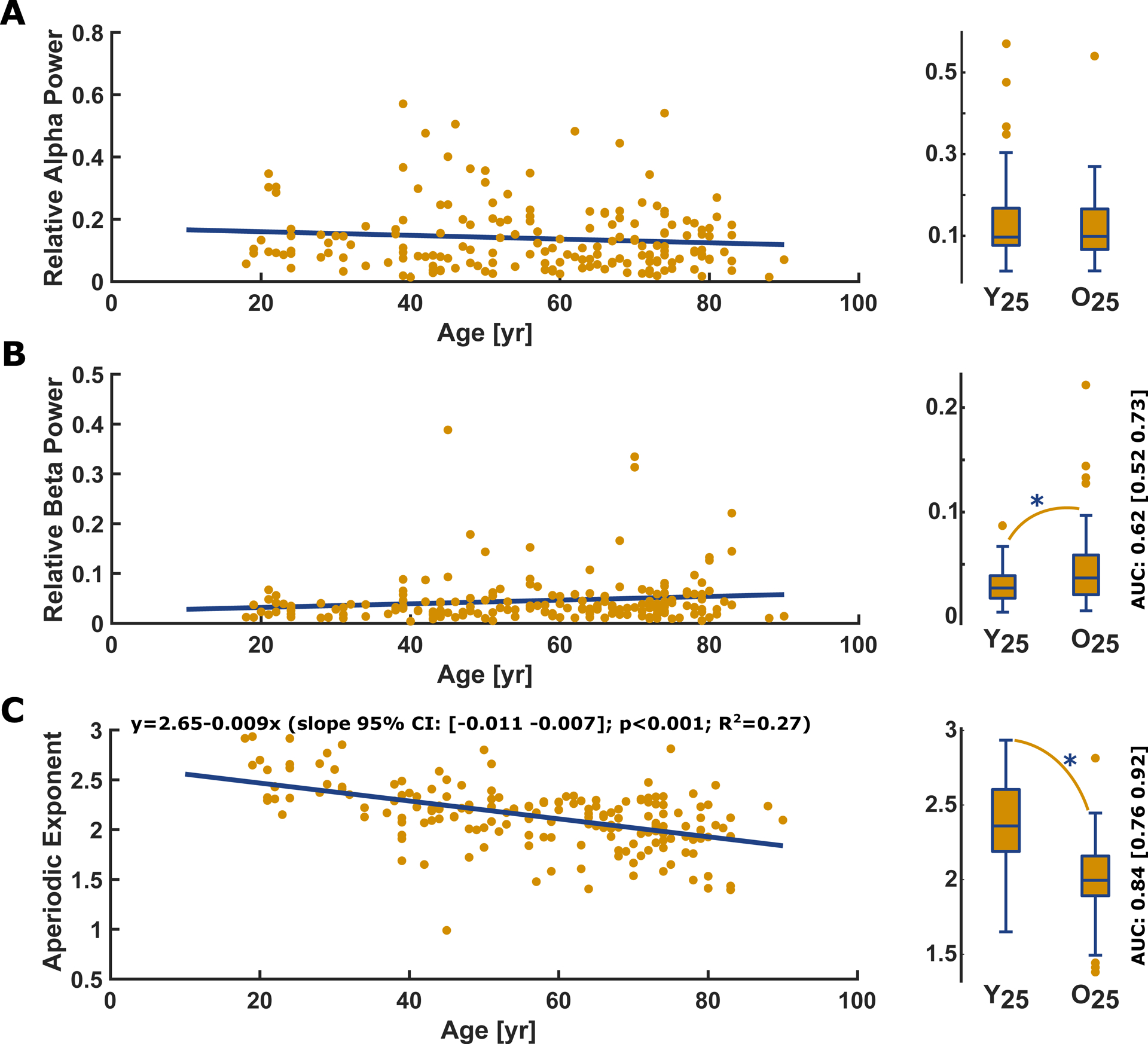
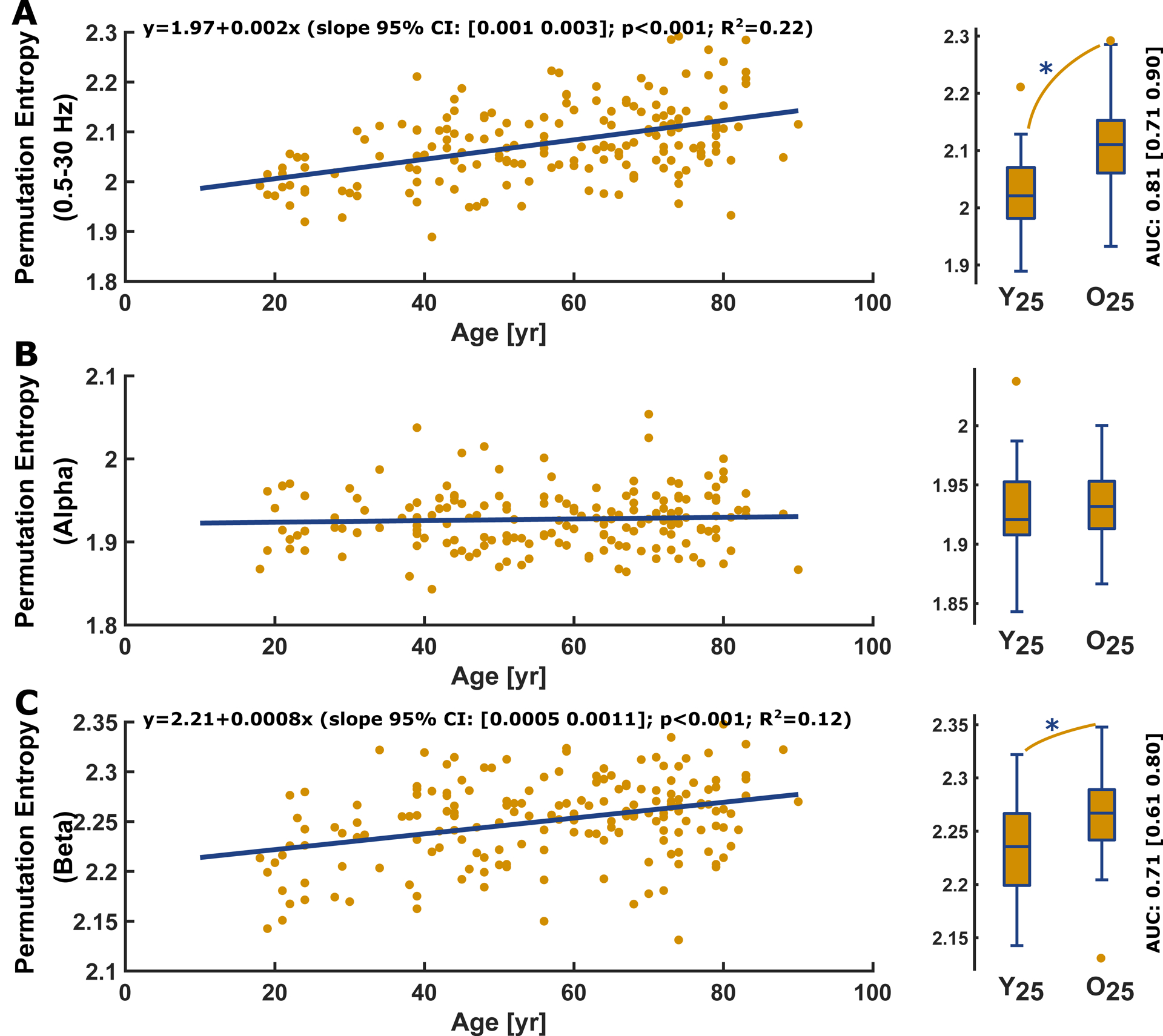
The oldest quartile of patients had significantly lower 1/f characteristics (P < 0.001; area under the receiver operating characteristics curve, 0.84 [0.76 0.92]), indicative of a more uniform distribution of spectral power. Analysis of the normalized power spectral density revealed no significant impact of age on relative alpha (P = 0.693; area under the receiver operating characteristics curve, 0.52 [0.41 0.63]) and a significant but weak effect on relative beta power (P = 0.041; area under the receiver operating characteristics curve, 0.62 [0.52 0.73]). Using entropic parameters, the authors found a significant age-related change toward a more irregular and unpredictable EEG (permutation entropy: P < 0.001, area under the receiver operating characteristics curve, 0.81 [0.71 0.90]; approximate entropy: P < 0.001; area under the receiver operating characteristics curve, 0.76 [0.66 0.85]). With approximate entropy, the authors could also detect an age-induced change in alpha-band activity (P = 0.002; area under the receiver operating characteristics curve, 0.69 [0.60 78]).
Like the sleep literature, spectral and entropic EEG features under general anesthesia change with age revealing a shift toward a faster, more irregular, oscillatory composition of the EEG in older patients. Age-related changes in neurophysiological activity may underlie these findings however the contribution of age-related changes in filtering properties or the signal to noise ratio must also be considered. Regardless, most current EEG technology used to guide anesthetic management focus on spectral features, and improvements to these devices might involve integration of entropic features of the raw EEG.
年龄和认知表现等预先存在的因素会影响全身麻醉期间的脑电图(EEG)。具体来说,与年轻受试者相比,老年受试者的频谱 EEG 功率较低。在这里,作者通过详细检查频谱和熵测量来研究全身麻醉患者中与年龄相关的脑电图结构变化。
作者回顾性研究了 180 名在新西兰汉密尔顿怀卡托医院接受全身麻醉的患者的 180 个额部 EEG 记录,这些患者通过异丙酚/芬太尼诱导,并用七氟醚维持。作者从手术前(即无伤害性刺激)获得的 EEG 片段中计算了功率谱密度和归一化功率谱密度、近似熵和排列熵、β比和频谱熵等参数的熵测度,以及当前监测系统中使用的示例参数。
最年长的四分位数患者的 1/f 特征明显降低(P < 0.001;接收者操作特征曲线下面积,0.84 [0.76 0.92]),表明频谱功率的分布更加均匀。对归一化功率谱密度的分析表明,年龄对相对阿尔法无显著影响(P = 0.693;接收者操作特征曲线下面积,0.52 [0.41 0.63]),对相对β功率有显著但较弱的影响(P = 0.041;接收者操作特征曲线下面积,0.62 [0.52 0.73])。使用熵参数,作者发现脑电图向更不规则和不可预测的方向发展与年龄相关(排列熵:P < 0.001,接收者操作特征曲线下面积,0.81 [0.71 0.90];近似熵:P < 0.001;接收者操作特征曲线下面积,0.76 [0.66 0.85])。近似熵可检测到年龄诱导的α波段活动变化(P = 0.002;接收者操作特征曲线下面积,0.69 [0.60 78])。
与睡眠文献一样,全身麻醉下的频谱和熵 EEG 特征随年龄变化而变化,揭示了老年患者脑电图更快、更不规则、更具振荡性的变化。神经生理活动的年龄相关变化可能导致了这些发现,但是必须考虑到年龄相关的滤波特性或信噪比的变化。无论如何,用于指导麻醉管理的大多数当前 EEG 技术都集中在频谱特征上,这些设备的改进可能涉及到对原始 EEG 的熵特征的整合。