Rodrigues Joana L, Gomes Daniela, Rodrigues Lígia R
Centre of Biological Engineering, University of Minho, Braga, Portugal.
Front Bioeng Biotechnol. 2020 Feb 7;8:59. doi: 10.3389/fbioe.2020.00059. eCollection 2020.
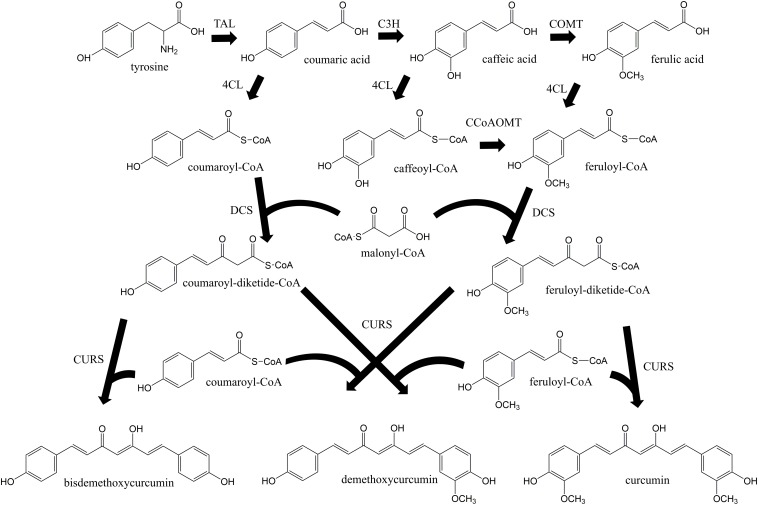
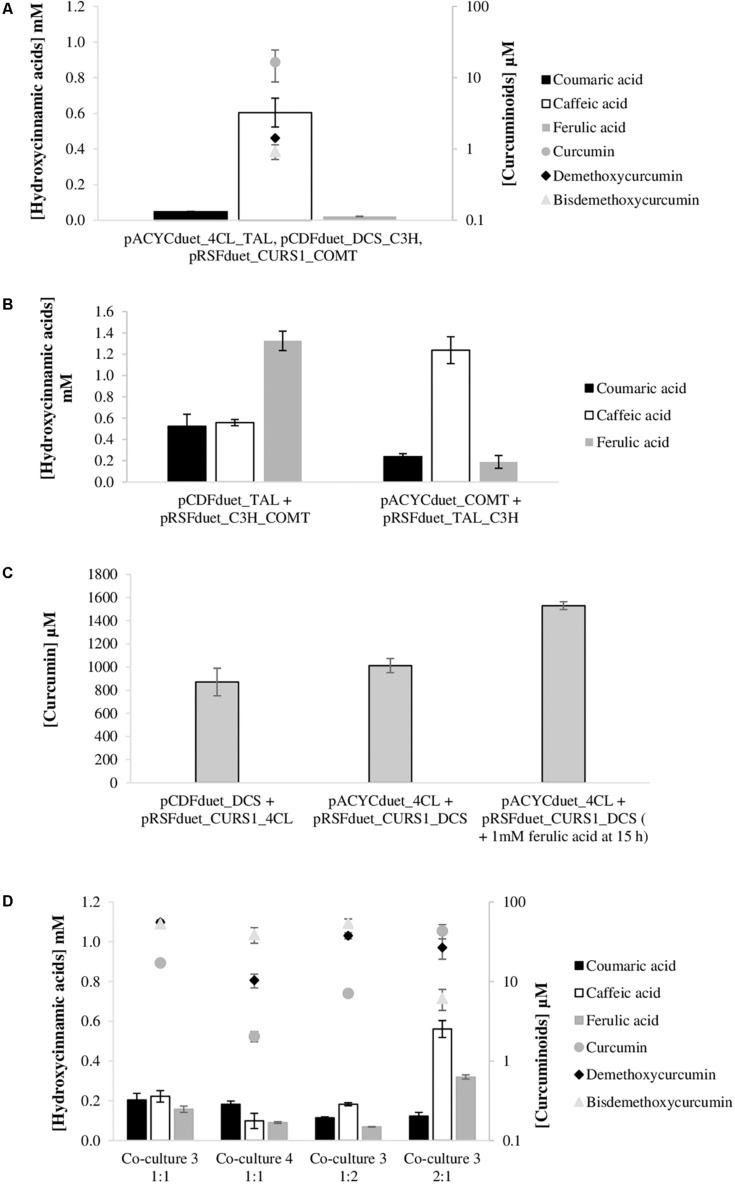
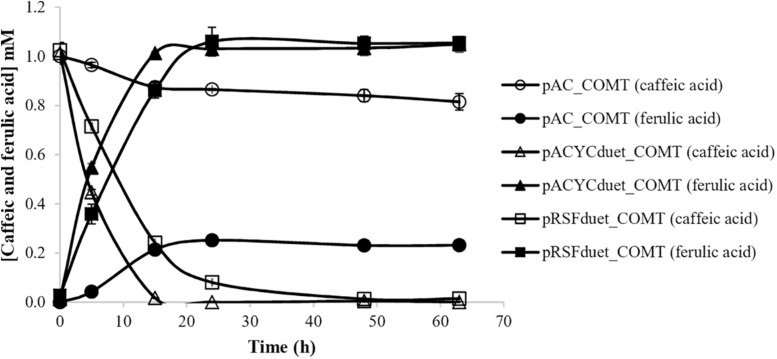
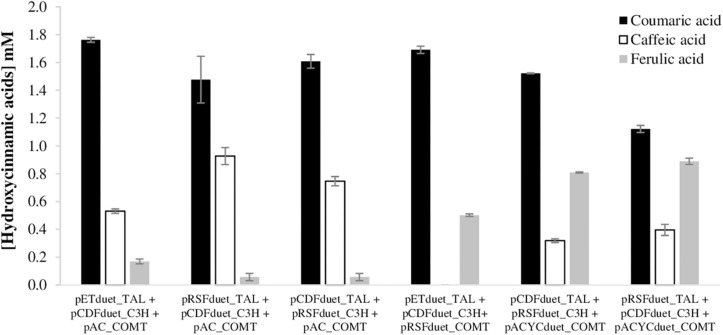
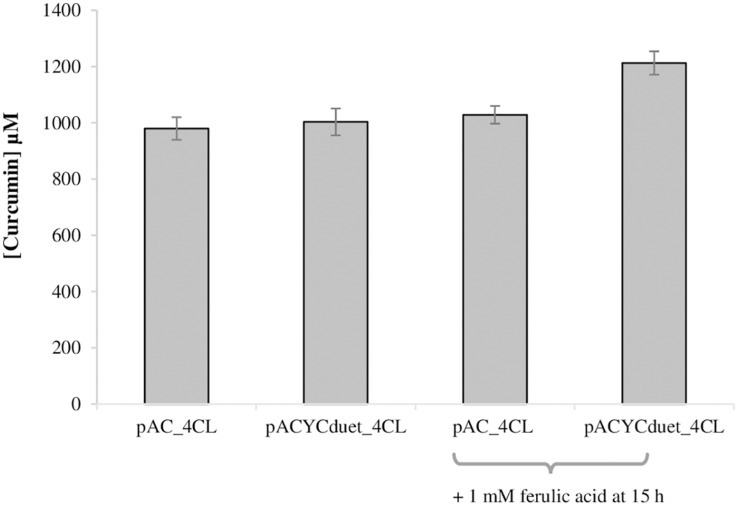
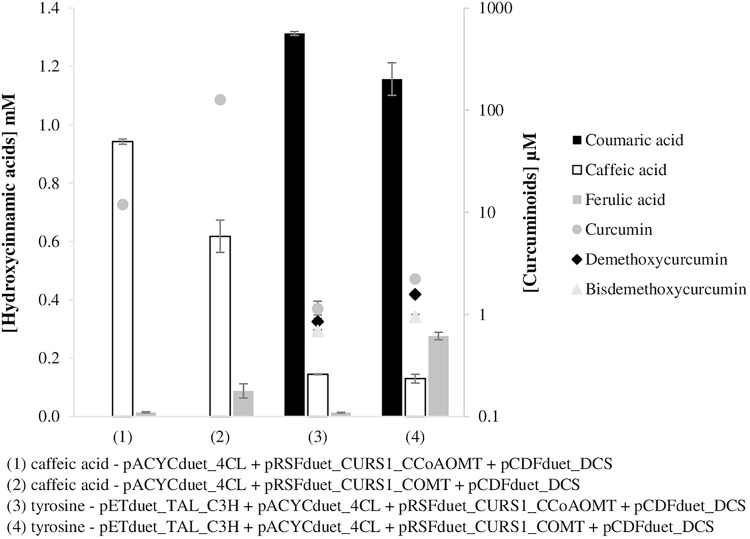
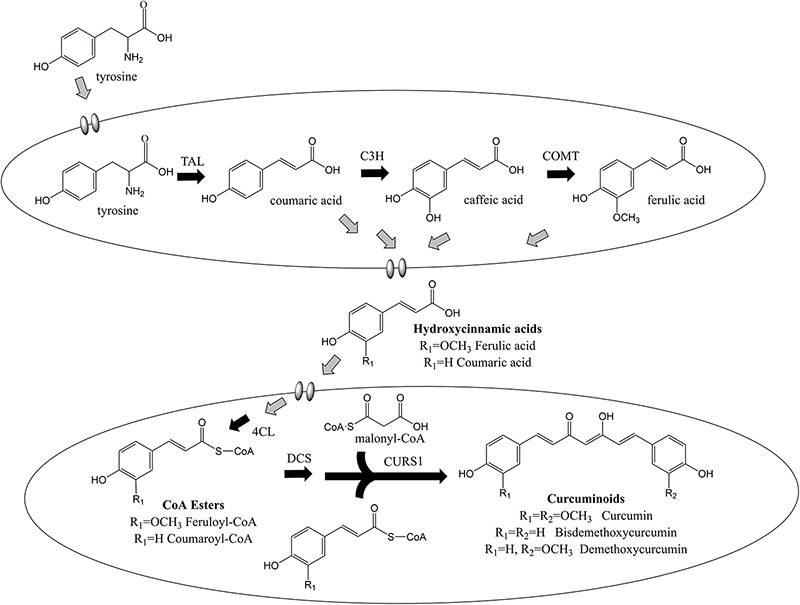
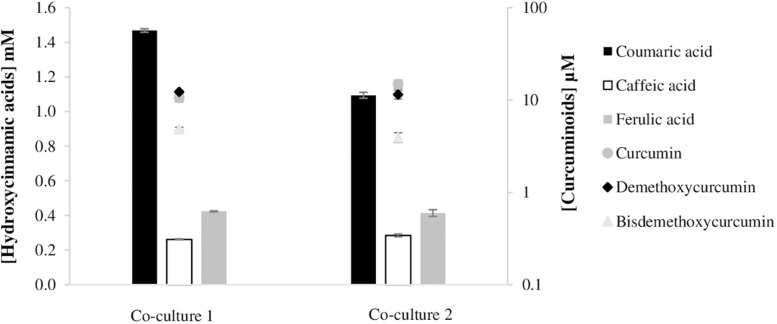
Curcuminoids are well-known for their therapeutic properties. However, their extraction from natural sources is environmentally unfriendly, expensive and limited by seasonal variability, highlighting the need for alternative production processes. We propose an optimized artificial biosynthetic pathway to produce curcuminoids, including curcumin, in . This pathway involves six enzymes, tyrosine ammonia lyase (TAL), 4-coumarate 3-hydroxylase (C3H), caffeic acid O-methyltransferase (COMT), 4-coumarate-CoA ligase (4CL), diketide-CoA synthase (DCS), and curcumin synthase (CURS1). Curcuminoids pathway was divided in two modules, the first module included TAL, C3H and COMT and the second one 4CL, DCS and CURS1. Optimizing the first module of the pathway, from tyrosine to ferulic acid, enabled obtaining the highest ferulic acid titer reported so far (1325.1 μM). Afterward, ferulic acid was used as substrate to optimize the second module of the pathway. We achieved the highest concentration of curcumin ever reported (1529.5 μM), corresponding to a 59.4% increase. Subsequently, curcumin and other curcuminoids were produced from tyrosine (using the whole pathway) in mono-culture. The production increased comparing to a previously reported pathway that used a caffeoyl-CoA O-methyltransferase enzyme (to convert caffeoyl-CoA to feruloyl-CoA) instead of COMT (to convert caffeic to ferulic acid). Additionally, the potential of a co-culture approach was evaluated to further improve curcuminoids production by reducing cells metabolic burden. We used one strain able to convert tyrosine to ferulic acid and another able to convert the hydroxycinnamic acids produced by the first one to curcuminoids. The co-culture strategies tested led to 6.6 times increase of total curcuminoids (125.8 μM) when compared to the mono-culture system. The curcuminoids production achieved in this study corresponds to a 6817% improvement. In addition, by using an inoculation ratio of 2:1, although total curcuminoids production decreased, curcumin production was enhanced and reached 43.2 μM, corresponding to an improvement of 160% comparing to mono-culture system. To our knowledge, these values correspond to the highest titers of curcuminoids obtained to date. These results demonstrate the enormous potential of modular co-culture engineering to produce curcumin, and other curcuminoids, from tyrosine.
姜黄素类化合物因其治疗特性而闻名。然而,从天然来源提取它们对环境不友好、成本高昂且受季节变化限制,这凸显了对替代生产工艺的需求。我们提出了一种优化的人工生物合成途径来生产姜黄素类化合物,包括姜黄素。该途径涉及六种酶,酪氨酸解氨酶(TAL)、4-香豆酸-3-羟化酶(C3H)、咖啡酸O-甲基转移酶(COMT)、4-香豆酸-CoA连接酶(4CL)、二酮-CoA合酶(DCS)和姜黄素合酶(CURS1)。姜黄素类化合物途径分为两个模块,第一个模块包括TAL、C3H和COMT,第二个模块包括4CL、DCS和CURS1。优化该途径的第一个模块,即从酪氨酸到阿魏酸,能够获得迄今为止报道的最高阿魏酸滴度(1325.1 μM)。之后,将阿魏酸用作底物来优化该途径的第二个模块。我们实现了有史以来报道的最高姜黄素浓度(1529.5 μM),增幅达59.4%。随后,在单培养中从酪氨酸(使用整个途径)生产姜黄素和其他姜黄素类化合物。与先前报道的使用咖啡酰-CoA O-甲基转移酶(将咖啡酰-CoA转化为阿魏酰-CoA)而非COMT(将咖啡酸转化为阿魏酸)的途径相比,产量有所提高。此外,评估了共培养方法通过减轻细胞代谢负担来进一步提高姜黄素类化合物产量的潜力。我们使用一种能够将酪氨酸转化为阿魏酸的菌株和另一种能够将第一种菌株产生的羟基肉桂酸转化为姜黄素类化合物的菌株。与单培养系统相比,所测试的共培养策略使总姜黄素类化合物增加了6.6倍(125.8 μM)。本研究中实现的姜黄素类化合物产量提高了6817%。此外,使用2:1的接种比例时,尽管总姜黄素类化合物产量下降,但姜黄素产量增加并达到43.2 μM,与单培养系统相比提高了160%。据我们所知,这些值对应于迄今为止获得的最高姜黄素类化合物滴度。这些结果证明了模块化共培养工程从酪氨酸生产姜黄素和其他姜黄素类化合物的巨大潜力。