Lee Jungwon, Pyo Se-Wook, Cho Hyun-Jae, An Jung-Sub, Lee Jae-Hyun, Koo Ki-Tae, Lee Yong-Moo
Department of Periodontics, One-Stop Specialty Center, Seoul National University Dental Hospital, Seoul, Korea.
Department of Dentistry, Ajou University School of Medicine, Suwon, Korea.
J Periodontal Implant Sci. 2020 Feb 18;50(1):56-66. doi: 10.5051/jpis.2020.50.1.56. eCollection 2020 Feb.
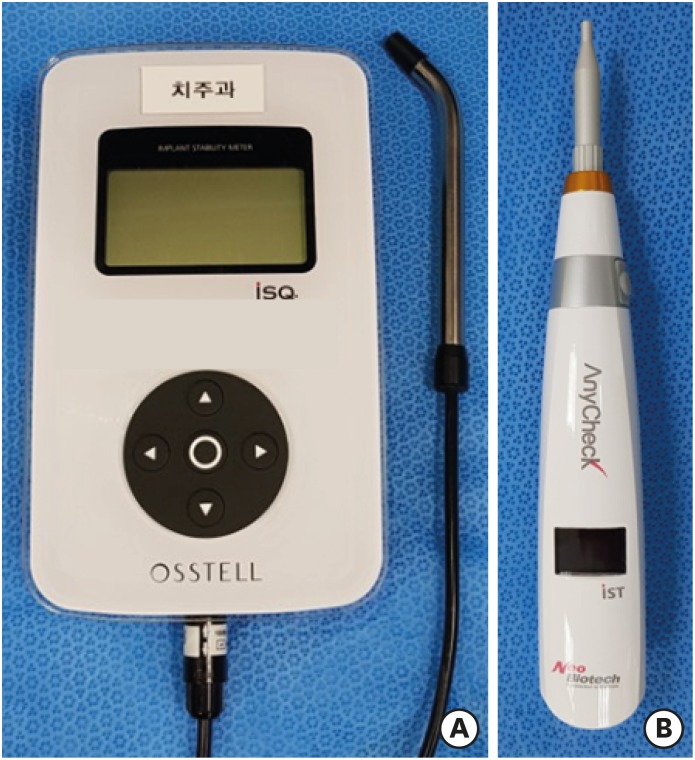
A stability-measuring device that utilizes damping capacity analysis (DCA) has recently been introduced in the field of dental implantology. This study aimed to evaluate the sensitivity and reliability of this device by measuring the implant stability of samples in comparison with a resonance frequency analysis (RFA) device.
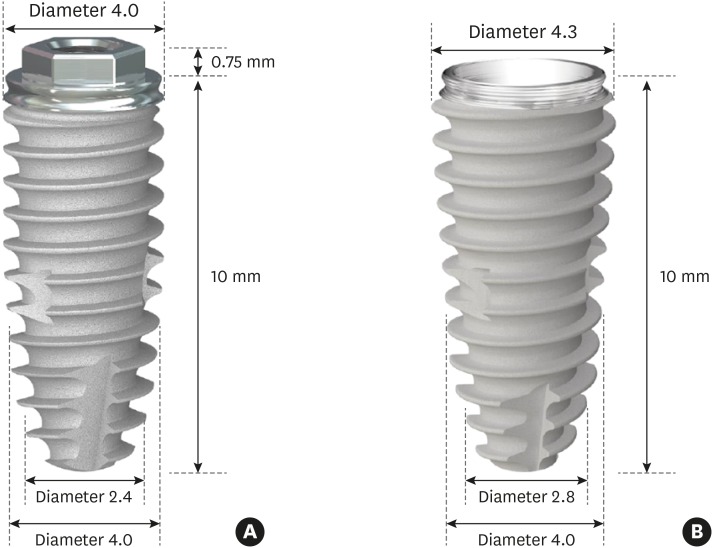
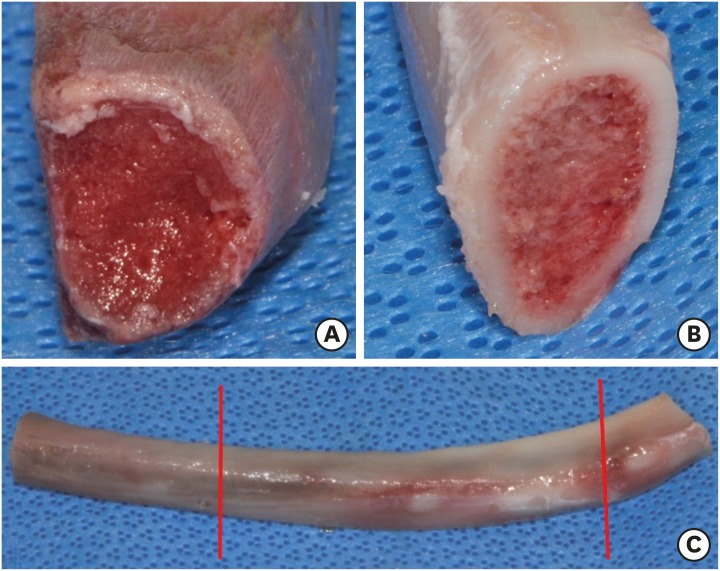
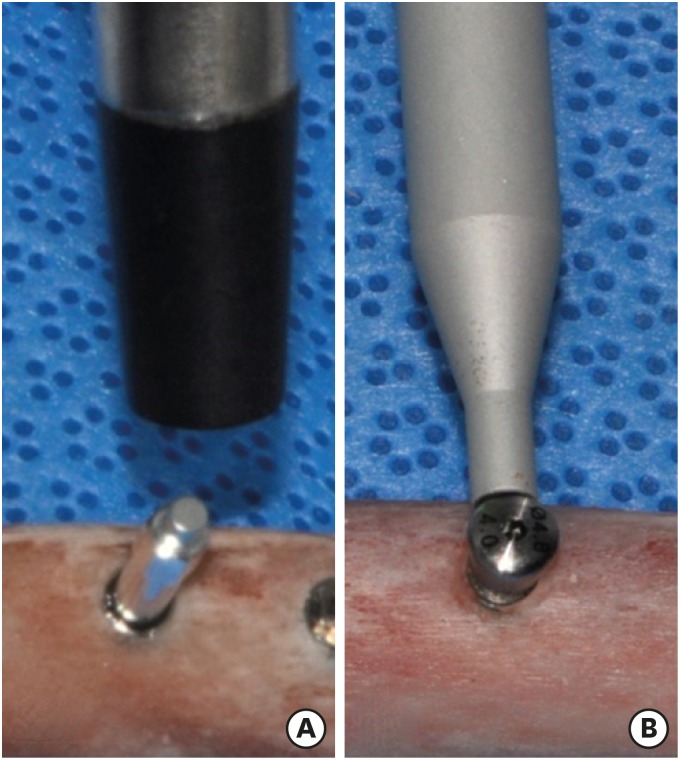
Six implant beds were prepared in porcine ribs using 3 different drilling protocols to simulate various implant stability conditions. Thirty-six pork ribs and 216 bone-level implants measuring 10 mm in height were used. The implant beds were prepared using 1 of the following 3 drilling protocols: 10-mm drilling depth with a 3.5-mm-diameter twist drill, 5-mm drilling depth with a 4.0-mm-diameter twist drill, and 10-mm drilling depth with a 4.0-mm-diameter twist drill. The first 108 implants were external-connection implants 4.0 mm in diameter, while the other 108 implants were internal-connection implants 4.3 mm in diameter. The peak insertion torque (PIT) during implant placement, the stability values obtained with DCA and RFA devices after implant placement, and the peak removal torque (PRT) during implant removal were measured.
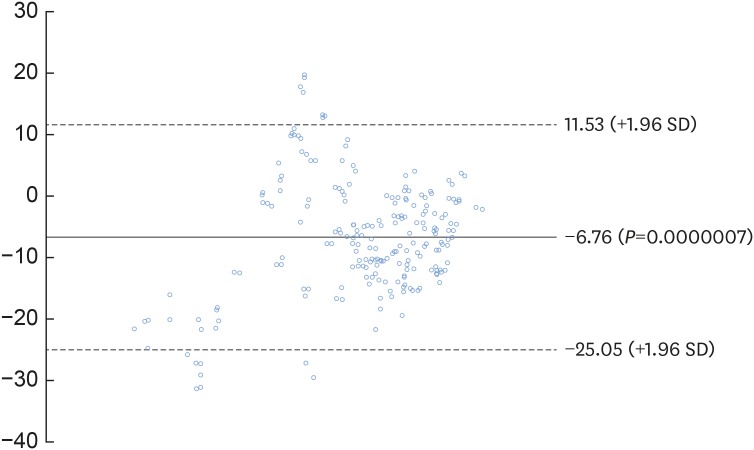
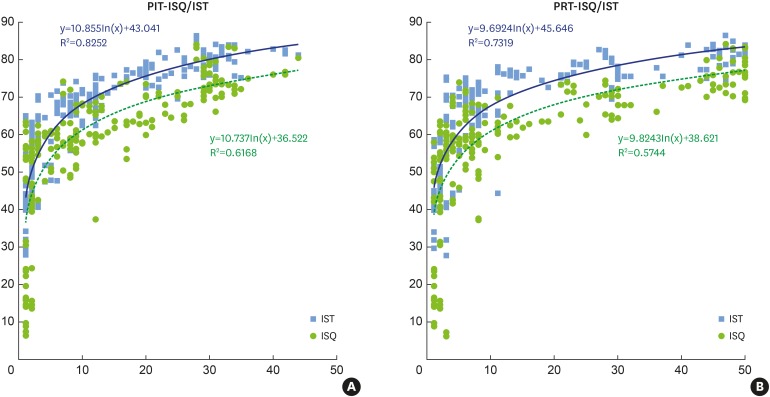
The intraclass correlation coefficients (ICCs) of the implant stability quotient (ISQ) results obtained using the RFA device at the medial, distal, ventral, and dorsal points were 0.997, 0.994, 0.994, and 0.998, respectively. The ICCs of the implant stability test (IST) results obtained using the DCA device at the corresponding locations were 0.972, 0.975, 0.974, and 0.976, respectively. Logarithmic relationships between PIT and IST, PIT and ISQ, PRT and IST, and PRT and ISQ were observed. The mean absolute difference between the ISQ and IST values on a Bland-Altman plot was -6.76 (-25.05 to 11.53, <0.05).
Within the limits of studies, measurements made using the RFA and DCA devices were found to be correlated under a variety of stability conditions.
一种利用阻尼容量分析(DCA)的稳定性测量装置最近已被引入牙种植学领域。本研究旨在通过测量样本的种植体稳定性,并与共振频率分析(RFA)装置进行比较,来评估该装置的敏感性和可靠性。
在猪肋骨上制备6个种植窝,采用3种不同的钻孔方案来模拟各种种植体稳定性条件。使用了36根猪肋骨和216颗高度为10 mm的骨水平种植体。种植窝采用以下3种钻孔方案中的1种制备:使用直径3.5 mm的麻花钻钻深10 mm,使用直径4.0 mm的麻花钻钻深5 mm,以及使用直径4.0 mm的麻花钻钻深10 mm。前108颗种植体为直径4.0 mm的外连接种植体,另外108颗种植体为直径4.3 mm的内连接种植体。测量种植体植入过程中的峰值插入扭矩(PIT)、植入后使用DCA和RFA装置获得的稳定性值,以及种植体取出过程中的峰值取出扭矩(PRT)。
使用RFA装置在中、远、腹、背点获得的种植体稳定性商数(ISQ)结果的组内相关系数(ICC)分别为0.997、0.994、0.994和0.998。使用DCA装置在相应位置获得的种植体稳定性测试(IST)结果的ICC分别为0.972、0.975、0.974和 0.976。观察到PIT与IST、PIT与ISQ、PRT与IST以及PRT与ISQ之间的对数关系。Bland-Altman图上ISQ和IST值之间的平均绝对差为-6.76(-25.05至11.53,<0.05)。
在本研究的范围内,发现在各种稳定性条件下,使用RFA和DCA装置进行的测量具有相关性。