Wan Lin, Ge Wen-Rong, Zhang Shan, Sun Yu-Lin, Wang Bin, Yang Guang
The First Medical Center of the Chinese PLA General Hospital, Beijing, China.
Beijing Friendship Hospital, Capital Medical University, Beijing, China.
Front Neurosci. 2020 Feb 18;14:127. doi: 10.3389/fnins.2020.00127. eCollection 2020.
Attention-deficit/hyperactivity disorder (ADHD) is a neuropsychiatric condition that may be related to an imbalance of neural transmitters. The gut microbiota is the largest ecosystem in the human body, and the brain-gut axis theory proposes that the gut microbiome can affect brain function in multiple ways. The purpose of this study was to explore the gut microbiota in children with ADHD and assess the possible role of the gut microbiota in disease pathogenesis to open new avenues for ADHD treatment.
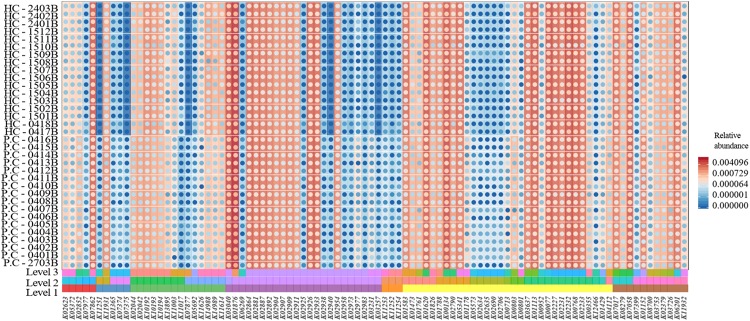
A case-control design was used. We enrolled 17 children aged 6-12 years with ADHD who were treated in the Pediatric Outpatient Department of the First Medical Center of the Chinese PLA General Hospital from January to June, 2019. Seventeen children aged 6-12 years were selected as the healthy control (HC) group. Fecal samples of cases and controls were analyzed by shotgun metagenomics sequencing. Alpha diversity and the differences in the relative abundances of bacteria were compared between the two groups. Functional annotations were performed for the microbiota genes and metabolic pathways were analyzed using the Kyoto Encyclopedia of Genes and Genomes (KEGG).
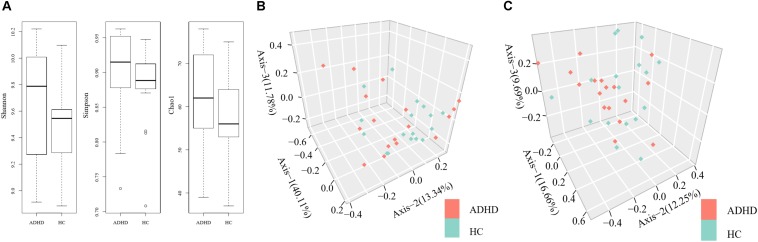
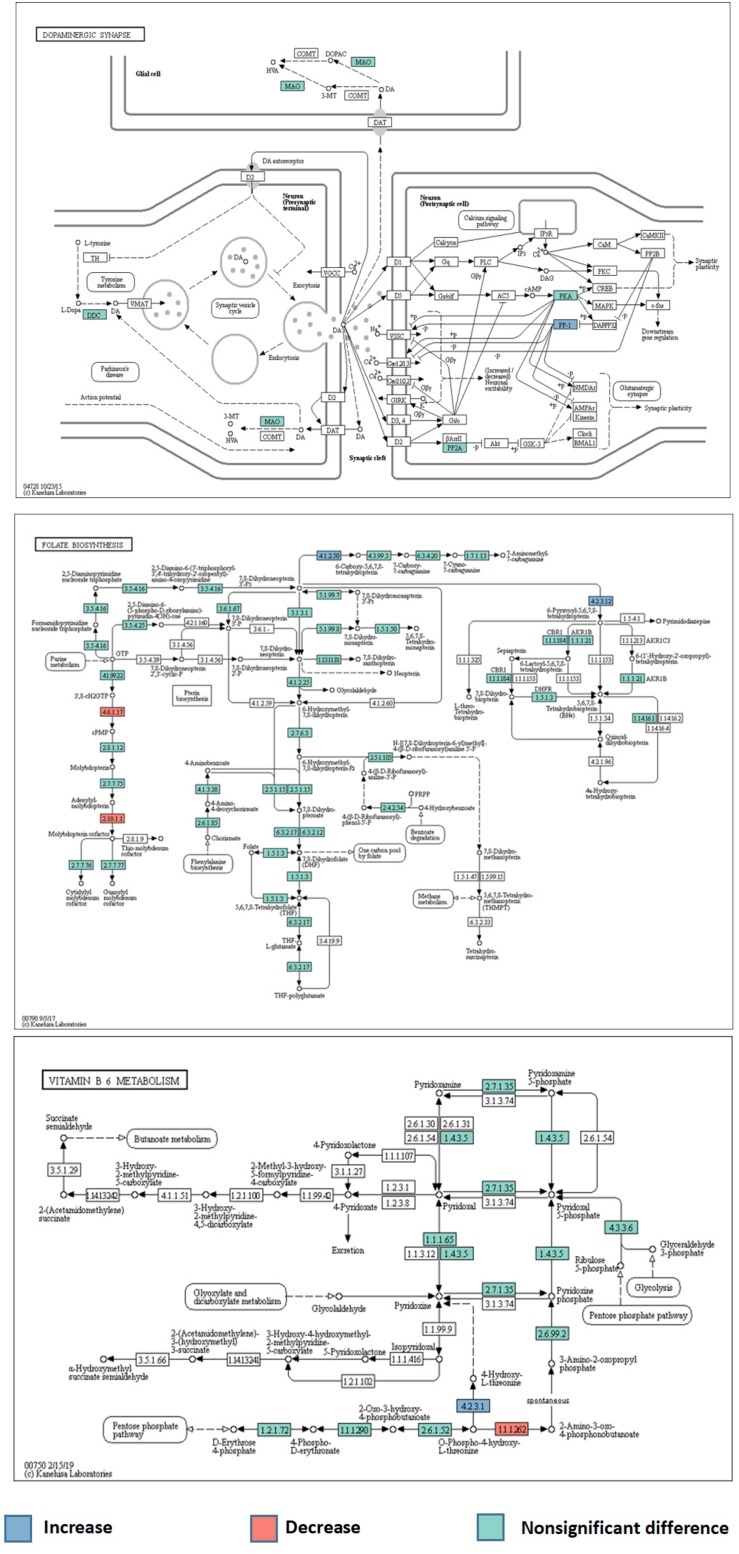
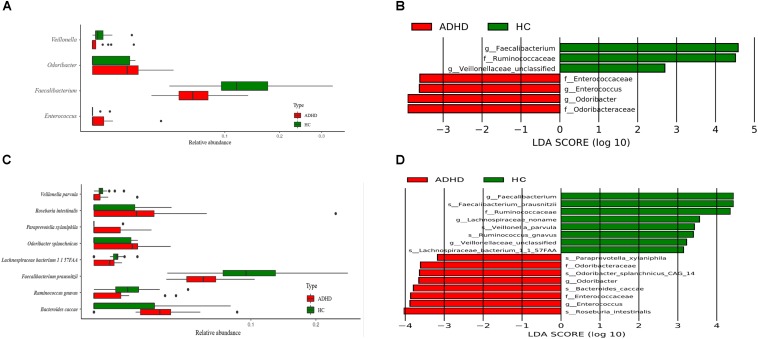
There was no significant difference in the alpha diversity of gut microbiota between the ADHD and HC groups. Compared with HCs, and were significantly reduced in children with ADHD ( < 0.05), and were significantly increased [linear discriminant analysis (LDA) > 2]. At the species level, , , and were significantly reduced in the ADHD group ( < 0.05), while , , , and were increased ( < 0.05). Metabolic pathway analysis revealed significant between-group differences in the metabolic pathways of neurotransmitters (e.g., serotonin and dopamine) ( < 0.05).
Composition differences of gut microbiota in subjects with ADHD may contribute to brain-gut axis alterations and affect neurotransmitter levels, which could contribute to ADHD symptoms.
注意力缺陷多动障碍(ADHD)是一种神经精神疾病,可能与神经递质失衡有关。肠道微生物群是人体最大的生态系统,脑-肠轴理论提出肠道微生物群可通过多种方式影响脑功能。本研究旨在探索ADHD患儿的肠道微生物群,并评估肠道微生物群在疾病发病机制中的可能作用,为ADHD治疗开辟新途径。
采用病例对照设计。我们纳入了2019年1月至6月在中国人民解放军总医院第一医学中心儿科门诊接受治疗的17例6-12岁ADHD患儿。选取17例6-12岁儿童作为健康对照组(HC组)。通过鸟枪法宏基因组测序分析病例组和对照组的粪便样本。比较两组之间的α多样性以及细菌相对丰度的差异。对微生物群基因进行功能注释,并使用京都基因与基因组百科全书(KEGG)分析代谢途径。
ADHD组和HC组肠道微生物群的α多样性无显著差异。与HC组相比,ADHD患儿的[具体细菌名称1]和[具体细菌名称2]显著减少(P<0.05),[具体细菌名称3]和[具体细菌名称4]显著增加[线性判别分析(LDA)>2]。在物种水平上,ADHD组的[具体细菌名称5]、[具体细菌名称6]和[具体细菌名称7]显著减少(P<0.05),而[具体细菌名称8]、[具体细菌名称9]、[具体细菌名称10]和[具体细菌名称11]增加(P<0.05)。代谢途径分析显示,神经递质(如血清素和多巴胺)的代谢途径在两组之间存在显著差异(P<0.05)。
ADHD患者肠道微生物群的组成差异可能导致脑-肠轴改变并影响神经递质水平,这可能导致ADHD症状。