Department of Radiation Medicine, Faculty of Naval Medicine, Second Military Medical University, Shanghai, China.
Department of Naval Aeromedicine, Faculty of Naval Medicine, Second Military Medical University, Shanghai, China.
J Cell Mol Med. 2020 Apr;24(7):3917-3930. doi: 10.1111/jcmm.14978. Epub 2020 Mar 5.
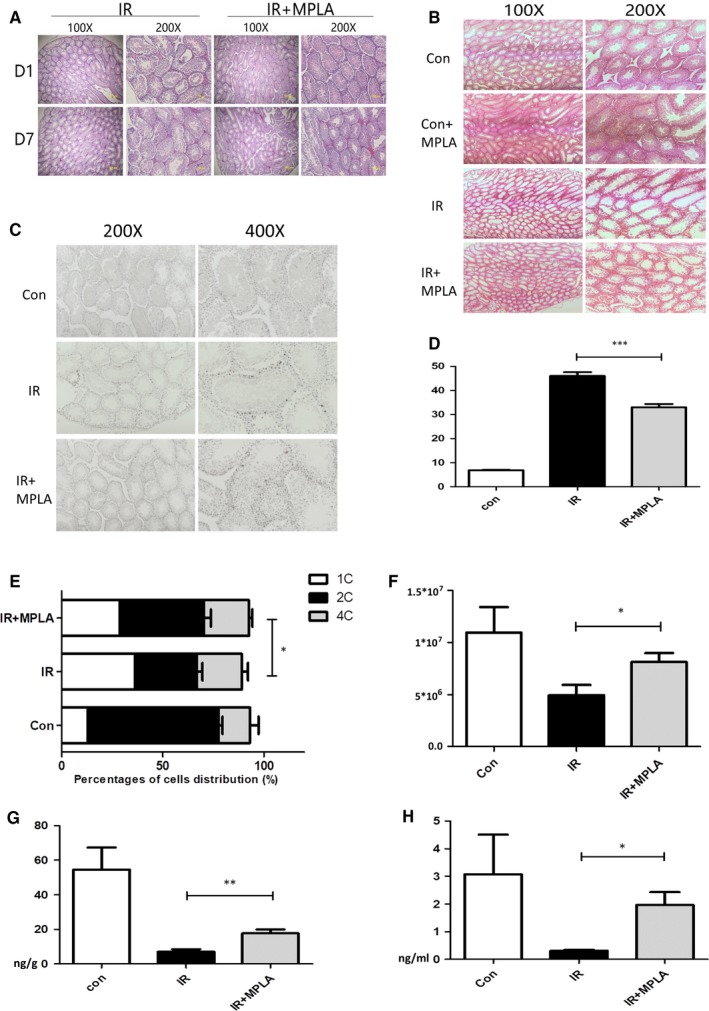
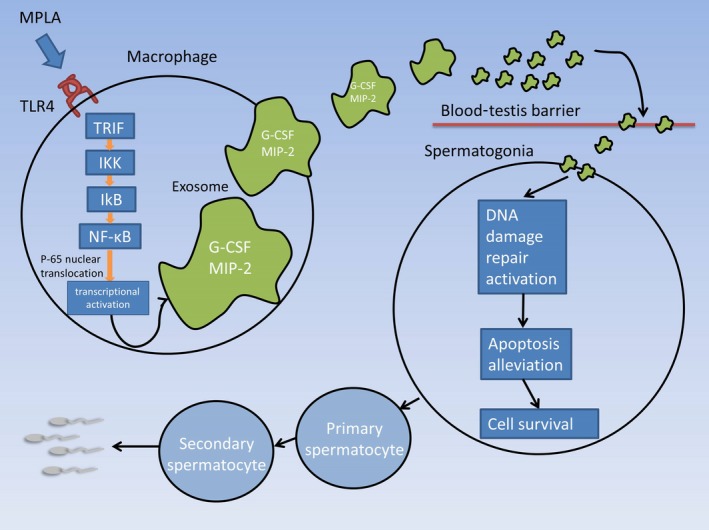
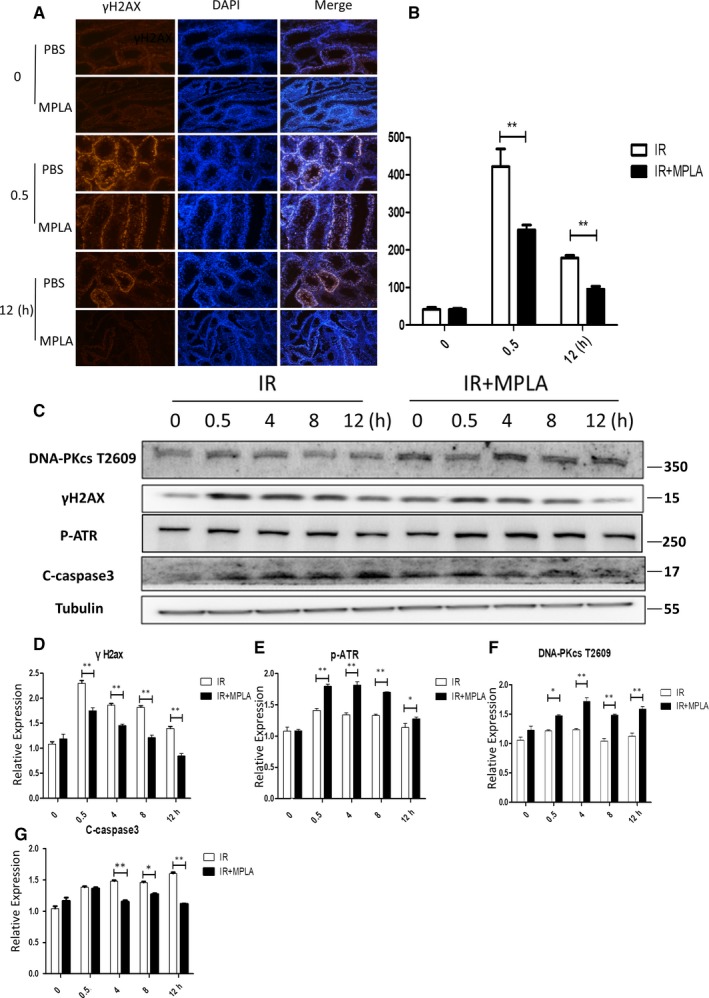
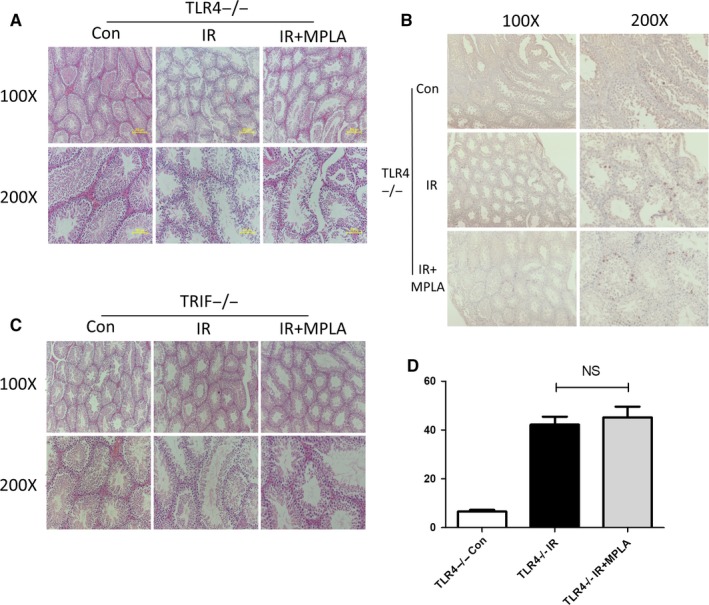
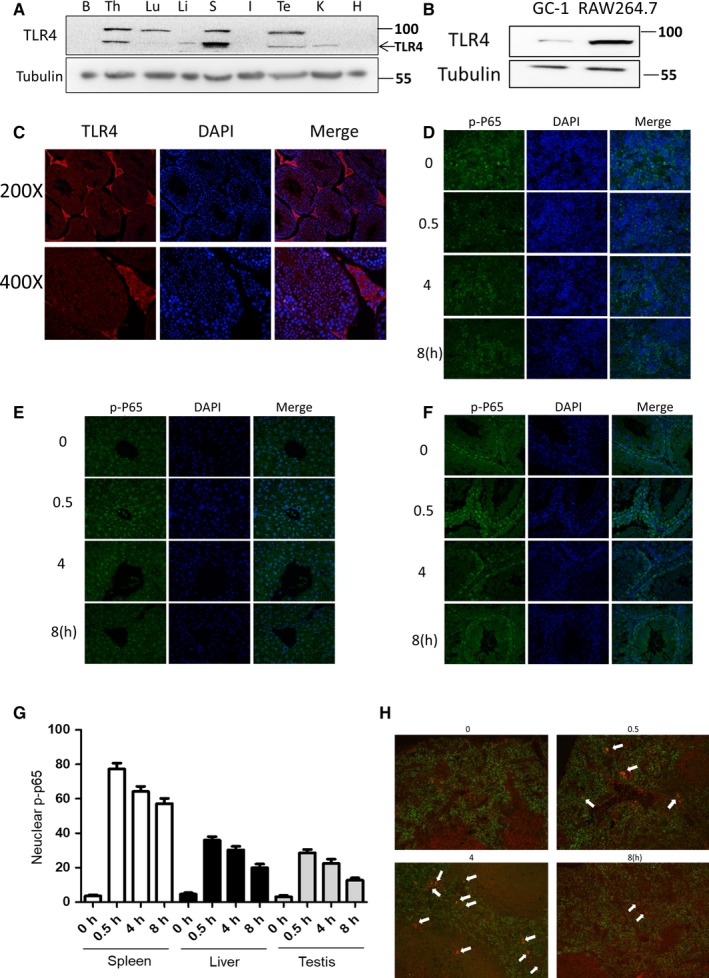
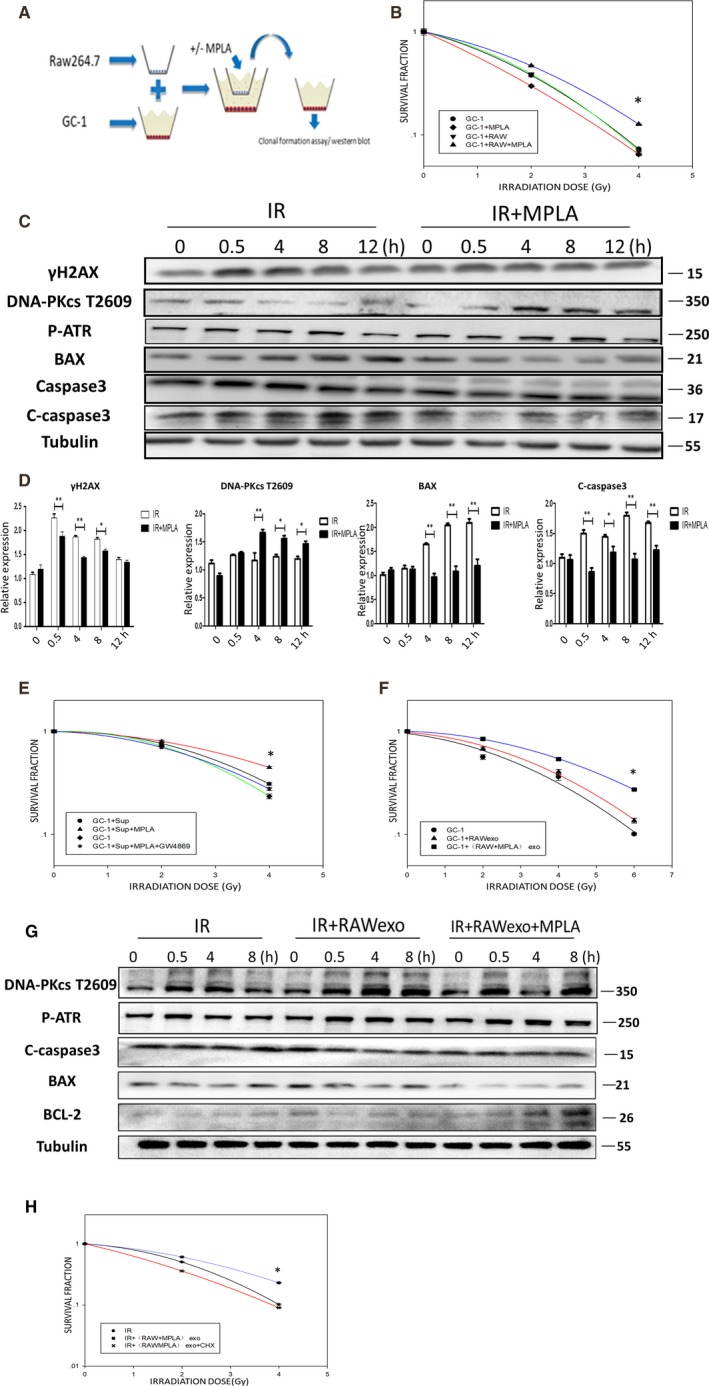
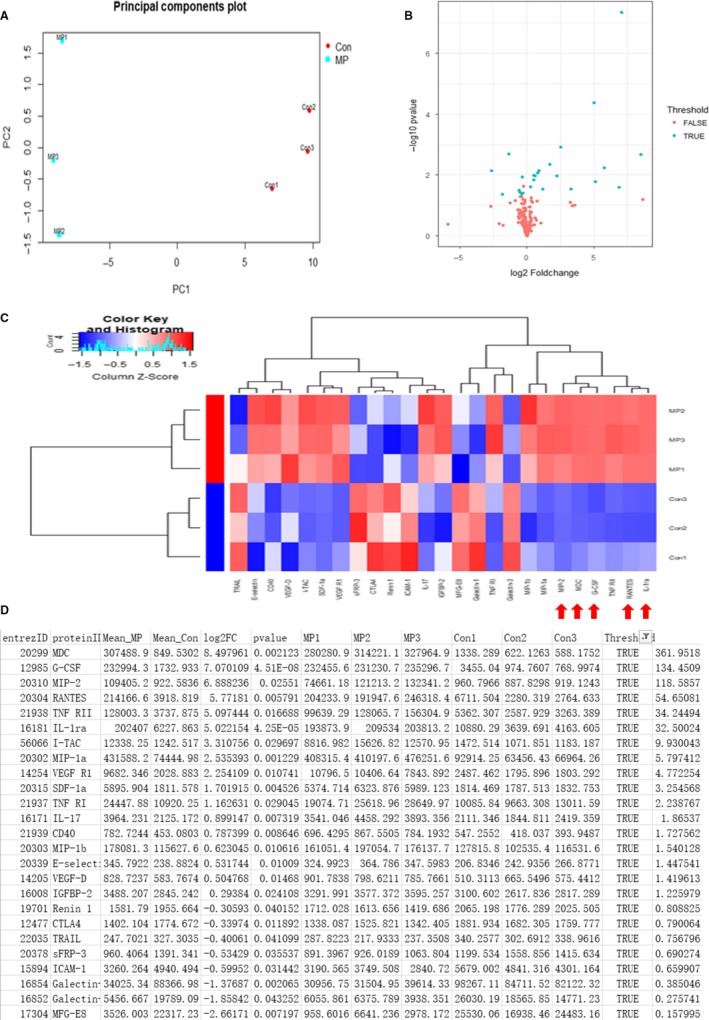
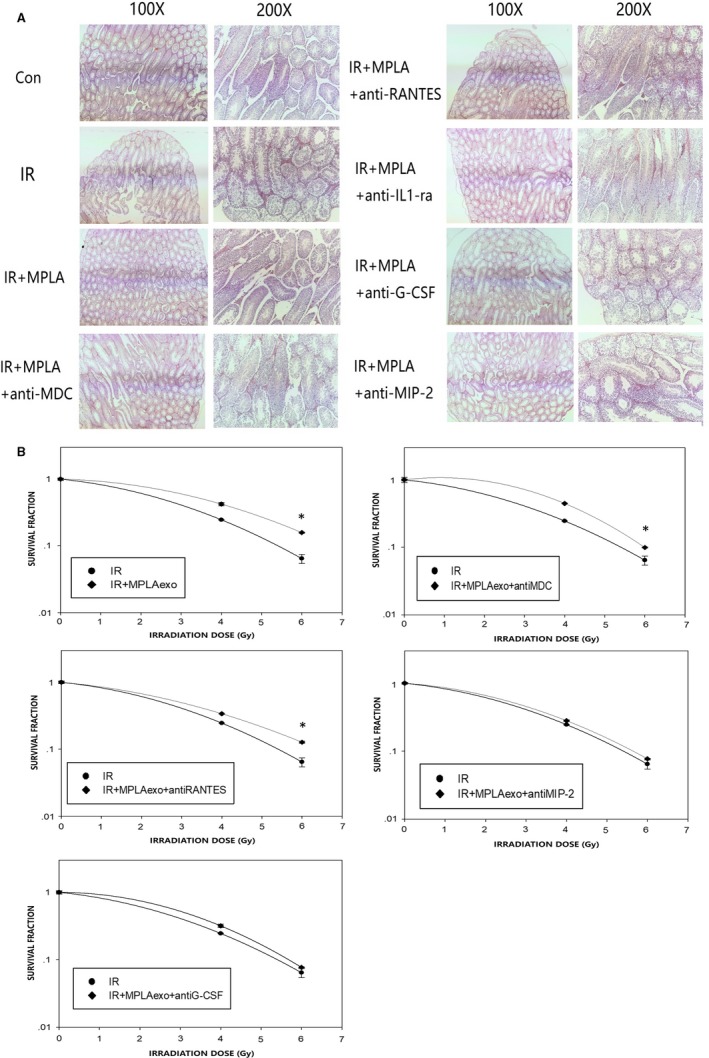
Radiation protection on male testis is an important task for ionizing radiation-related workers or people who receive radiotherapy for tumours near the testicle. In recent years, Toll-like receptors (TLRs), especially TLR4, have been widely studied as a radiation protection target. In this study, we detected that a low-toxicity TLR4 agonist monophosphoryl lipid A (MPLA) produced obvious radiation protection effects on mice testis. We found that MPLA effectively alleviated testis structure damage and cell apoptosis induced by ionizing radiation (IR). However, as the expression abundance differs a lot in distinct cells and tissues, MPLA seemed not to directly activate TLR4 singling pathway in mice testis. Here, we demonstrated a brand new mechanism for MPLA producing radiation protection effects on testis. We observed a significant activation of TLR4 pathway in macrophages after MPLA stimulation and identified significant changes in macrophage-derived exosomes protein expression. We proved that after MPLA treatment, macrophage-derived exosomes played an important role in testis radiation protection, and specially, G-CSF and MIP-2 in exosomes are the core molecules in this protection effect.
睾丸的辐射防护是从事与电离辐射相关工作的人员或因靠近睾丸的肿瘤接受放射治疗的人的一项重要任务。近年来,Toll 样受体(TLRs),特别是 TLR4,已被广泛研究作为辐射防护靶点。在这项研究中,我们发现一种低毒性的 TLR4 激动剂单磷酰脂质 A(MPLA)对小鼠睾丸产生明显的辐射防护作用。我们发现 MPLA 可有效缓解电离辐射(IR)引起的睾丸结构损伤和细胞凋亡。然而,由于在不同的细胞和组织中表达丰度差异很大,MPLA 似乎并没有直接激活小鼠睾丸中的 TLR4 信号通路。在这里,我们证明了 MPLA 对睾丸产生辐射防护作用的一种全新机制。我们观察到 MPLA 刺激后巨噬细胞中 TLR4 途径的显著激活,并鉴定了巨噬细胞衍生的外体蛋白表达的显著变化。我们证明,在用 MPLA 处理后,巨噬细胞衍生的外体在睾丸辐射防护中发挥重要作用,特别是外体中的 G-CSF 和 MIP-2 是这种保护作用的核心分子。