Cai Hanxu, Wang Peilei, Xu Yang, Yao Ya, Liu Jia, Li Tao, Sun Yong, Liang Jie, Fan Yujiang, Zhang Xingdong
National Engineering Research Center for Biomaterials, Sichuan University, 29 Wangjiang Road, Chengdu 610064, P. R. China.
Department of Gynecology and Obstetrics, Development and Related Disease of Women and Children Key Laboratory of Sichuan Province, Key Laboratory of Birth Defects and Related Diseases of Women and Children, Ministry of Education, West China Second Hospital, Sichuan University, 20 Renmin South Road, Chengdu 610041, P. R. China.
Regen Biomater. 2020 Feb;7(1):35-45. doi: 10.1093/rb/rbz028. Epub 2019 Nov 22.
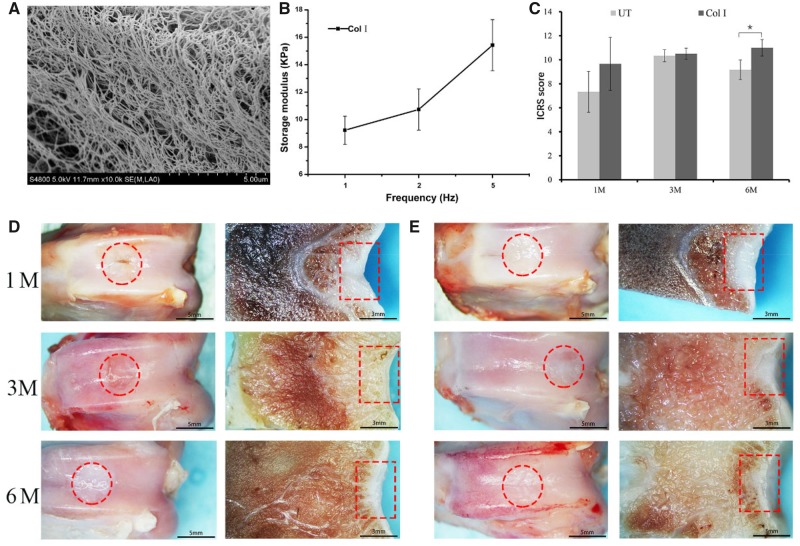
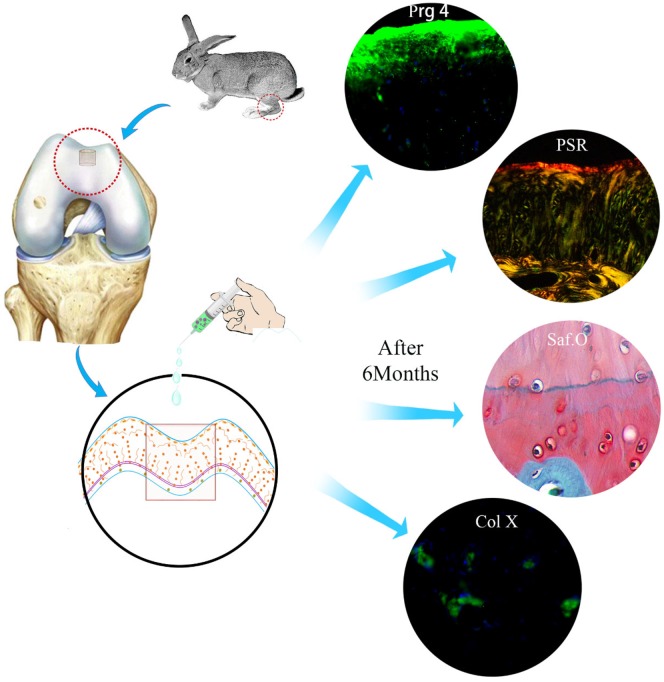
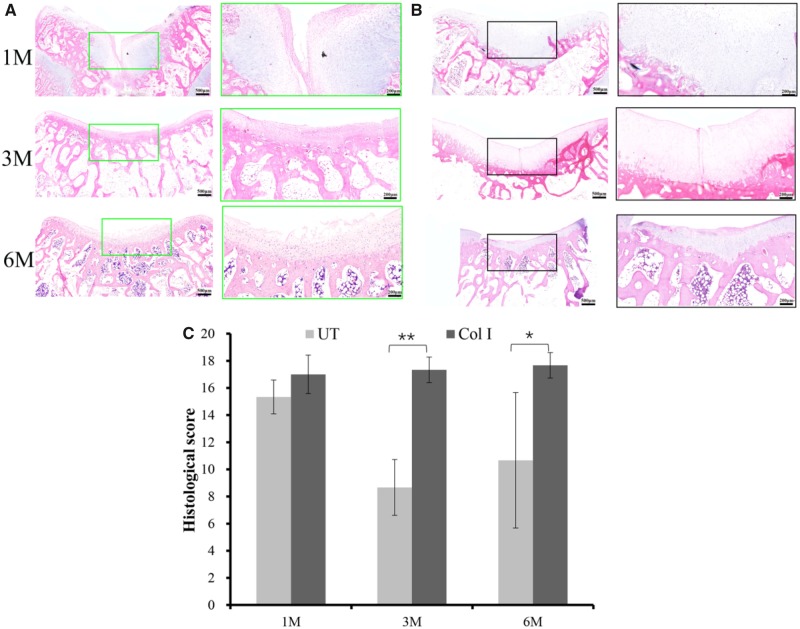
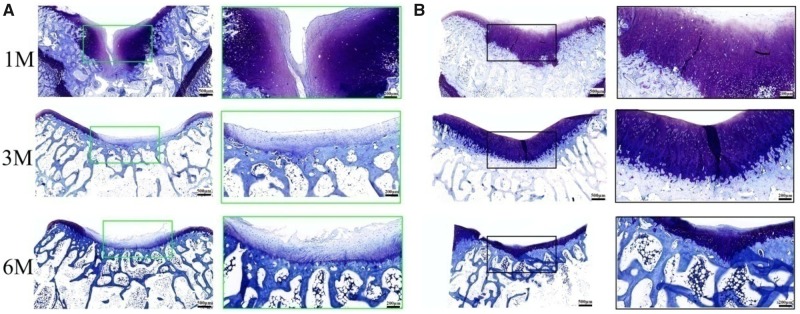
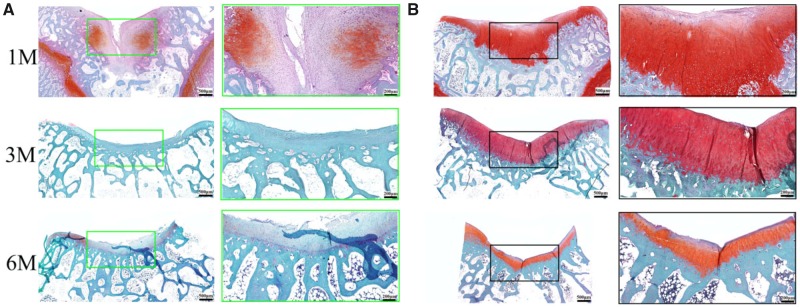
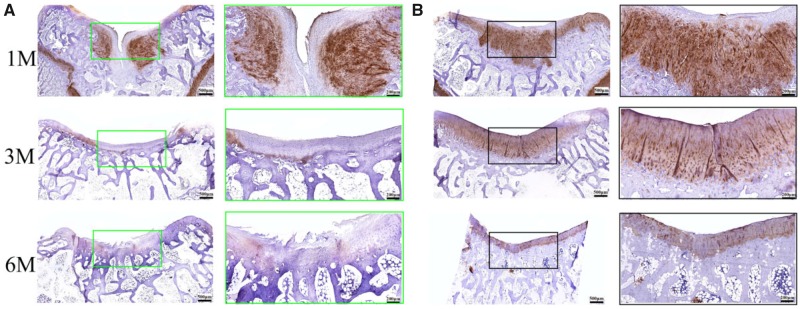
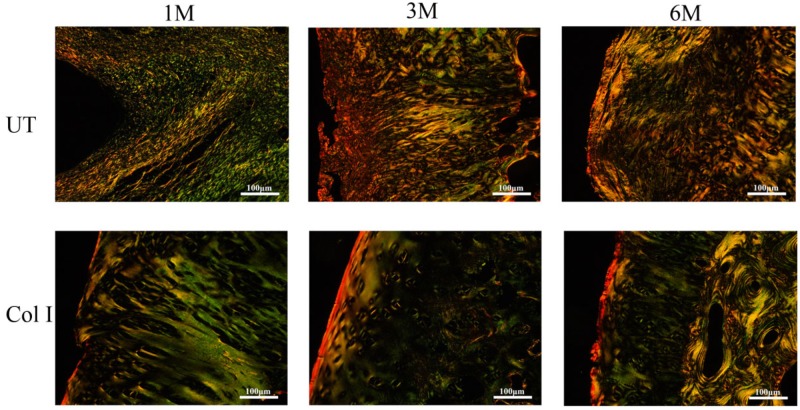
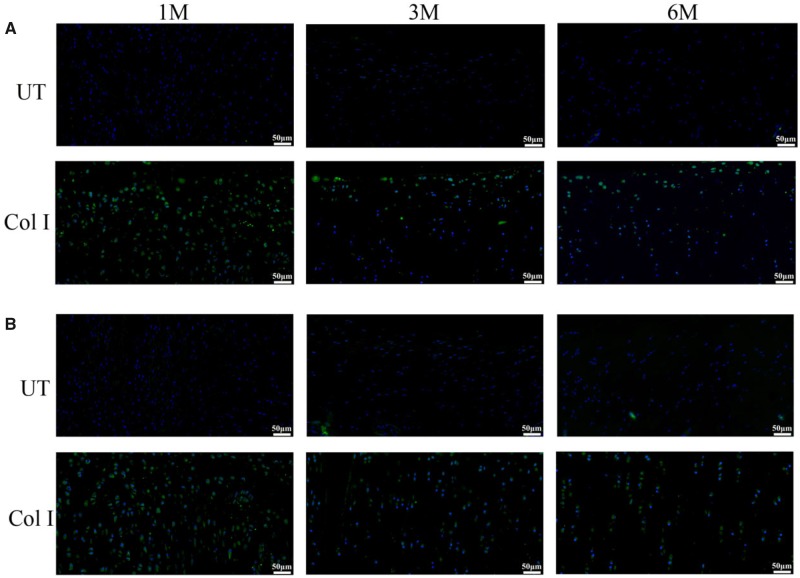
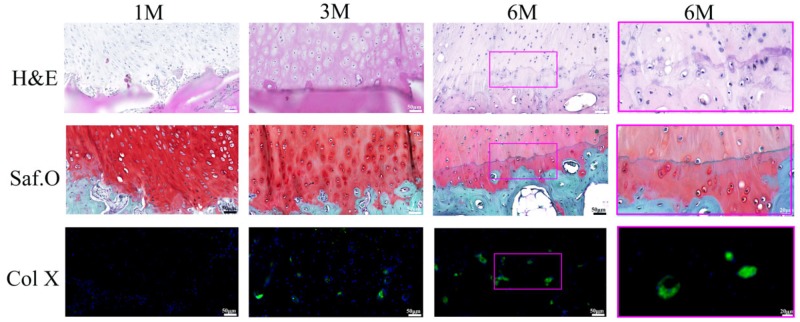
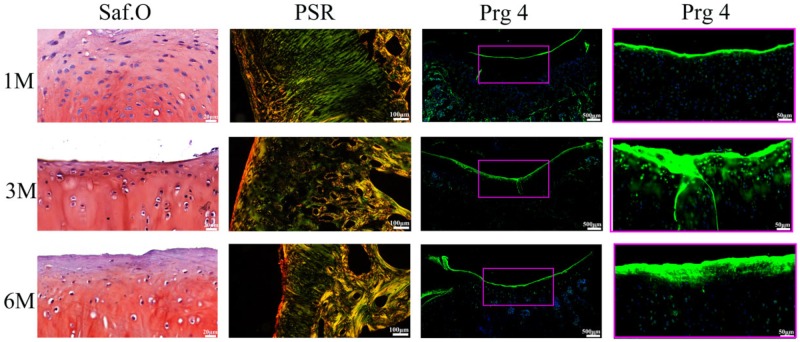
The self-healing capacity of cartilage was limited due to absence of vascular, nervous and lymphatic systems. Although many clinical treatments have been used in cartilage defect repair and shown a promising repair result in short term, however, regeneration of complete zonal structure with physiological function, reconstruction cartilage homeostasis and maintaining long-term repair was still an unbridgeable chasm. Cartilage has complex zonal structure and multiple physiological functions, especially, superficial and calcified cartilage played an important role in keeping homeostasis. To address this hurdle of regenerating superficial and calcified cartilage, injectable tissue-induced type I collagen (Col I) hydrogel-encapsulated BMSCs was chosen to repair cartilage damage. After 1 month implantation, the results demonstrated that Col I gel was able to induce BMSCs differentiation into chondrocytes, and formed hyaline-like cartilage and the superficial layer with lubrication function. After 3 months post-surgery, chondrocytes at the bottom of the cartilage layer would undergo hypertrophy and promote the regeneration of calcified cartilage. Six months later, a continuous anatomical tidemark and complete calcified interface were restored. The regeneration of neo-hyaline cartilage was similar with adjacent normal tissue on the thickness of the cartilage, matrix secretion, collagen type and arrangement. Complete multilayer zonal structure with physiological function remodeling indicated that BMSCs-assisted injectable Col I hydrogel could reconstruct cartilage homeostasis and maintain long-term therapeutic effect.
由于缺乏血管、神经和淋巴系统,软骨的自我修复能力有限。尽管许多临床治疗方法已用于软骨缺损修复,并在短期内显示出有希望的修复效果,然而,具有生理功能的完整分层结构的再生、重建软骨内环境稳态以及维持长期修复仍是一道难以逾越的鸿沟。软骨具有复杂的分层结构和多种生理功能,尤其是表层和钙化软骨在维持内环境稳态中发挥着重要作用。为了解决再生表层和钙化软骨这一难题,选择了可注射的组织诱导型I型胶原(Col I)水凝胶包裹的骨髓间充质干细胞(BMSCs)来修复软骨损伤。植入1个月后,结果表明Col I凝胶能够诱导BMSCs分化为软骨细胞,并形成具有润滑功能的透明样软骨和表层。术后3个月,软骨层底部的软骨细胞会发生肥大并促进钙化软骨的再生。6个月后,恢复了连续的解剖潮线和完整的钙化界面。新生透明软骨在软骨厚度、基质分泌、胶原类型和排列方面与相邻正常组织相似。具有生理功能重塑的完整多层分层结构表明,BMSCs辅助的可注射Col I水凝胶可以重建软骨内环境稳态并维持长期治疗效果。