Chu Luan Luong, Montecillo Jake Adolf V, Bae Hanhong
Department of Biotechnology, Yeungnam University, Gyeongsan-si, South Korea.
Front Bioeng Biotechnol. 2020 Feb 25;8:139. doi: 10.3389/fbioe.2020.00139. eCollection 2020.
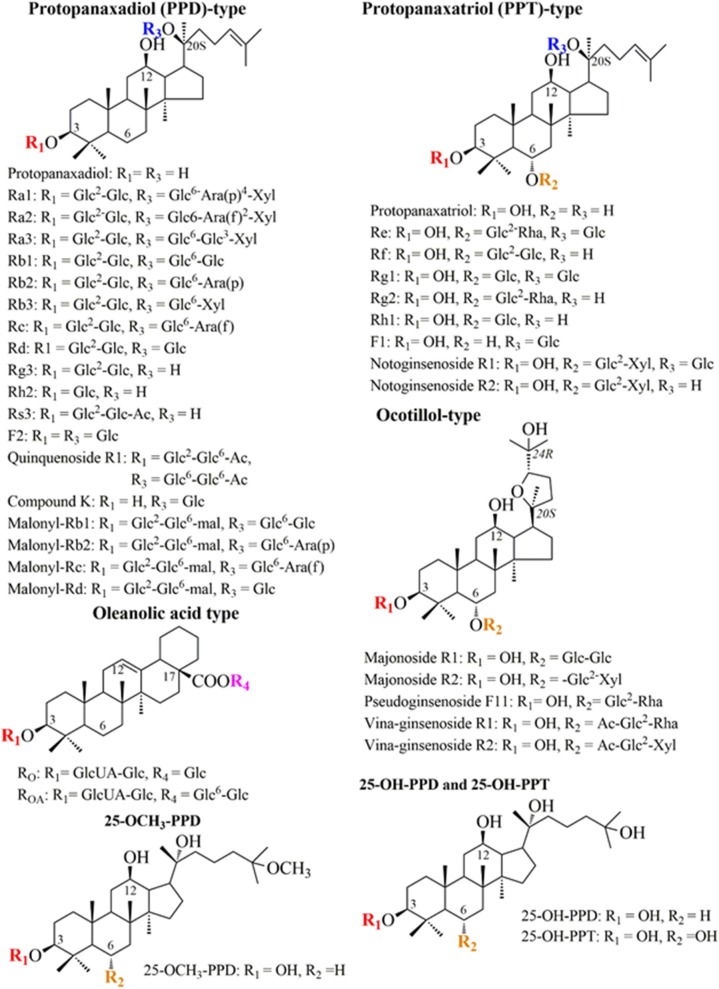
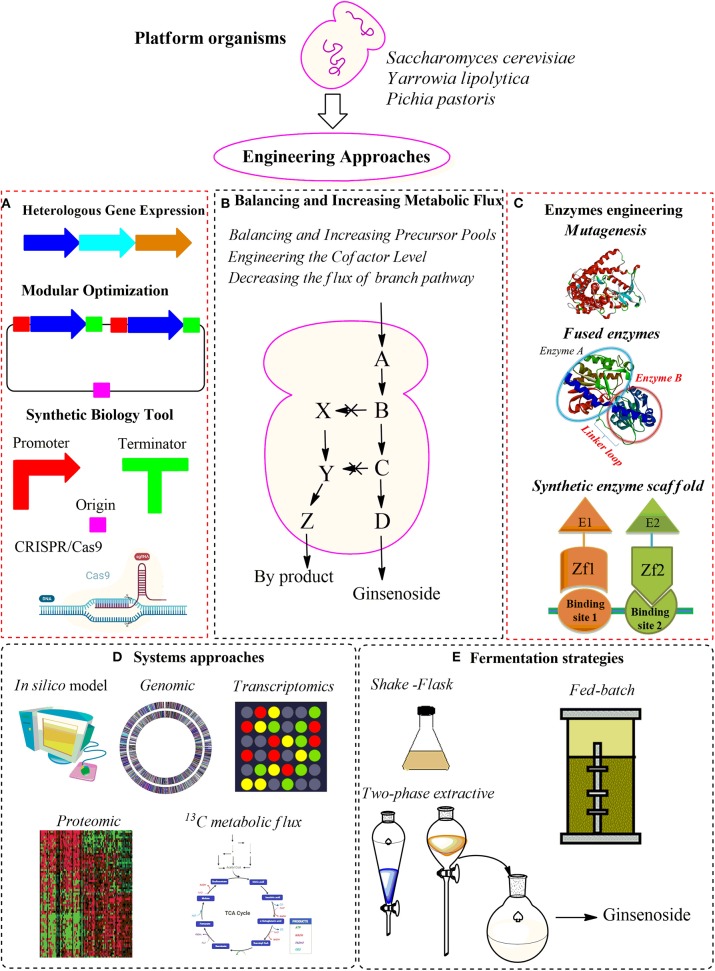
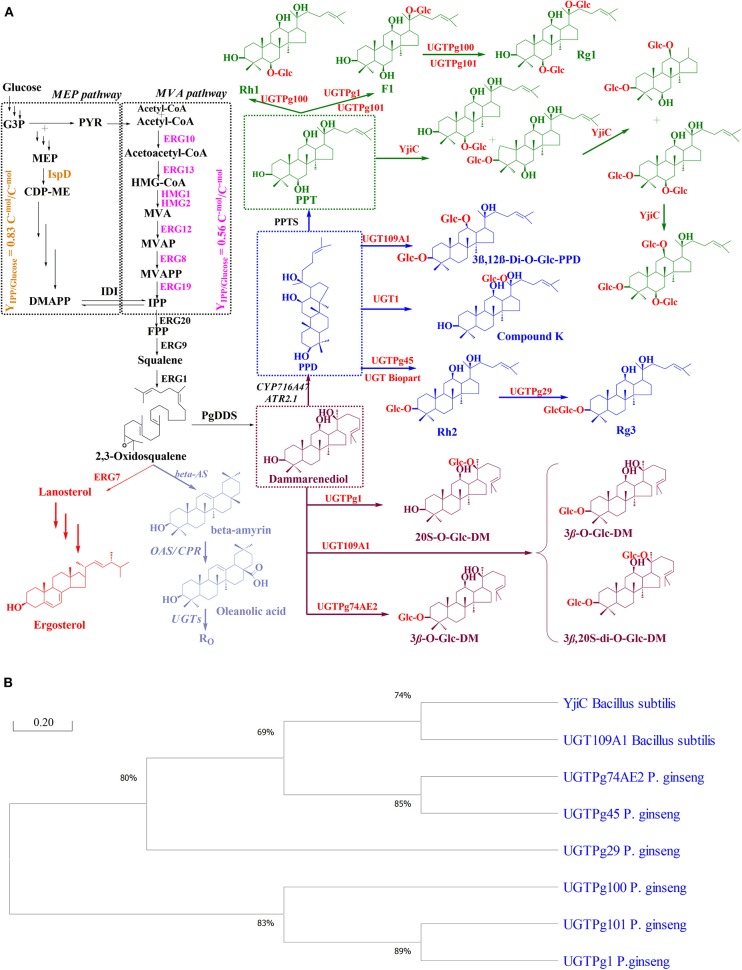
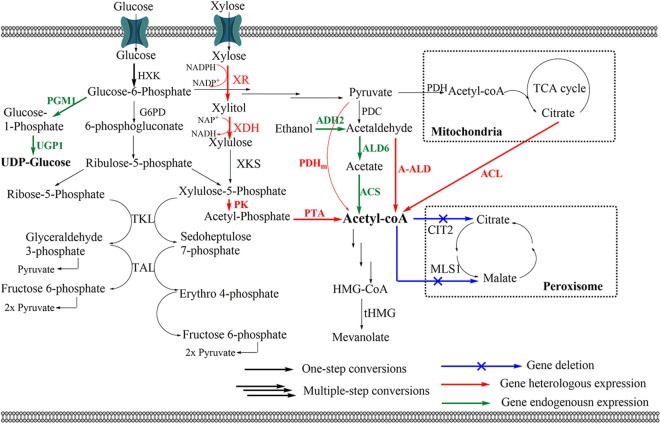
Ginsenosides are a group of glycosylated triterpenes isolated from species. Ginsenosides are promising candidates for the prevention and treatment of cancer as well as food additives. However, owing to a lack of efficient approaches for ginsenoside production from plants and chemical synthesis, ginsenosides may not yet have reached their full potential as medicinal resources. In recent years, an alternative approach for ginsenoside production has been developed using the model yeast and non-conventional yeasts such as and . In this review, various metabolic engineering strategies, including heterologous gene expression, balancing, and increasing metabolic flux, and enzyme engineering, have been described as recent advanced engineering techniques for improving ginsenoside production. Furthermore, the usefulness of a systems approach and fermentation strategy has been presented. Finally, the present challenges and future research direction for industrial cell factories have been discussed.
人参皂苷是从物种中分离出的一组糖基化三萜类化合物。人参皂苷有望成为预防和治疗癌症的候选药物以及食品添加剂。然而,由于缺乏从植物中生产人参皂苷以及化学合成的有效方法,人参皂苷作为药用资源可能尚未发挥其全部潜力。近年来,已经开发出一种使用模式酵母以及非常规酵母(如和)生产人参皂苷的替代方法。在这篇综述中,各种代谢工程策略,包括异源基因表达、平衡和增加代谢通量以及酶工程,已被描述为提高人参皂苷产量的最新先进工程技术。此外,还介绍了系统方法和发酵策略的实用性。最后,讨论了工业细胞工厂目前面临的挑战和未来的研究方向。