Physical Sciences Inc., Andover, Massachusetts, United States.
Thayer School of Engineering at Dartmouth, Hanover, New Hampshire, United States.
J Biomed Opt. 2020 Mar;25(6):1-13. doi: 10.1117/1.JBO.25.6.063810.
Photodynamic therapy (PDT) involves complex light-drug-pathophysiology interactions that can be affected by multiple parameters and often leads to large variations in treatment outcome from patient to patient. Direct PDT dosimetry technologies have been sought to optimize the control variables (e.g., light dose, drug administration, tissue oxygenation, and patient conditioning) for best patient outcomes. In comparison, singlet oxygen (O21) dosimetry has been tested in various forms to provide an accurate and perhaps comprehensive prediction of the treatment efficacy.
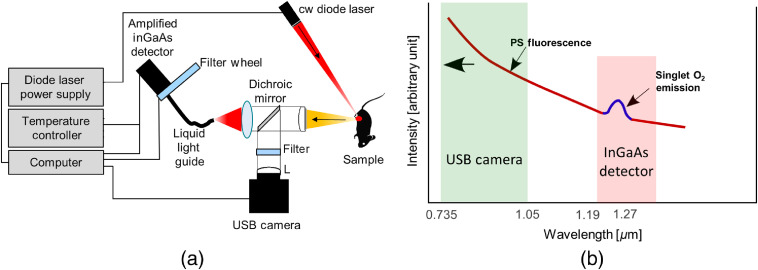
We discuss an advanced version of this approach provided by a noninvasive, continuous wave dosimeter that can measure near-infrared spectrally resolved luminescence of both photosensitizer (PS) and O21 generated during PDT cancer treatment.
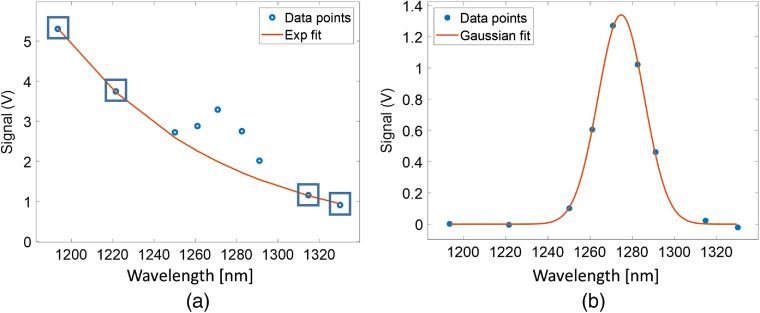
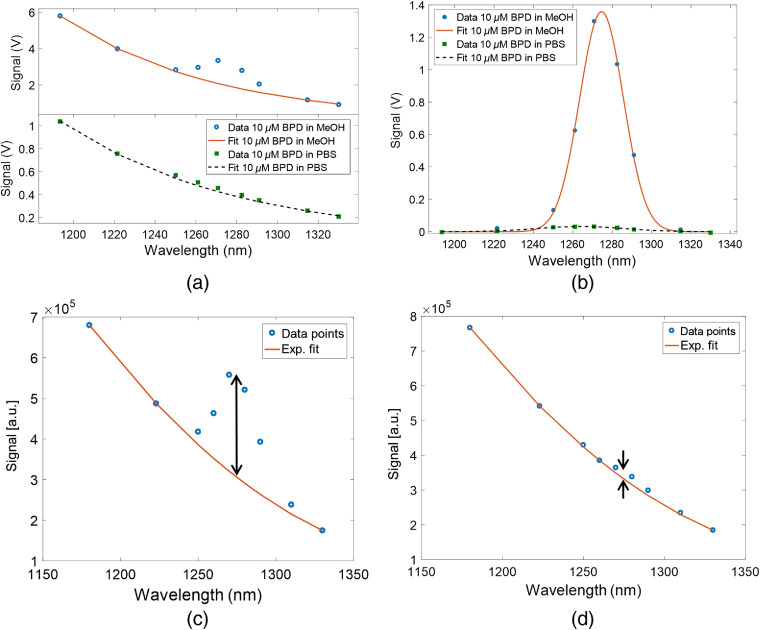
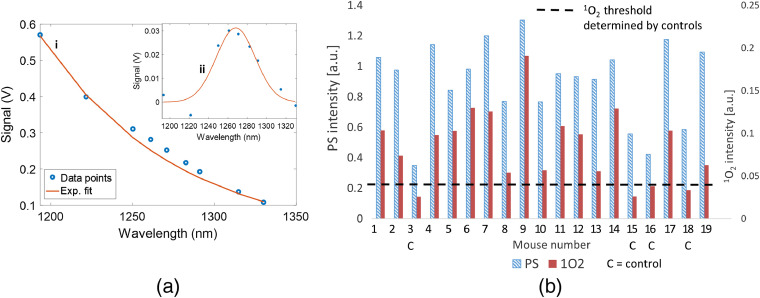
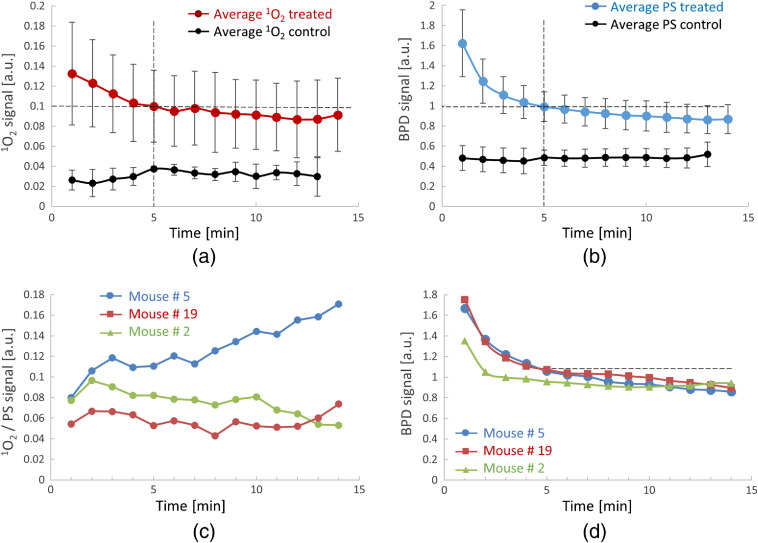
This dosimetry technology uses an amplified, high quantum efficiency InGaAs detector with spectroscopic decomposition during the light treatment to continuously extract the maximum signal of O21 phosphorescence while suppressing the strong PS luminescence background by spectrally fitting the data points across nine narrow band wavelengths. O21 and PS luminescence signals were measured in vivo in FaDu xenograft tumors grown in mice during PDT treatment using Verteporfin as the PS and a continuous laser treatment at 690 nm wavelength.
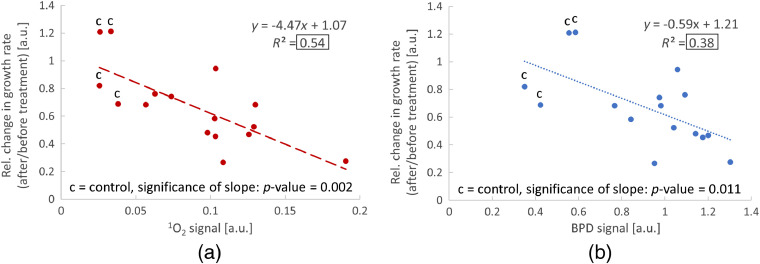
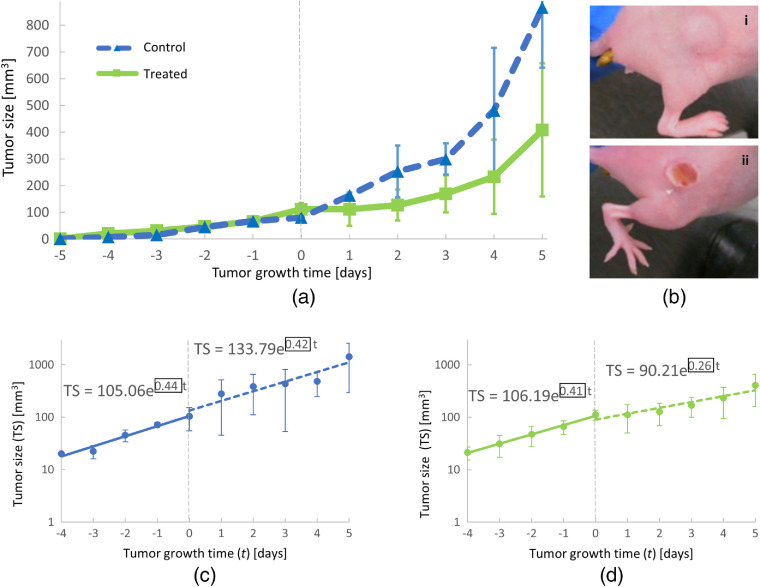
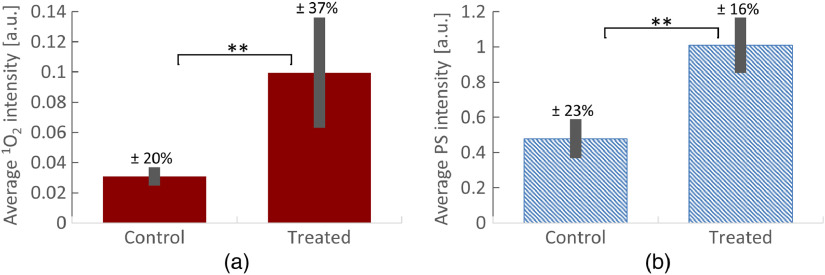
A cohort of 19 mice was used and observations indicate that the tumor growth rate inhibition showed a stronger correlation with O21 than with just the PS signal.
These results suggest that O21 measurement may be a more direct dosimeter of PDT damage, and it has potential value as a definitive diagnostic for PDT treatment, especially with spectral separation of the background luminescence and online estimation of the PS concentration.
光动力疗法(PDT)涉及复杂的光-药物-病理生理相互作用,这些作用可能受到多个参数的影响,并且通常会导致患者之间的治疗效果差异很大。人们一直在寻求直接的 PDT 剂量测定技术,以优化控制变量(例如,光剂量、药物施用、组织氧合和患者调理),从而获得最佳的患者结果。相比之下,单线态氧(O21)剂量测定已以各种形式进行了测试,以提供对治疗效果的准确且可能全面的预测。
我们讨论了一种先进的方法,该方法由一种非侵入性的连续波剂量计提供,该剂量计可以测量 PDT 癌症治疗过程中产生的光敏剂(PS)和 O21 的近红外光谱分辨发光。
该剂量测定技术使用经过放大的、具有高量子效率的 InGaAs 探测器,在光治疗期间进行光谱分解,以连续提取 O21 磷光的最大信号,同时通过对九个窄带宽波长的数据点进行光谱拟合来抑制 PS 发光背景的强烈信号。在使用 Verteporfin 作为 PS 并在 690nm 波长的连续激光治疗下,在小鼠中生长的 FaDu 异种移植肿瘤中进行 PDT 治疗时,在体内测量了 O21 和 PS 发光信号。
使用了 19 只小鼠进行了研究,观察结果表明,肿瘤生长抑制率与 O21 的相关性比仅与 PS 信号的相关性更强。
这些结果表明,O21 测量可能是 PDT 损伤的更直接剂量计,并且它具有作为 PDT 治疗的明确诊断的潜在价值,特别是具有背景发光的光谱分离和 PS 浓度的在线估计。