Key Laboratory of Animal Genetics, Breeding and Reproduction, MARA, National Engineering Laboratory for Animal Breeding, College of Animal Science and Technology, China Agricultural University, Beijing 100193, China.
State Key Laboratory of Animal Nutrition, Beijing Engineering Technology Research Centre of Raw Milk Quality and Safety Control, College of Animal Science and Technology, China Agricultural University, Beijing 100193, China.
Genes (Basel). 2020 Mar 13;11(3):306. doi: 10.3390/genes11030306.
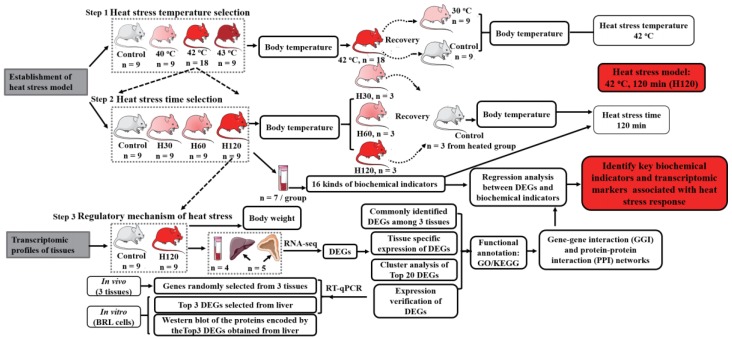
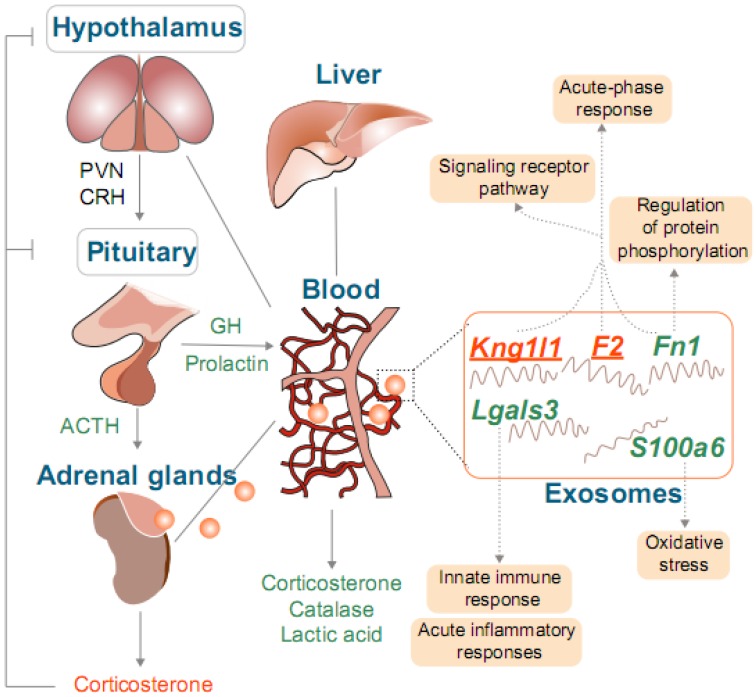
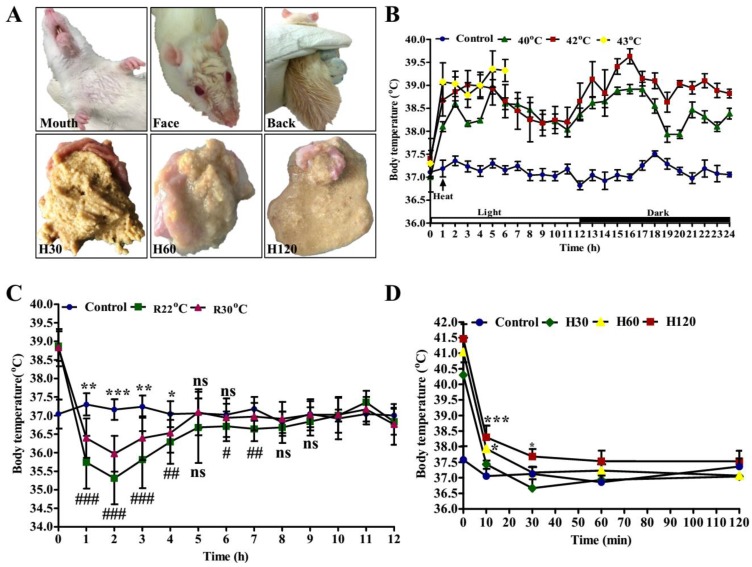
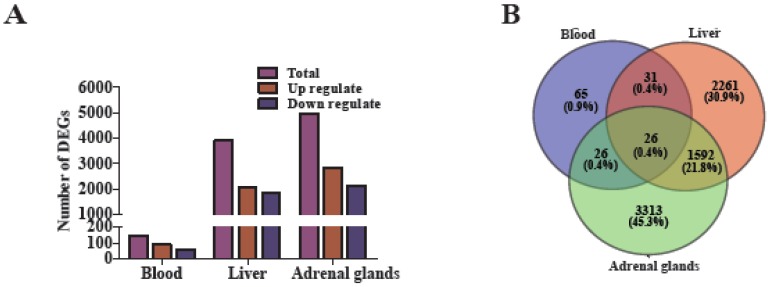
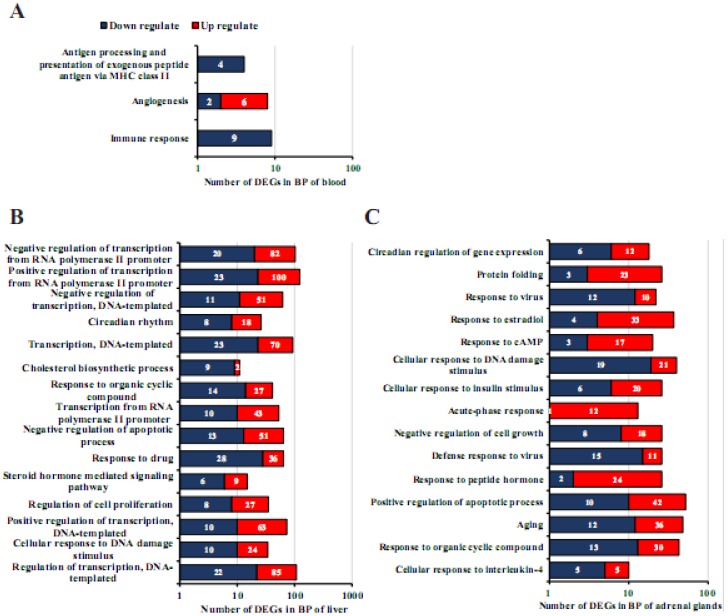
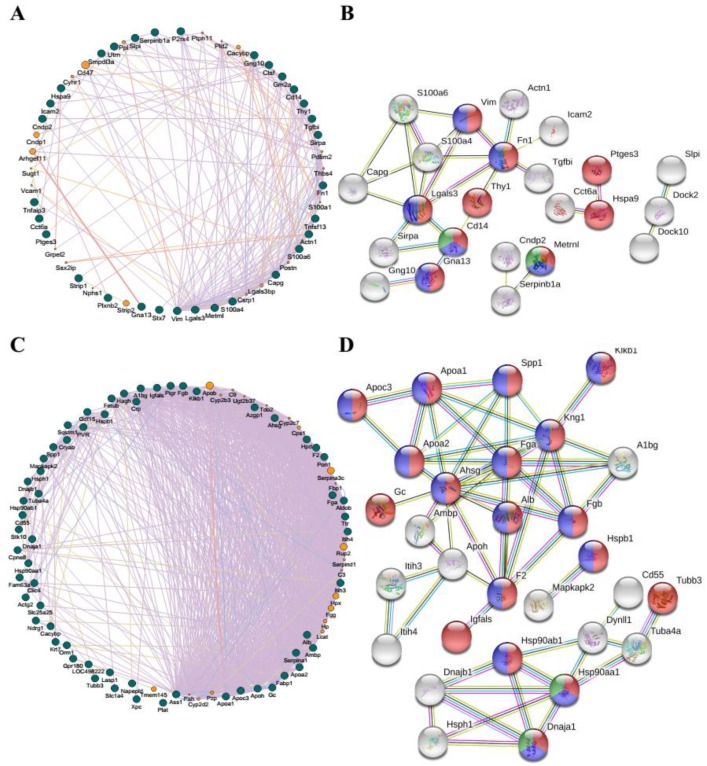
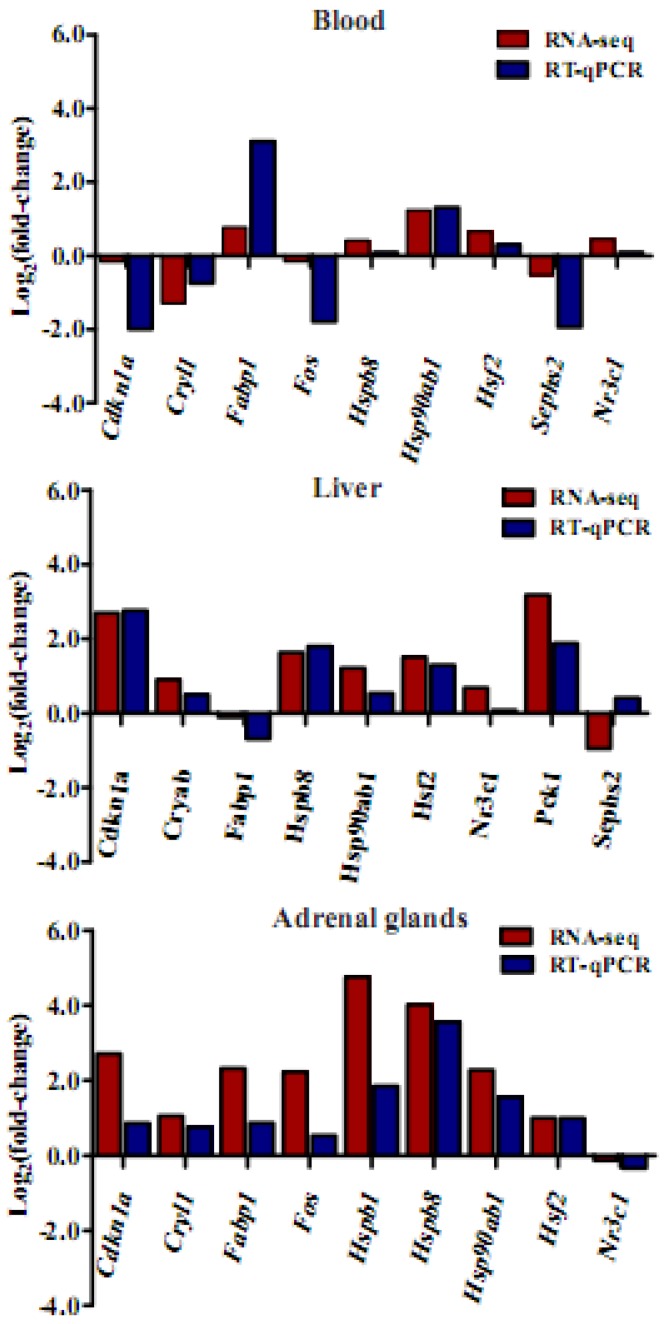
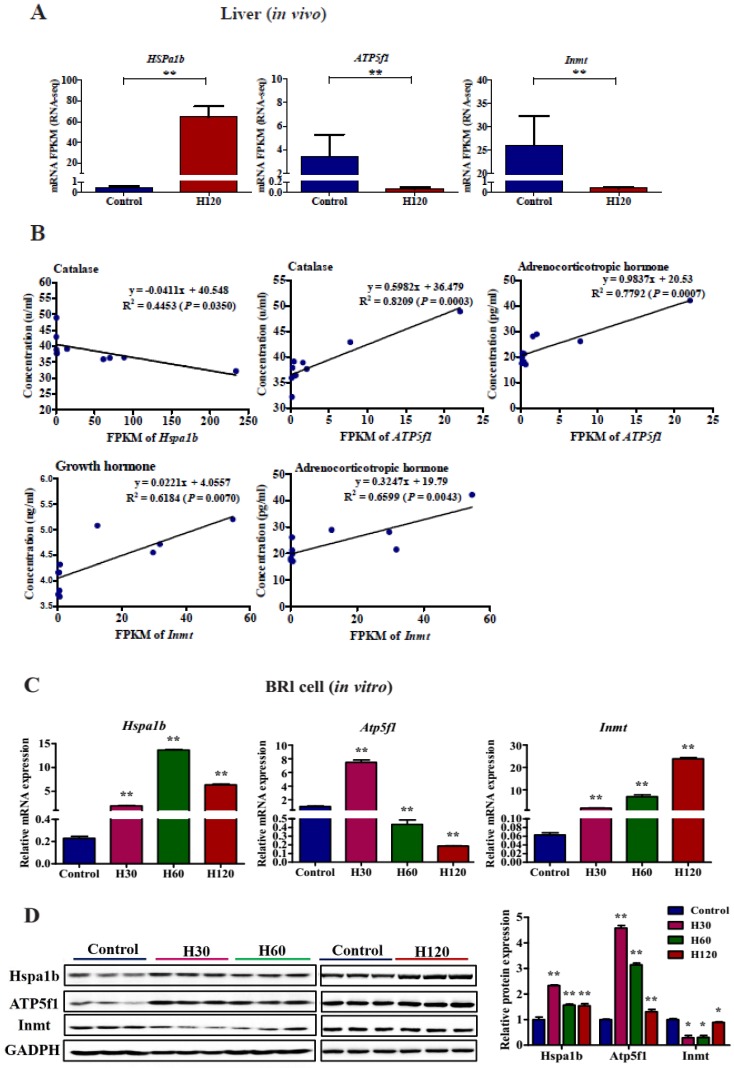
Heat stress (HS) is challenging in humans and animals as it is a complicated regulatory mechanism. This prompted us to characterize the physiological and molecular responses of a HS-animal model. In this study, a rat model system was developed by using three temperature treatments (40 ℃, 42 ℃, and 43 ℃) and sixteen biochemical indicators in blood at 42 ℃ for 30 min (H30), 60 min (H60), and 120 min (H120). In addition, transcriptomic profiling was carried out in H120-rats' blood, liver, and adrenal gland samples for detection of the genes of interest. Our findings demonstrated that the adrenocorticotropic hormone, catalase, prolactin, growth hormone, and lactic acid have significant spatiotemporal variation in the H120-rats as compared with the control. Furthermore, through transcriptomic screening, we documented a high ratio of differentially expressed genes (DEGs) in adrenal glands, liver, and blood, respectively. Among them, , , , , , , and were associated with the regulation of HS and immune response processes. Notably, 36 and 314 of DEGs in blood and adrenal glands were detected in the composition of the extracellular exosome, respectively. Furthermore, the correlation analysis between gene transcripts and biochemical indicator levels identified the and as key candidate genes for HS encoding extracellular exosomal proteins. On the basis of our results, it was concluded that the current rat model provides a molecular basis for future research in HS resistance in humans and livestock.
热应激(HS)对人类和动物来说都是一个挑战,因为它是一个复杂的调节机制。这促使我们对 HS 动物模型的生理和分子反应进行了特征描述。在本研究中,我们通过使用三种温度处理(40℃、42℃和 43℃)和 16 个血液生化指标在 42℃下处理 30 分钟(H30)、60 分钟(H60)和 120 分钟(H120),建立了大鼠模型系统。此外,还对 H120 大鼠的血液、肝脏和肾上腺样本进行了转录组分析,以检测感兴趣的基因。我们的研究结果表明,与对照组相比,H120 大鼠的促肾上腺皮质激素、过氧化氢酶、催乳素、生长激素和乳酸在时空上有显著变化。此外,通过转录组筛选,我们记录了肾上腺、肝脏和血液中差异表达基因(DEGs)的高比例。其中,、、、、、、和与 HS 和免疫反应过程的调节有关。值得注意的是,血液和肾上腺中分别有 36 个和 314 个 DEGs 被检测到在外泌体的组成中。此外,基因转录物和生化指标水平之间的相关性分析确定了和作为编码细胞外囊泡蛋白的 HS 关键候选基因。基于我们的研究结果,得出的结论是,当前的大鼠模型为未来人类和家畜 HS 抗性的研究提供了分子基础。