Proteogenomics Research Institute for Systems Medicine (PRISM), La Jolla, California, 92037, USA.
BMC Cancer. 2020 Mar 17;20(1):226. doi: 10.1186/s12885-020-6703-0.
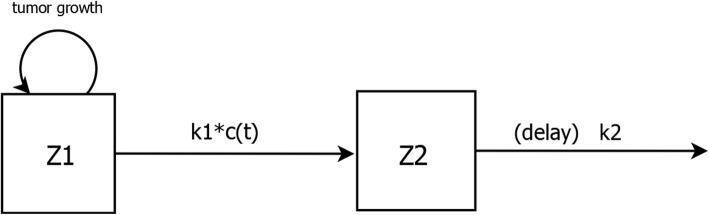
Simeoni and colleagues introduced a compartmental model for tumor growth that has proved quite successful in modeling experimental therapeutic regimens in oncology. The model is based on a system of ordinary differential equations (ODEs), and accommodates a lag in therapeutic action through delay compartments. There is some ambiguity in the appropriate number of delay compartments, which we examine in this note.
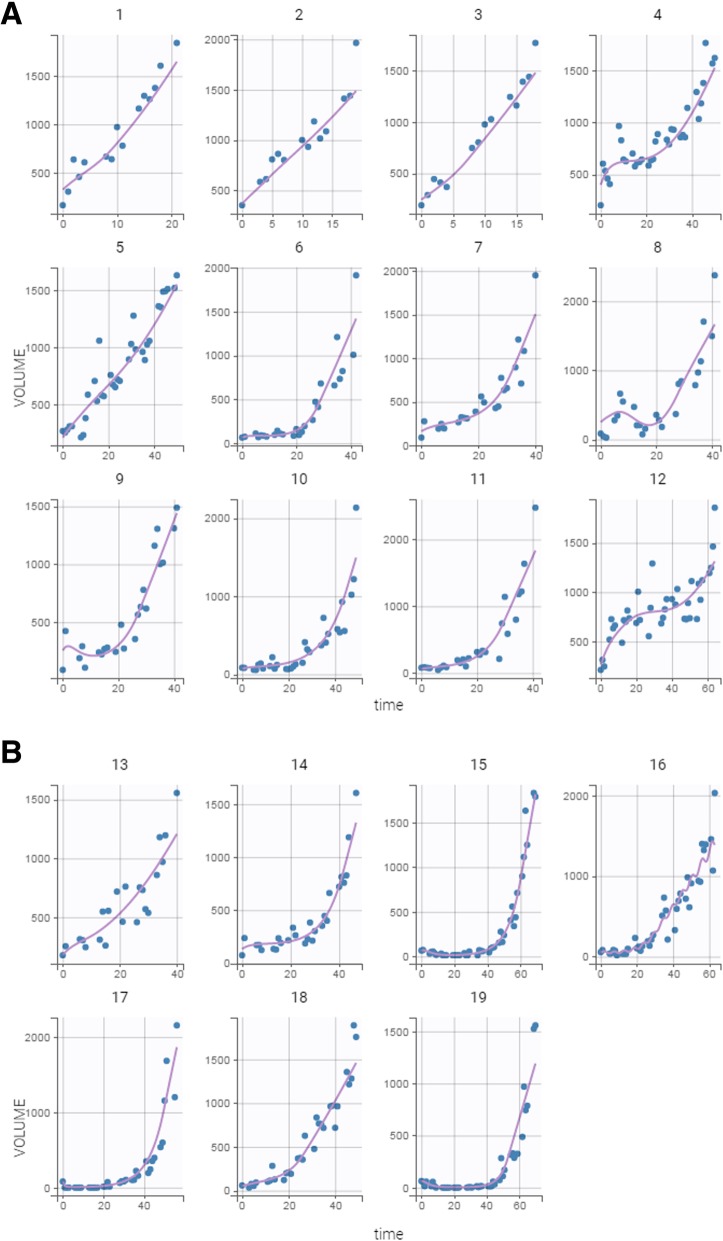
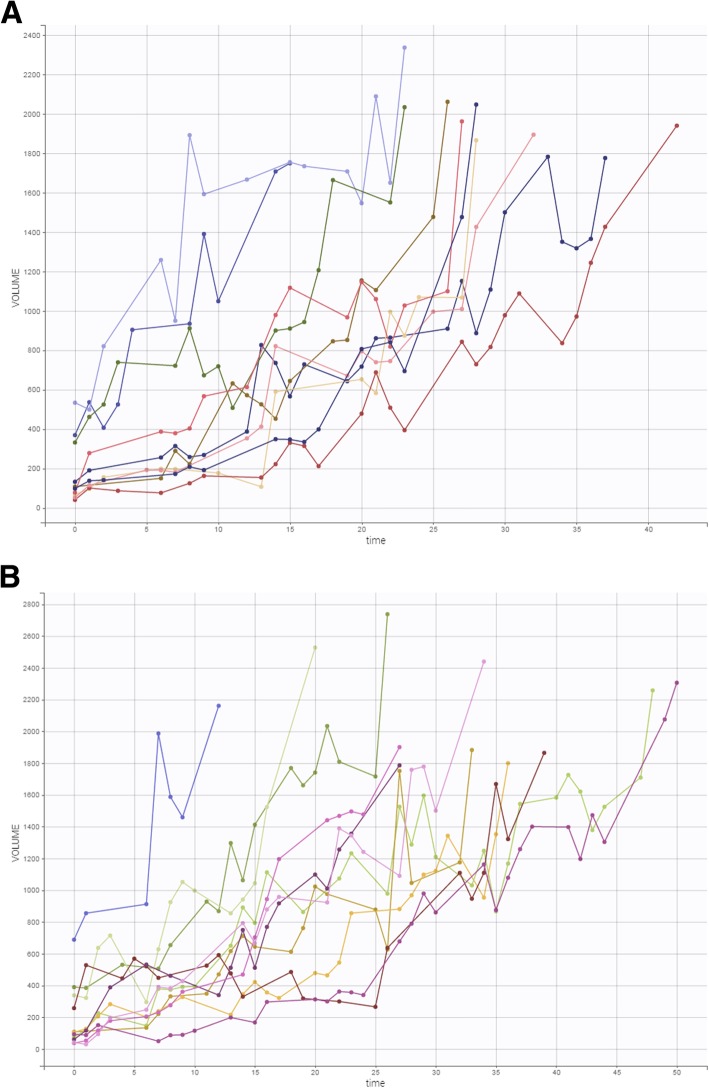
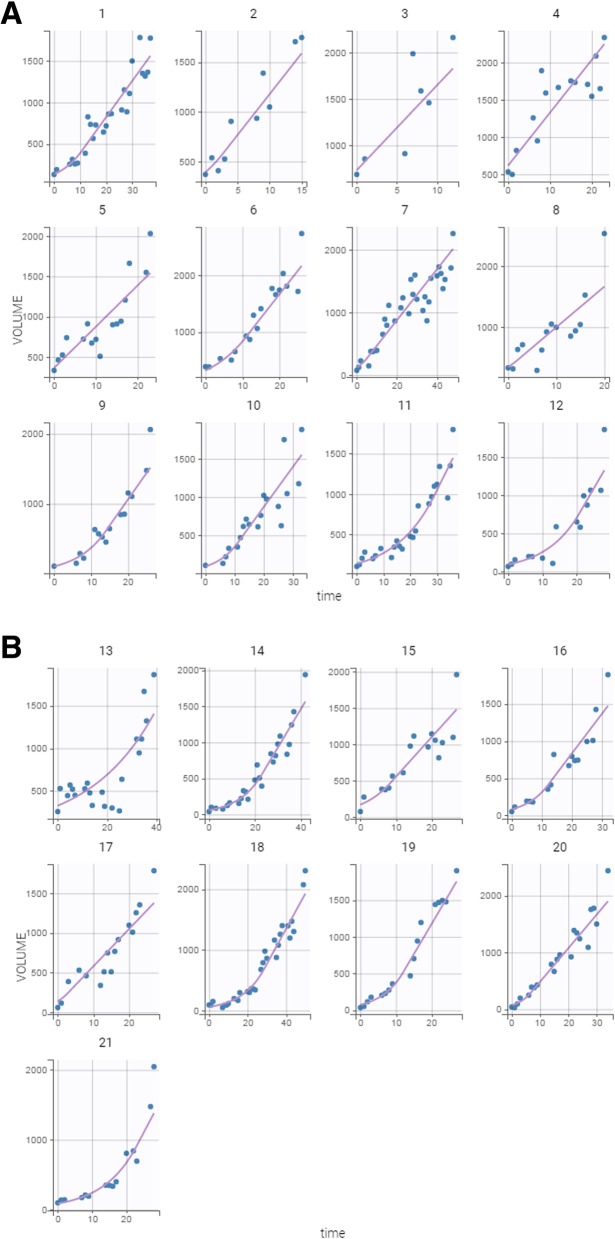
We devised an explicit delay differential equation model that reflects the main features of the Simeoni ODE model. We evaluated the original Simeoni model and this adaptation with a sample data set of mammary tumor growth in the FVB/N-Tg(MMTVneu)202Mul/J mouse model.
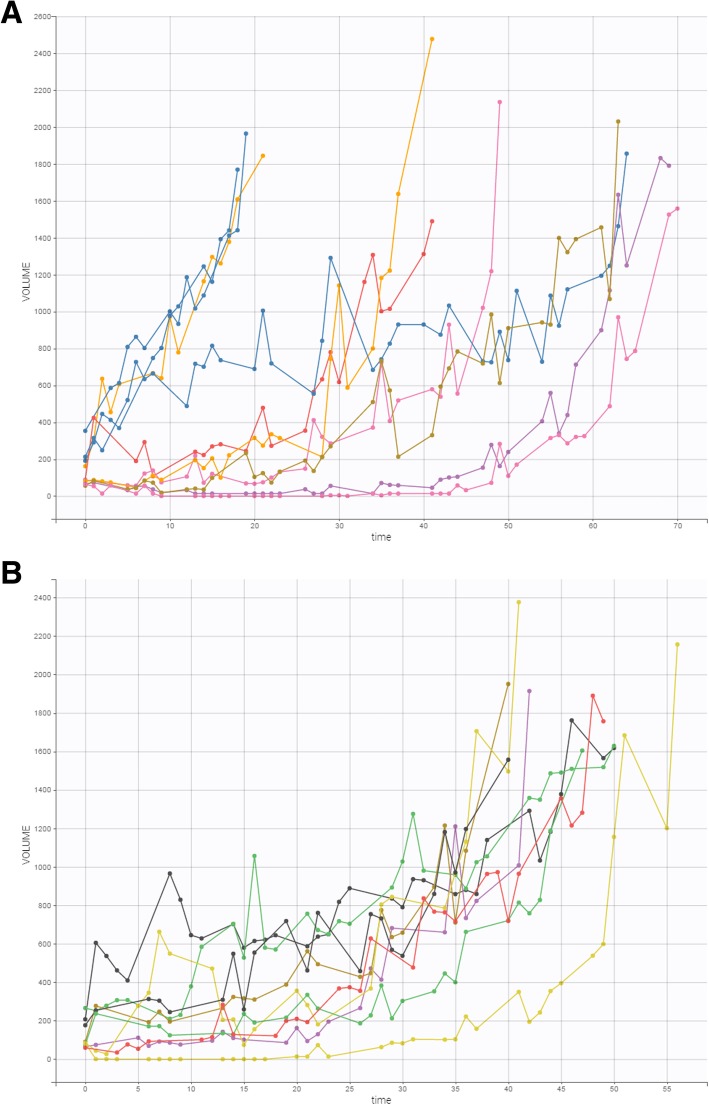
The experimental data evinced tumor growth heterogeneity and inter-individual diversity in response, which could be accommodated statistically through mixed models. We found little difference in goodness of fit between the original Simeoni model and the delay differential equation model relative to the sample data set.
One should exercise caution if asserting a particular mathematical model uniquely characterizes tumor growth curve data. The Simeoni ODE model of tumor growth is not unique in that alternative models can provide equivalent representations of tumor growth.
Simeoni 和同事引入了一种肿瘤生长的房室模型,该模型在肿瘤学中对实验治疗方案的建模非常成功。该模型基于常微分方程(ODE)系统,并通过延迟房室来适应治疗作用的滞后。延迟房室的适当数量存在一些模糊性,我们在本注释中对此进行了检查。
我们设计了一个显式延迟微分方程模型,反映了 Simeoni ODE 模型的主要特征。我们使用 FVB/N-Tg(MMTVneu)202Mul/J 小鼠模型中乳腺肿瘤生长的样本数据集评估了原始 Simeoni 模型和这种改编模型。
实验数据显示肿瘤生长存在异质性和个体间反应的多样性,通过混合模型可以进行统计学上的适应。我们发现,与样本数据集相比,原始 Simeoni 模型和延迟微分方程模型在拟合优度方面几乎没有差异。
如果断言特定的数学模型唯一地描述了肿瘤生长曲线数据,那么应该谨慎。肿瘤生长的 Simeoni ODE 模型并不是唯一的,因为替代模型可以提供肿瘤生长的等效表示。