Seabrook Elizabeth, Kelly Ryan, Foley Fiona, Theiler Stephen, Thomas Neil, Wadley Greg, Nedeljkovic Maja
Centre for Mental Health, Swinburne University of Technology, Hawthorn, Melbourne, Australia.
School of Computing and Information Systems, University of Melbourne, Melbourne, Australia.
J Med Internet Res. 2020 Mar 18;22(3):e16106. doi: 10.2196/16106.
Regular mindfulness practice has been demonstrated to be beneficial for mental health, but mindfulness can be challenging to adopt, with environmental and personal distractors often cited as challenges. Virtual reality (VR) may address these challenges by providing an immersive environment for practicing mindfulness and by supporting the user to orient attention to the present moment within a tailored virtual setting. However, there is currently a limited understanding of the ways in which VR can support or hinder mindfulness practice. Such an understanding is required to design effective VR apps while ensuring that VR-supported mindfulness is acceptable to end users.
This study aimed to explore how VR can support mindfulness practice and to understand user experience issues that may affect the acceptability and efficacy of VR mindfulness for users in the general population.
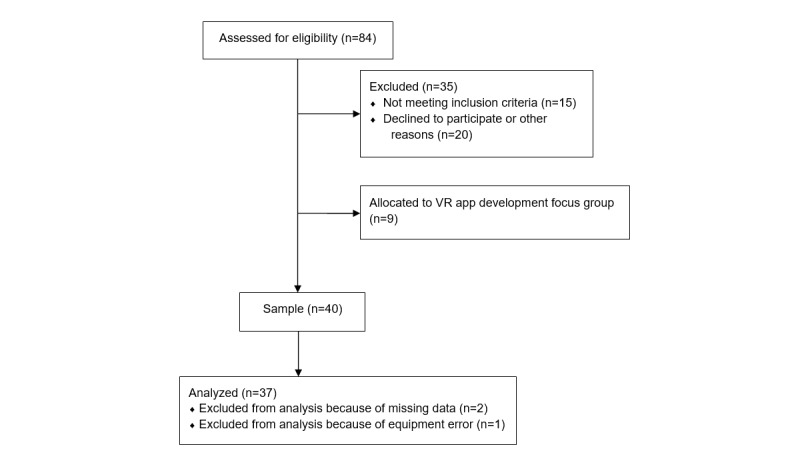
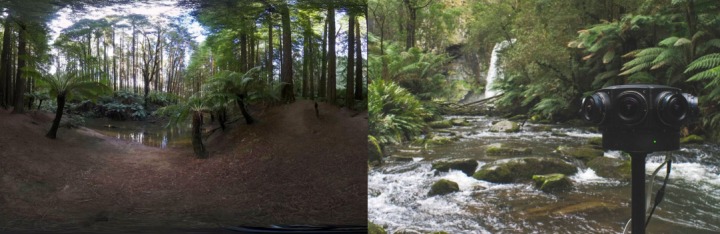
A sample of 37 participants from the general population trialed a VR mindfulness app in a controlled laboratory setting. The VR app presented users with an omnidirectional video of a peaceful forest environment with a guided mindfulness voiceover that was delivered by a male narrator. Scores on the State Mindfulness Scale, Simulator Sickness Questionnaire, and single-item measures of positive and negative emotion and arousal were measured pre- and post-VR for all participants. Qualitative feedback was collected through interviews with a subset of 19 participants. The interviews sought to understand the user experience of mindfulness practice in VR.
State mindfulness (P<.001; Cohen d=1.80) and positive affect (P=.006; r=.45) significantly increased after using the VR mindfulness app. No notable changes in negative emotion, subjective arousal, or symptoms of simulator sickness were observed across the sample. Participants described the user experience as relaxing, calming, and peaceful. Participants suggested that the use of VR helped them to focus on the present moment by using visual and auditory elements of VR as attentional anchors. The sense of presence in the virtual environment (VE) was identified by participants as being helpful to practicing mindfulness. Interruptions to presence acted as distractors. Some uncomfortable experiences were discussed, primarily in relation to video fidelity and the weight of the VR headset, although these were infrequent and minor.
This study suggests that an appropriately designed VR app can support mindfulness practice by enhancing state mindfulness and inducing positive affect. VR may help address the challenges of practicing mindfulness by creating a sense of presence in a tailored VE; by allowing users to attend to visual and auditory anchors of their choice; and by reducing the scope of the content in users' mind-wandering. VR has the unique capability to combine guided mindfulness practice with tailored VEs that lend themselves to support individuals to focus attention on the present moment.
定期进行正念练习已被证明对心理健康有益,但采用正念练习可能具有挑战性,环境和个人干扰因素常被视为挑战。虚拟现实(VR)可以通过提供沉浸式环境来进行正念练习,并支持用户在定制的虚拟环境中将注意力导向当下,从而应对这些挑战。然而,目前对于VR支持或阻碍正念练习的方式了解有限。在设计有效的VR应用程序并确保VR支持的正念练习为最终用户所接受时,需要这样的理解。
本研究旨在探讨VR如何支持正念练习,并了解可能影响普通人群用户对VR正念练习的可接受性和有效性的用户体验问题。
从普通人群中抽取37名参与者的样本,在受控的实验室环境中试用一款VR正念应用程序。该VR应用程序向用户展示了一个宁静森林环境的全景视频,并配有男性旁白的正念引导语音。对所有参与者在使用VR前后进行了状态正念量表、模拟器晕动病问卷以及积极和消极情绪与唤醒的单项测量。通过对19名参与者的子集进行访谈收集了定性反馈。访谈旨在了解VR中正念练习的用户体验。
使用VR正念应用程序后,状态正念(P<.001;Cohen d=1.80)和积极情绪(P=.006;r=.45)显著增加。在整个样本中,未观察到消极情绪、主观唤醒或模拟器晕动病症状的显著变化。参与者将用户体验描述为放松、平静和安宁。参与者表示,使用VR通过将VR的视觉和听觉元素用作注意力锚点,帮助他们专注于当下。参与者认为在虚拟环境(VE)中的临场感有助于进行正念练习。对临场感的干扰起到了分散注意力的作用。讨论了一些不舒服的体验,主要涉及视频保真度和VR头显的重量,不过这些情况很少且不太严重。
本研究表明,设计得当的VR应用程序可以通过增强状态正念和诱发积极情绪来支持正念练习。VR可以通过在定制的VE中营造临场感、允许用户关注其选择的视觉和听觉锚点以及减少用户走神时脑海中的内容范围,来帮助应对正念练习的挑战。VR具有独特的能力,能够将引导式正念练习与定制的VE相结合,以支持个人将注意力集中在当下。