Böszörményi Andrea, Dobi Adrienn, Skribanek Anna, Pávai Melinda, Solymosi Katalin
Department of Pharmacognosy, Semmelweis University, Budapest, Hungary.
Department of Plant Anatomy, ELTE Eötvös Loránd University, Budapest, Hungary.
Front Plant Sci. 2020 Mar 3;11:196. doi: 10.3389/fpls.2020.00196. eCollection 2020.
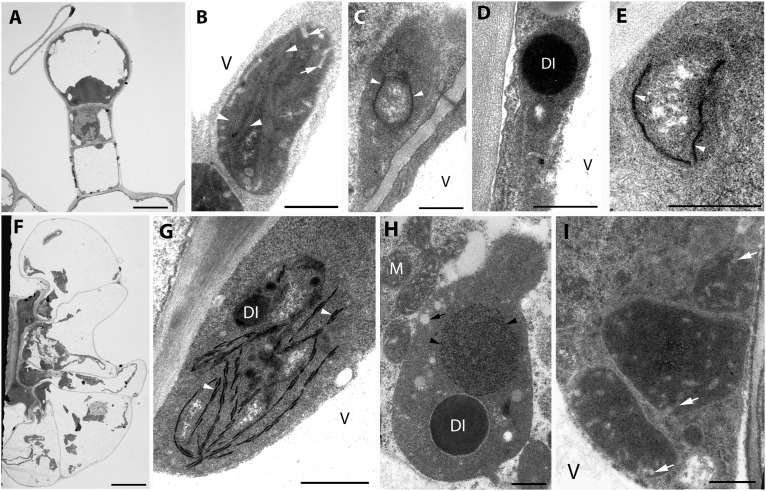
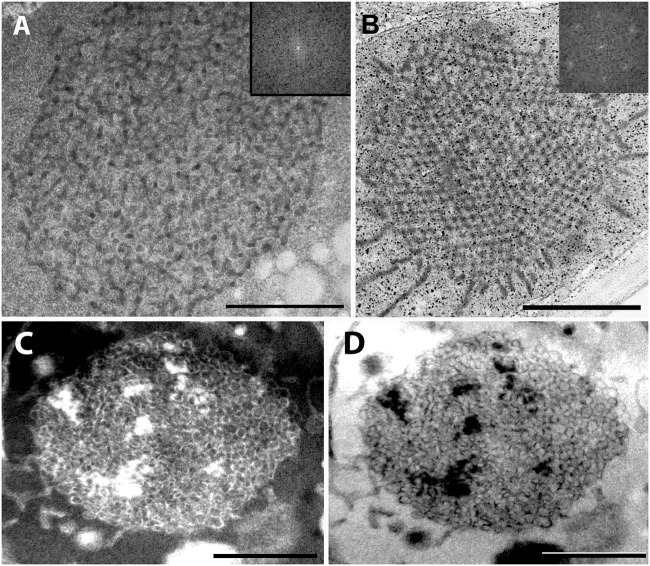
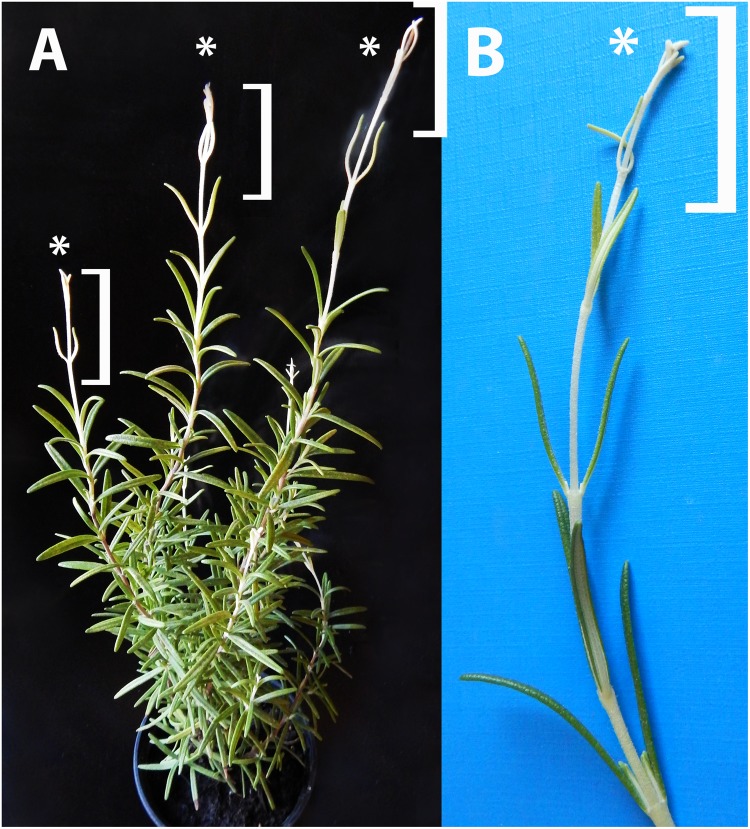
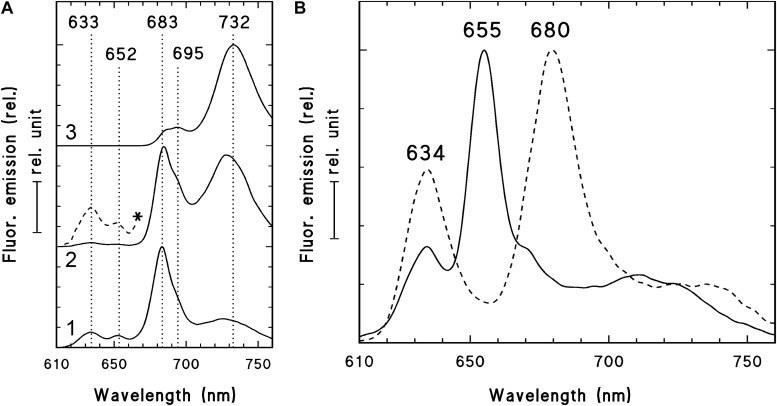
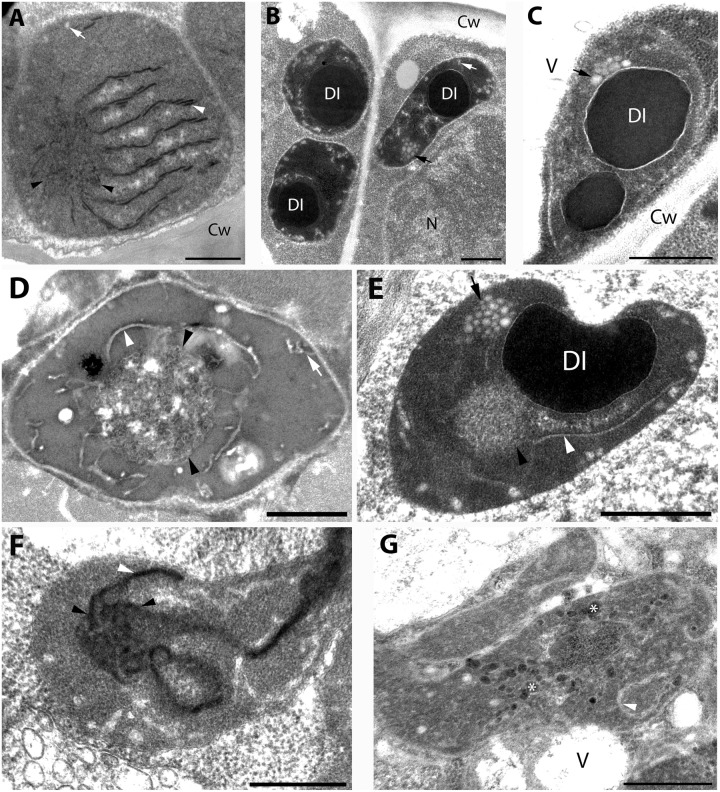
It is unclear whether light affects the structure and activity of exogenous secretory tissues like glandular hairs. Therefore, transmission electron microscopy was first used to study plastid differentiation in glandular hairs and leaves of light-grown rosemary ( "Arp") plants kept for 2 weeks under ambient light conditions. During our detailed analyses, among others, we found leucoplasts with tubuloreticular membrane structures resembling prolamellar bodies in stalk cell plastids of peltate glandular hairs. To study the effect of darkness on plastid differentiation, we then dark-forced adult, light-grown rosemary plants for 2 weeks and observed occasionally the development of new shoots with elongated internodes and pale leaves on them. Absorption and fluorescence spectroscopic analyses of the chlorophyllous pigment contents, the native arrangement of the pigment-protein complexes and photosynthetic activity confirmed that the first and second pairs of leaf primordia of dark-forced shoots were partially etiolated (contained low amounts of protochlorophyll/ide and residual chlorophylls, had etio-chloroplasts with prolamellar bodies and low grana, and impaired photosynthesis). Darkness did not influence plastid structure in fifth leaves or secretory tissues (except for head cells of peltate glandular hairs in which rarely tubuloreticular membranes appeared). The mesophyll cells of cotyledons of 2-week-old dark-germinated rosemary seedlings contained etioplasts with highly regular prolamellar bodies similar to those in mesophyll etio-chloroplasts of leaves and clearly differing from tubuloreticular membranes of secretory cells. Analyses of the essential oil composition obtained after solid phase microextraction and gas chromatography-mass spectroscopy showed that in addition to light, the age of the studied organ (i.e., first leaf primordia and leaf tip vs. fifth, fully developed green leaves) and the type of the organ (cotyledon vs. leaves) also strongly influenced the essential oil composition. Therefore, light conditions and developmental stage are both important factors to be considered in case of potential therapeutic, culinary or aromatic uses of rosemary leaves and their essential oils.
尚不清楚光照是否会影响外分泌组织(如腺毛)的结构和活性。因此,首先利用透射电子显微镜研究了在环境光照条件下生长2周的迷迭香(“阿尔普”)植株的腺毛和叶片中的质体分化情况。在我们的详细分析中,除其他发现外,我们在盾状腺毛柄细胞的质体中发现了具有类似原片层体的管状网状膜结构的白色体。为了研究黑暗对质体分化的影响,我们随后对成年的、在光照下生长的迷迭香植株进行了2周的暗处理,并偶尔观察到带有伸长节间和浅色叶片的新梢的发育情况。对叶绿素色素含量、色素 - 蛋白质复合物的天然排列以及光合活性的吸收光谱和荧光光谱分析证实,暗处理新梢的第一和第二对叶原基部分黄化(含有少量原叶绿素/原叶绿素酸酯和残留叶绿素,具有带有原片层体和低基粒的黄化质体,且光合作用受损)。黑暗并未影响第五片叶子或分泌组织中的质体结构(盾状腺毛的头部细胞除外,在其中很少出现管状网状膜)。2周龄暗发芽的迷迭香幼苗子叶的叶肉细胞含有具有高度规则原片层体的黄化质体,类似于叶片叶肉黄化质体中的原片层体,且明显不同于分泌细胞的管状网状膜。对固相微萃取和气相色谱 - 质谱联用分析后得到的精油成分分析表明,除了光照外,所研究器官的年龄(即第一叶原基和叶尖与第五片完全发育的绿叶相比)和器官类型(子叶与叶片)也强烈影响精油成分。因此,在考虑迷迭香叶及其精油的潜在治疗用途或烹饪用途或芳香用途时,光照条件和发育阶段都是需要考虑的重要因素。