Department of Nutrition and Bromatology, Faculty of Pharmacy, University of Granada, Campus de Cartuja, s.n, 18071 Granada, Spain.
Iberoamerican Nutrition Foundation (FINUT), Av. Del Conocimiento 12, 3 ª pta, 18016 Armilla, Granada, Spain.
Nutrients. 2020 Mar 25;12(4):893. doi: 10.3390/nu12040893.
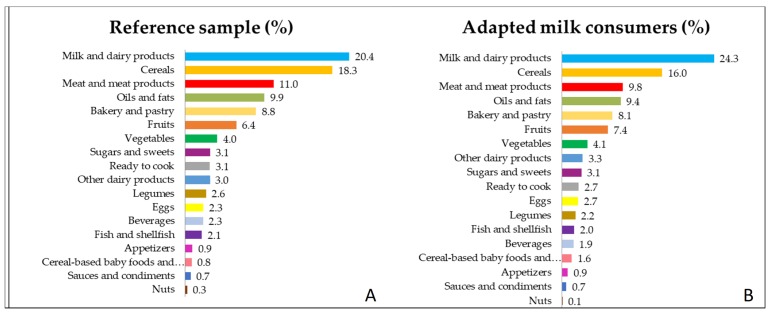
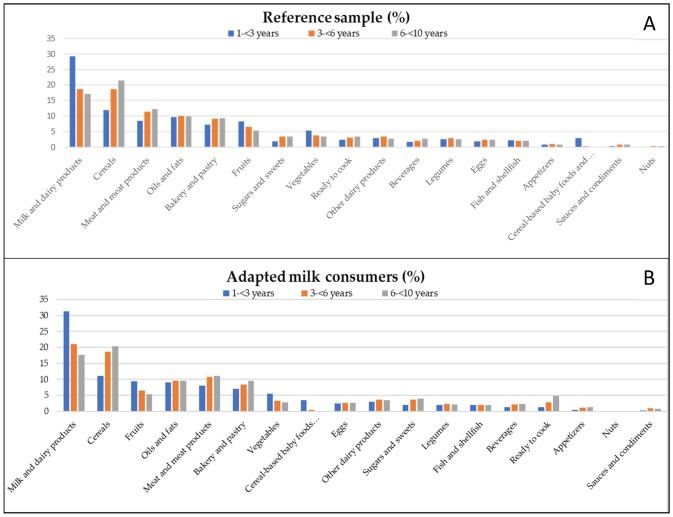
The present study aimed to assess energy intake, nutrient profile and food sources in Spanish children participating in the EsNuPI ("Estudio Nutricional en Población Infantil Española") study. Plausibility of energy intake and adequacy of nutrient intakes to international recommendations were analyzed in a final sample of 1448 subjects (728 boys and 720 girls) and one group representative of the 1 to <10 years old urban Spanish children (reference sample ( = 707)) who consumed milk and one of the same age who consumed adapted milk over the last year (adapted milk consumers sample ( = 741)) were compared. Both groups completed data of a face-to-face and a telephone 24-h dietary recalls. Both the reference and the adapted milk consumers samples reported an adequate daily energy intake (1503 kcal/day and 1404 kcal/day); and a high contribution to total energy from protein (16.5% and 15.6%) and fat (36.5% and 35.9%). Also, a high percentage of children from both samples were below the lower limit of the recommendations for carbohydrates (47.8% and 39.3%). As the percentage of plausible energy reporters was high for both groups (84.7% and 83.5%, respectively), data for the whole sample were analyzed. Milk and dairy, cereals, meat and derived products, fats and oils, bakery and pastry, fruits and vegetables contributed to about 80% of the total energy intake in both groups. However, the reference sample reported significantly more contribution to energy from cereals, meat and meat products, bakery and pastry and ready to cook/eat foods; meanwhile, the adapted milk consumers sample reported significantly more energy from milk and dairy products, fruits and eggs. Those results suggest that adapted milk consumers have better adherence to the food-based dietary guidelines. Further analyses are warranted to characterize food patterns and the quality of the diet in the EsNuPI study population.
本研究旨在评估参加 EsNuPI(“西班牙儿童营养研究”)研究的西班牙儿童的能量摄入、营养状况和食物来源。在最终的 1448 名受试者(728 名男孩和 720 名女孩)和一个代表 1 至<10 岁城市西班牙儿童的小组(参考样本(n = 707))中分析了能量摄入的可信度和营养素摄入量对国际建议的适宜性,该小组在过去一年中摄入了牛奶和一种相同年龄的适应牛奶(适应牛奶消费者样本(n = 741))。这两个组都完成了面对面和电话 24 小时膳食回忆的数据。参考组和适应牛奶消费者组均报告了足够的每日能量摄入(1503 千卡/天和 1404 千卡/天);蛋白质(16.5%和 15.6%)和脂肪(36.5%和 35.9%)对总能量的贡献也很高。此外,两个样本中都有很大比例的儿童碳水化合物摄入量低于推荐量的下限(47.8%和 39.3%)。由于两个组的可信能量报告者比例都很高(分别为 84.7%和 83.5%),因此对整个样本进行了分析。牛奶和乳制品、谷物、肉类及其制品、脂肪和油、面包店和糕点、水果和蔬菜在两个组的总能量摄入中均占 80%左右。然而,参考组报告称,从谷物、肉类和肉类制品、面包店和糕点以及准备烹饪/食用的食物中获得的能量有显著增加;相比之下,适应牛奶消费者组报告称,从牛奶和乳制品、水果和鸡蛋中获得的能量显著增加。这些结果表明,适应牛奶消费者对基于食物的饮食指南的依从性更好。需要进一步分析以描述 EsNuPI 研究人群的食物模式和饮食质量。