Rienhoff H Y, Groudine M
Fred Hutchinson Cancer Research Center, Seattle, Washington 98104.
Mol Cell Biol. 1988 Sep;8(9):3710-6. doi: 10.1128/mcb.8.9.3710-3716.1988.
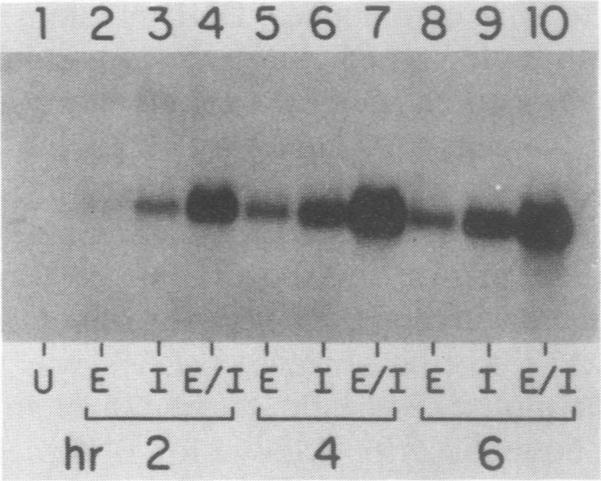
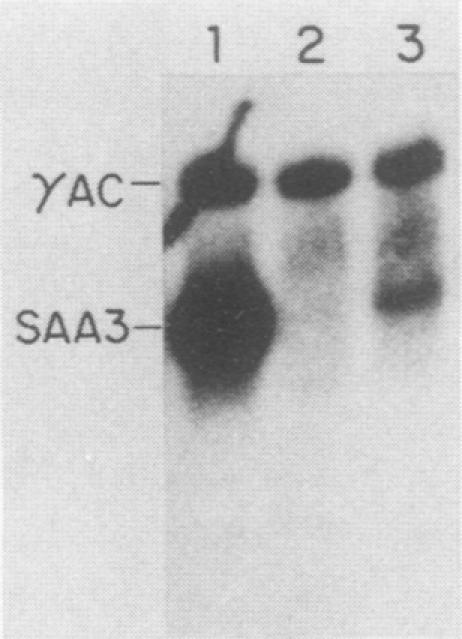
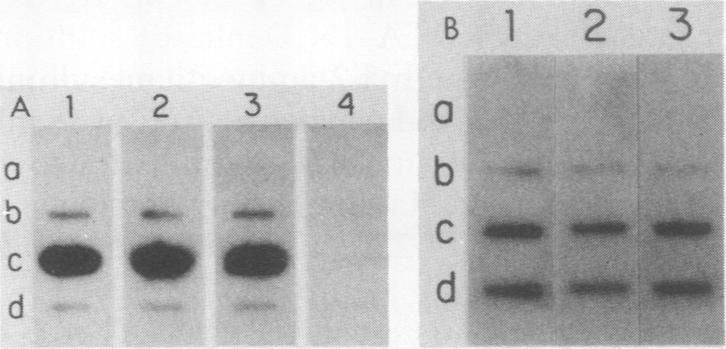
Serum amyloid A (SAA) proteins are secreted by mammalian liver in response to inflammatory stimuli. Both transcriptional and posttranscriptional mechanisms have been shown to regulate the 2,000-fold increase in SAA mRNA after injection of endotoxin into mice. We report here the characterization of a cell line derived from mouse liver (BNL) in which the expression of SAA3 mRNA is regulated. In this model, SAA3 mRNA accumulated in response to conditioned medium from the mouse macrophage P388D1 cell line with kinetics similar to that seen in mouse liver (C. A. Lowell, R. S. Stearman, and J. F. Morrow, J. Biol. Chem. 261:8453-8461, 1986). In in vitro nuclear transcription assays, the SAA3 gene was transcribed equally in induced and uninduced cells. In addition, in steady-state RNA studies treatment with conditioned medium allowed the cells to rapidly accumulate SAA3 mRNA without an apparent change in half-life. These observations suggest that conditioned medium contains a factor(s) that acts directly on hepatocytes to regulate SAA3 mRNA processing.
血清淀粉样蛋白A(SAA)是哺乳动物肝脏在炎症刺激下分泌的蛋白质。转录和转录后机制均已被证明可调节小鼠注射内毒素后SAA mRNA增加2000倍的过程。我们在此报告一种源自小鼠肝脏(BNL)的细胞系的特征,其中SAA3 mRNA的表达受到调节。在该模型中,SAA3 mRNA响应小鼠巨噬细胞P388D1细胞系的条件培养基而积累,其动力学与在小鼠肝脏中观察到的相似(C. A. Lowell、R. S. Stearman和J. F. Morrow,《生物化学杂志》261:8453 - 8461,1986年)。在体外细胞核转录试验中,SAA3基因在诱导和未诱导的细胞中均以相同水平转录。此外,在稳态RNA研究中,用条件培养基处理使细胞能够快速积累SAA3 mRNA,而半衰期没有明显变化。这些观察结果表明,条件培养基含有一种直接作用于肝细胞以调节SAA3 mRNA加工的因子。