Department of Pediatrics, Ningbo Women and Children's Hospital, Ningbo, Zhejiang, China.
Department of Infectious Diseases, The Third Affiliated Hospital of Wenzhou Medical University, Wenzhou, Zhejiang, China.
Lancet Infect Dis. 2020 Jun;20(6):689-696. doi: 10.1016/S1473-3099(20)30198-5. Epub 2020 Mar 25.
Since December, 2019, an outbreak of coronavirus disease 2019 (COVID-19) has spread globally. Little is known about the epidemiological and clinical features of paediatric patients with COVID-19.
We retrospectively retrieved data for paediatric patients (aged 0-16 years) with confirmed COVID-19 from electronic medical records in three hospitals in Zhejiang, China. We recorded patients' epidemiological and clinical features.
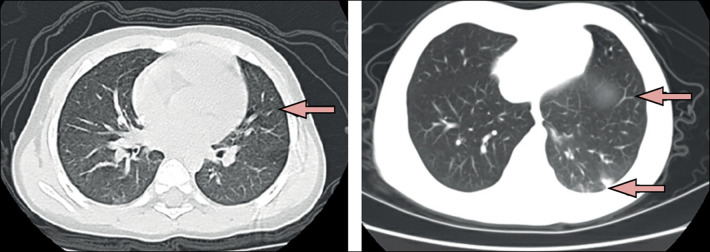
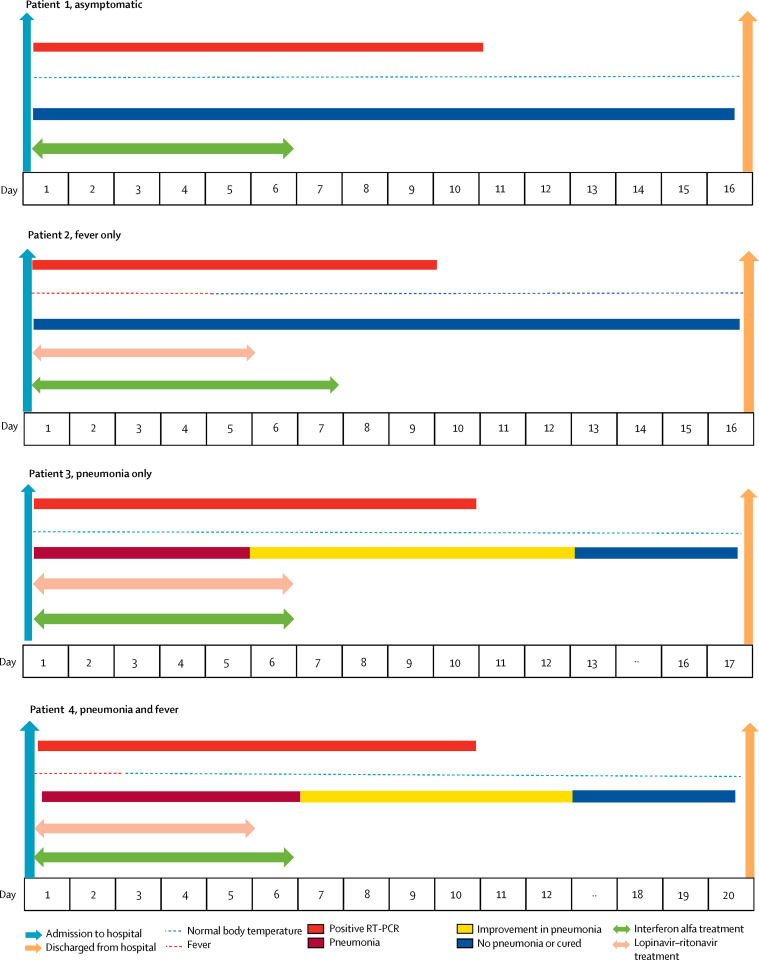
From Jan 17 to March 1, 2020, 36 children (mean age 8·3 [SD 3·5] years) were identified to be infected with severe acute respiratory syndrome coronavirus 2. The route of transmission was by close contact with family members (32 [89%]) or a history of exposure to the epidemic area (12 [33%]); eight (22%) patients had both exposures. 19 (53%) patients had moderate clinical type with pneumonia; 17 (47%) had mild clinical type and either were asymptomatic (ten [28%]) or had acute upper respiratory symptoms (seven [19%]). Common symptoms on admission were fever (13 [36%]) and dry cough (seven [19%]). Of those with fever, four (11%) had a body temperature of 38·5°C or higher, and nine (25%) had a body temperature of 37·5-38·5°C. Typical abnormal laboratory findings were elevated creatine kinase MB (11 [31%]), decreased lymphocytes (11 [31%]), leucopenia (seven [19%]), and elevated procalcitonin (six [17%]). Besides radiographic presentations, variables that were associated significantly with severity of COVID-19 were decreased lymphocytes, elevated body temperature, and high levels of procalcitonin, D-dimer, and creatine kinase MB. All children received interferon alfa by aerosolisation twice a day, 14 (39%) received lopinavir-ritonavir syrup twice a day, and six (17%) needed oxygen inhalation. Mean time in hospital was 14 (SD 3) days. By Feb 28, 2020, all patients were cured.
Although all paediatric patients in our cohort had mild or moderate type of COVID-19, the large proportion of asymptomatic children indicates the difficulty in identifying paediatric patients who do not have clear epidemiological information, leading to a dangerous situation in community-acquired infections.
Ningbo Clinical Research Center for Children's Health and Diseases, Ningbo Reproductive Medicine Centre, and Key Scientific and Technological Innovation Projects of Wenzhou.
自 2019 年 12 月以来,2019 年冠状病毒病(COVID-19)的爆发已在全球范围内蔓延。关于 COVID-19 儿科患者的流行病学和临床特征,人们知之甚少。
我们从中国浙江省的 3 家医院的电子病历中回顾性地检索了确诊为 COVID-19 的儿科患者(年龄 0-16 岁)的数据。我们记录了患者的流行病学和临床特征。
从 2020 年 1 月 17 日至 3 月 1 日,我们共发现 36 例感染严重急性呼吸综合征冠状病毒 2 的儿童(平均年龄 8.3[标准差 3.5]岁)。传播途径是通过与家庭成员的密切接触(32 例[89%])或有暴露于疫区的病史(12 例[33%]);8 例(22%)患者均有两种暴露。19 例(53%)患者有中度临床类型肺炎;17 例(47%)有轻度临床类型,其中 10 例(28%)无症状,7 例(19%)有急性上呼吸道症状。入院时常见症状为发热(13 例[36%])和干咳(7 例[19%])。发热患者中,4 例(11%)体温为 38.5°C 或更高,9 例(25%)体温为 37.5-38.5°C。典型的异常实验室发现包括肌酸激酶 MB 升高(11 例[31%])、淋巴细胞减少(11 例[31%])、白细胞减少(7 例[19%])和降钙素原升高(6 例[17%])。除了影像学表现外,与 COVID-19 严重程度显著相关的变量是淋巴细胞减少、体温升高以及降钙素原、D-二聚体和肌酸激酶 MB 水平升高。所有患儿均接受每日两次雾化吸入干扰素 alfa,14 例(39%)每日两次服用洛匹那韦-利托那韦糖浆,6 例(17%)需要吸氧。患儿平均住院时间为 14(标准差 3)天。截至 2020 年 2 月 28 日,所有患儿均治愈。
尽管我们研究队列中的所有儿科患者均为轻度或中度 COVID-19,但大量无症状患儿表明,识别无明确流行病学信息的儿科患者存在困难,这导致了社区获得性感染的危险局面。
宁波市儿童健康与疾病临床医学研究中心、宁波市生殖医学中心、温州市关键科技创新项目。