Krahel Julita Anna, Baran Anna, Kamiński Tomasz W, Maciaszek Magdalena, Flisiak Iwona
Department of Dermatology and Venereology, Medical University of Bialystok, Zurawia 14 St., 15-540 Bialystok, Poland.
Department of Farmacodynamics, Medical University of Bialystok, Mickiewicza 2c St., 15-222 Bialystok, Poland.
J Clin Med. 2020 Mar 26;9(4):910. doi: 10.3390/jcm9040910.
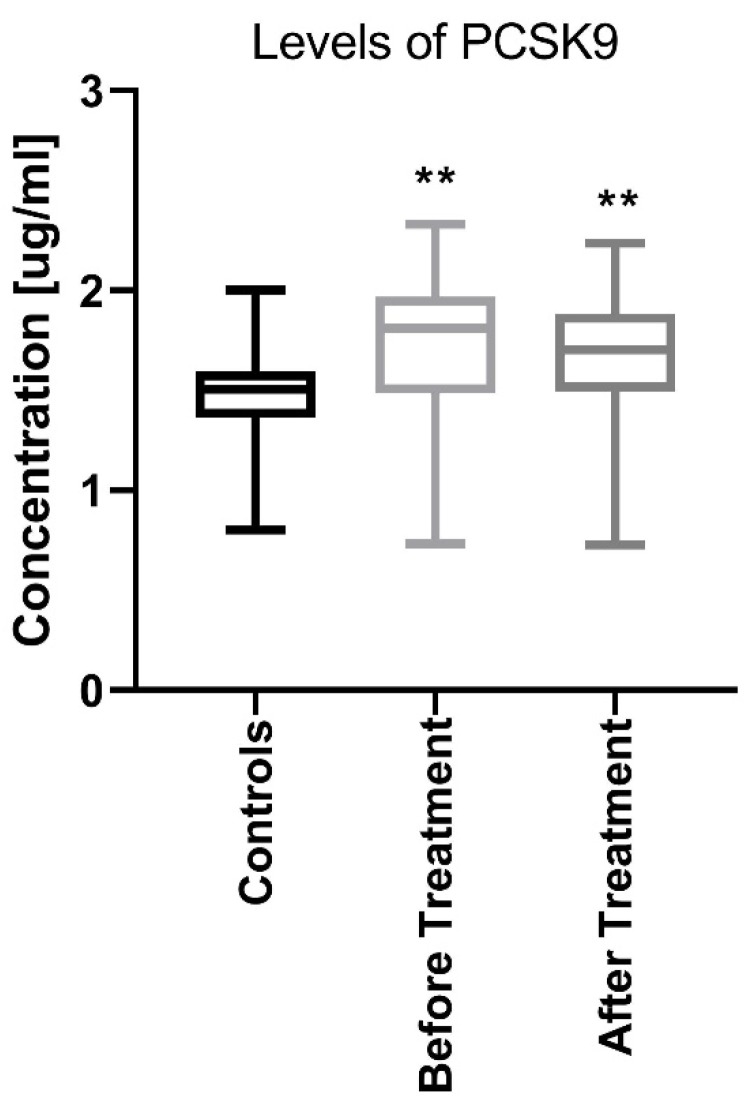
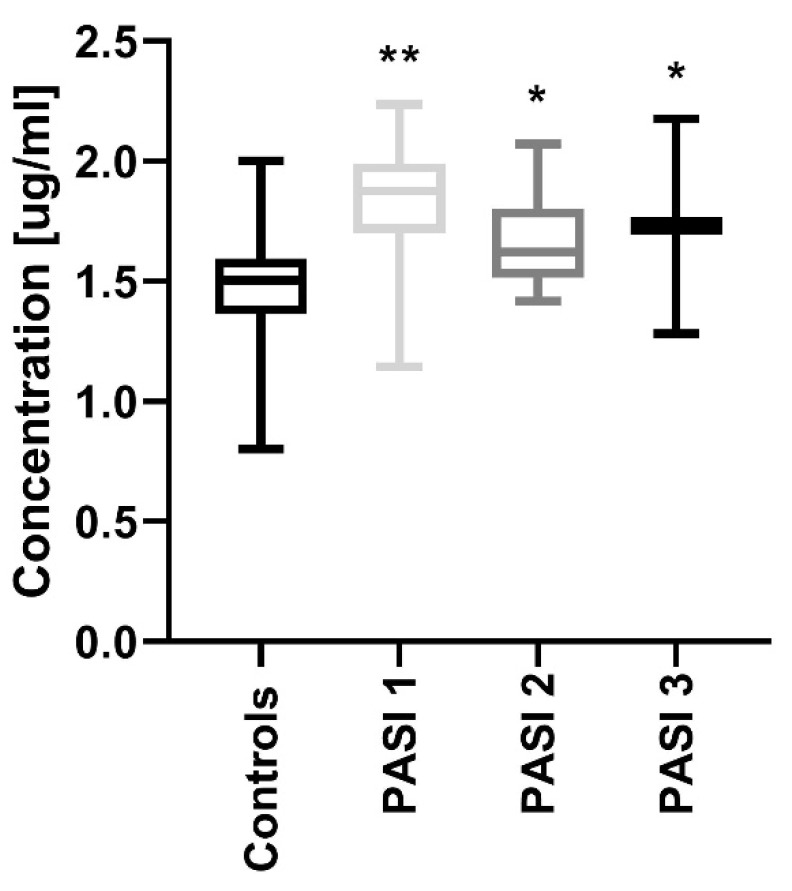
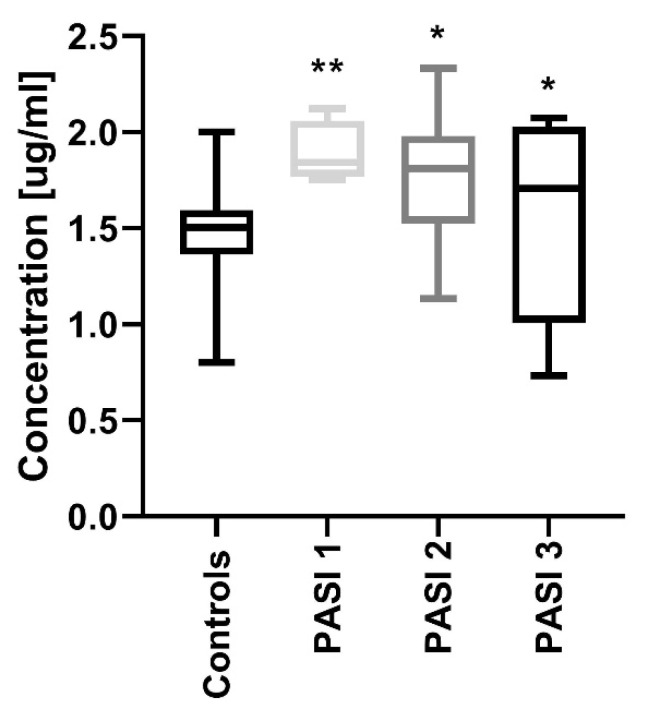
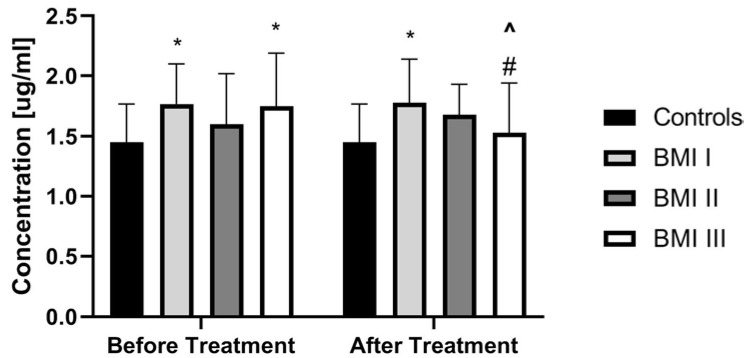
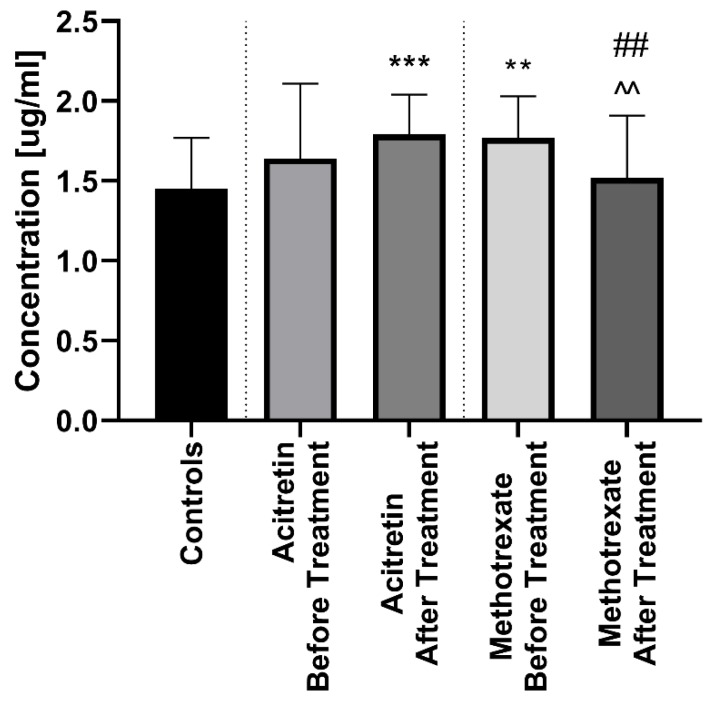
Proprotein convertase subtilisin/kexin type 9 (PCSK9) exerts an important role in inflammatory processes, lipids homeostasis, and cardiometabolic disorders that are closely associated with psoriasis. The aim of the study was to analyze the clinical and diagnostic value of serum PCSK9 concentrations and their connections with disease severity, inflammation, metabolic syndrome, and impact of systemic therapies in psoriatic patients. The study enrolled thirty-five patients with active plaque-type psoriasis and eighteen healthy volunteers served as controls. Blood samples were obtained before and after 12 weeks of treatment with methotrexate or acitretin. Serum PCSK9 concentrations were measured by the ELISA (Enzyme-Linked Immunosorbent Assay) commercial kits. Morphological and biochemical parameters were assayed using routine laboratory techniques. Psoriatic patients showed significantly elevated levels of PCSK9 compared to controls ( < 0.01), mostly in patients with a mild and moderate course of psoriasis. PCSK9 concentrations correlated positively with BMI and triglyceride levels ( < 0.05). Interestingly, PCSK9 had a strong negative correlation with low-density lipoprotein levels and total cholesterol ( < 0.05). Three months of monotherapy with methotrexate significantly reduced PCSK9 level ( < 0.05), on the contrary, the acitretin group showed a further increase of PCSK9 levels ( < 0.05). PCSK9 seems to be a novel marker of psoriasis and a putative explanation of lipid disturbances, which are common in patients with psoriasis and are vital for the further developing of metabolic syndrome. Methotrexate should be considered as a treatment of choice in patients with an elevated PCSK9 concentration.
前蛋白转化酶枯草溶菌素/克尔新9型(PCSK9)在炎症过程、脂质稳态以及与银屑病密切相关的心脏代谢紊乱中发挥着重要作用。本研究的目的是分析银屑病患者血清PCSK9浓度的临床和诊断价值及其与疾病严重程度、炎症、代谢综合征的关系,以及全身治疗的影响。该研究纳入了35例活动性斑块型银屑病患者,并选取18名健康志愿者作为对照。在使用甲氨蝶呤或阿维A治疗12周前后采集血样。采用ELISA(酶联免疫吸附测定)商业试剂盒测定血清PCSK9浓度。使用常规实验室技术检测形态学和生化参数。与对照组相比,银屑病患者的PCSK9水平显著升高(<0.01),大多发生在轻度和中度病程的患者中。PCSK9浓度与BMI和甘油三酯水平呈正相关(<0.05)。有趣的是,PCSK9与低密度脂蛋白水平和总胆固醇呈强烈负相关(<0.05)。甲氨蝶呤单药治疗三个月显著降低了PCSK9水平(<0.05),相反,阿维A组的PCSK9水平进一步升高(<0.05)。PCSK9似乎是银屑病的一种新型标志物,也是脂质紊乱的一种可能解释,脂质紊乱在银屑病患者中很常见,对代谢综合征的进一步发展至关重要。对于PCSK9浓度升高的患者,应考虑将甲氨蝶呤作为首选治疗药物。