Steckiewicz Karol P, Inkielewicz-Stepniak Iwona
Chair and Department of Medical Chemistry, Faculty of Medicine, Medical University of Gdansk, ul. Dębinki 1, 80-211 Gdansk, Poland.
Nanomaterials (Basel). 2020 Apr 1;10(4):658. doi: 10.3390/nano10040658.
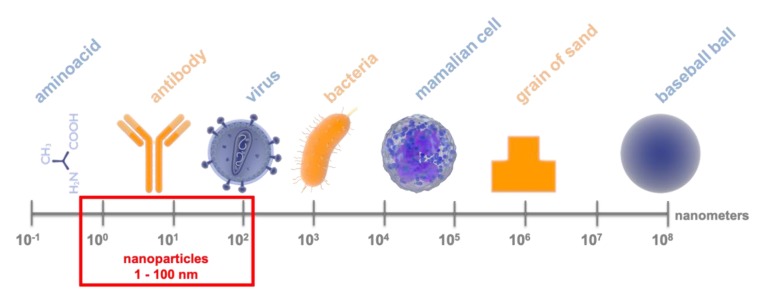
Materials sized 1-100 nm are the nanotechnology's field of interest. Because of the unique properties such as the ability to penetrate biological barriers and a high surface to volume ratio, nanoparticles (NPs) are a powerful tool to be used in medicine and industry. This review discusses the role of nanotechnology in bone-related issues: osteosarcoma (bone cancer), the biocompatibility of the implants and implant-related infections. In cancer therapy, NPs can be used as (I) cytotoxic agents, (II) drug delivery platforms and (III) in thermotherapy. In implant-related issues, NPs can be used as (I) antimicrobial agents and (II) adjuvants to increase the biocompatibility of implant surface. Properties of NPs depend on (I) the type of NPs, (II) their size, (III) shape, (IV) concentration, (V) incubation time, (VI) functionalization and (VII) capping agent type.
尺寸在1至100纳米之间的材料是纳米技术的研究领域。由于具有诸如穿透生物屏障的能力和高表面积与体积比等独特特性,纳米颗粒(NPs)是一种可用于医学和工业的强大工具。本综述讨论了纳米技术在与骨骼相关问题中的作用:骨肉瘤(骨癌)、植入物的生物相容性以及与植入物相关的感染。在癌症治疗中,纳米颗粒可用作(I)细胞毒性剂、(II)药物递送平台和(III)热疗剂。在与植入物相关的问题中,纳米颗粒可用作(I)抗菌剂和(II)佐剂以提高植入物表面的生物相容性。纳米颗粒的性质取决于(I)纳米颗粒的类型、(II)其尺寸、(III)形状、(IV)浓度、(V)孵育时间、(VI)功能化以及(VII)封端剂类型。