Liou Chian-Jiun, Chen Ya-Ling, Yu Ming-Chin, Yeh Kuo-Wei, Shen Szu-Chuan, Huang Wen-Chung
Department of Nursing, Division of Basic Medical Sciences, Research Center for Chinese Herbal Medicine, and Graduate Institute of Health Industry Technology, Chang Gung University of Science and Technology, No.261, Wenhua 1st Rd., Guishan Dist., Taoyuan City 33303, Taiwan.
Division of Allergy, Asthma, and Rheumatology, Department of Pediatrics, Chang Gung Memorial Hospital, Linkou, Guishan Dist., Taoyuan City 33305, Taiwan.
Antioxidants (Basel). 2020 Apr 1;9(4):295. doi: 10.3390/antiox9040295.
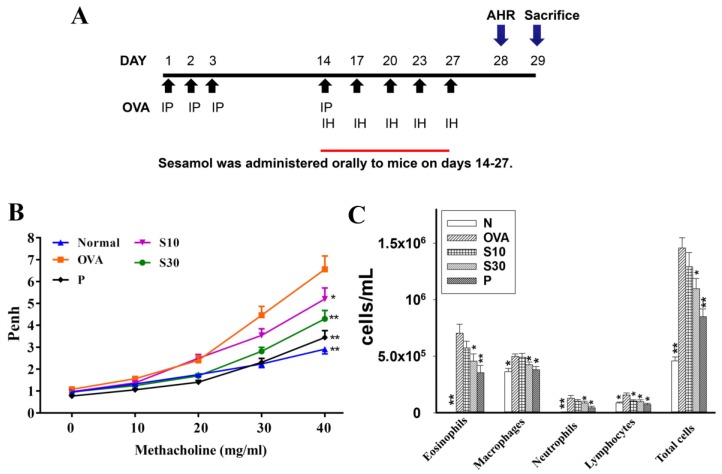
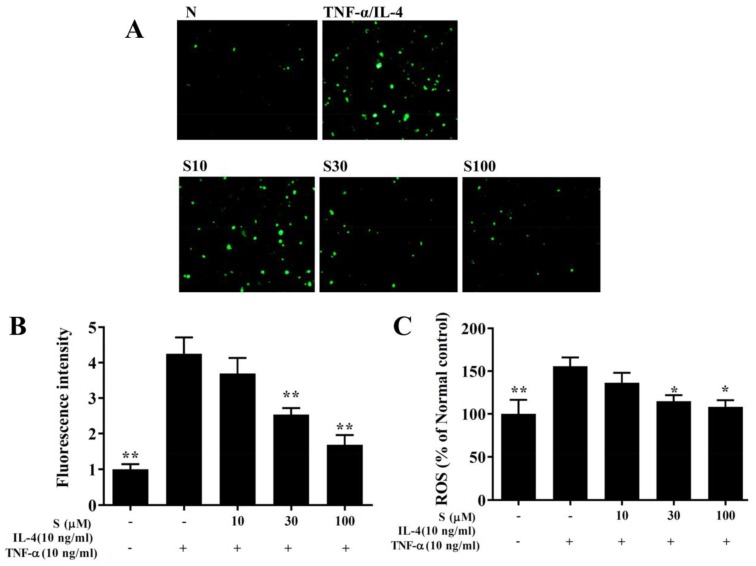
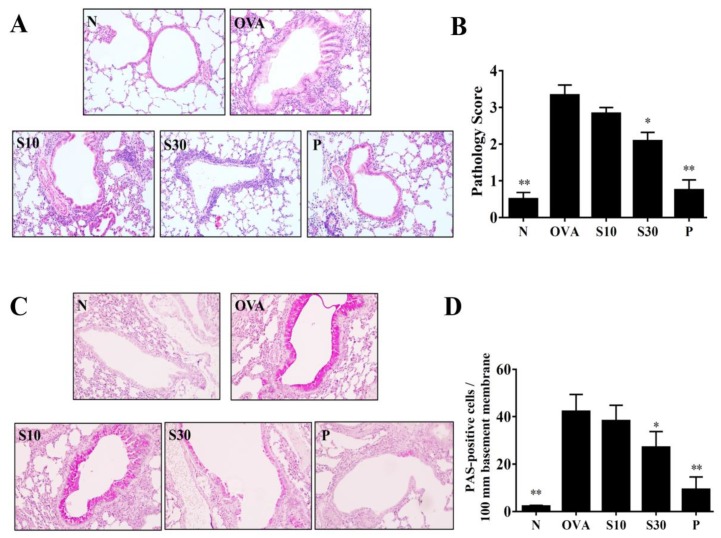
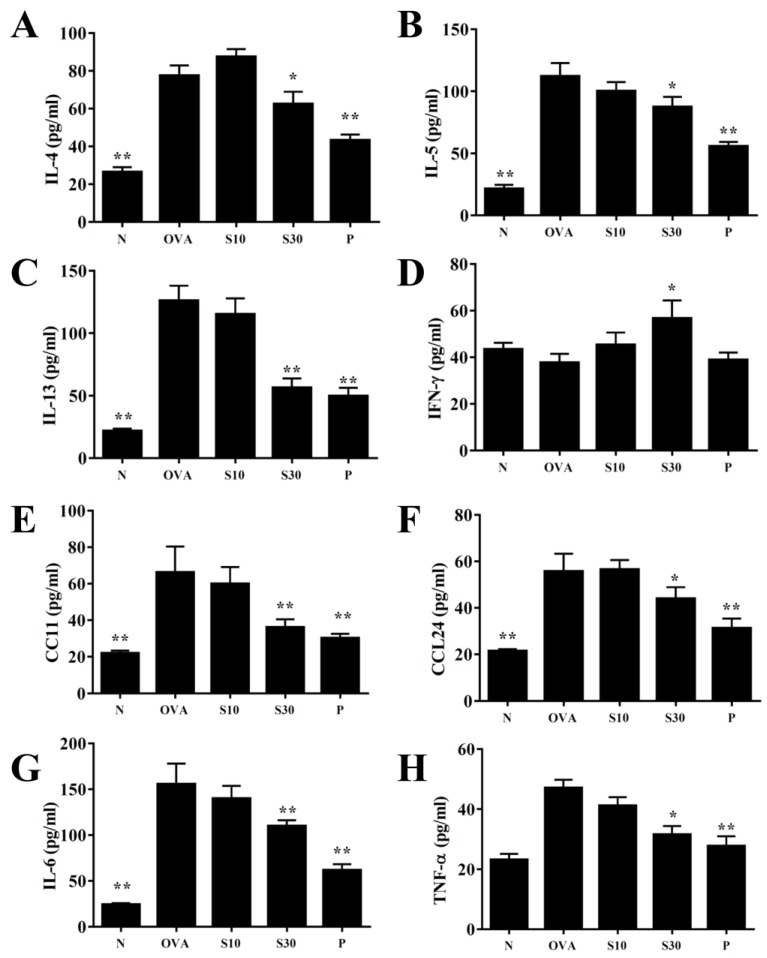
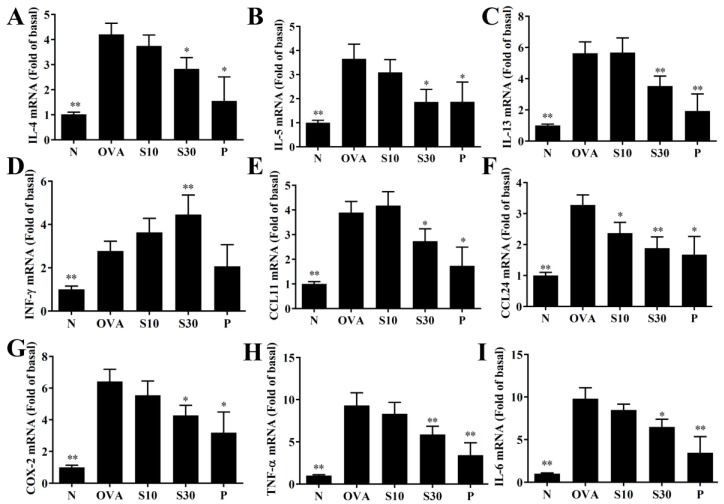
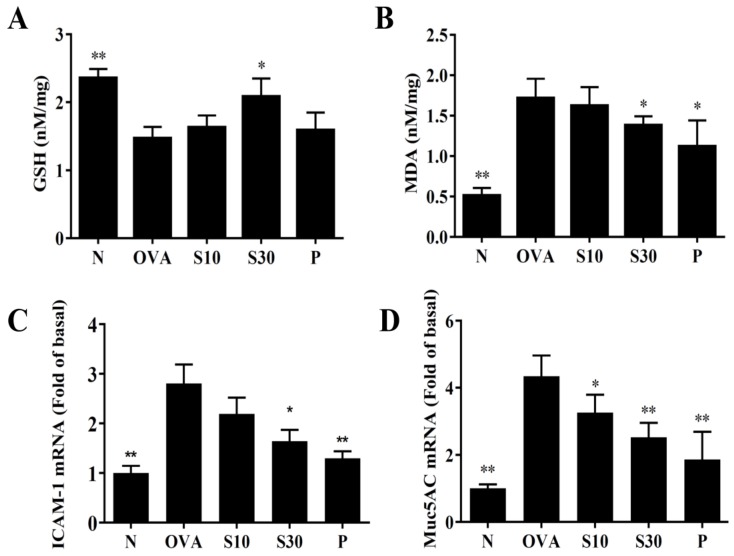
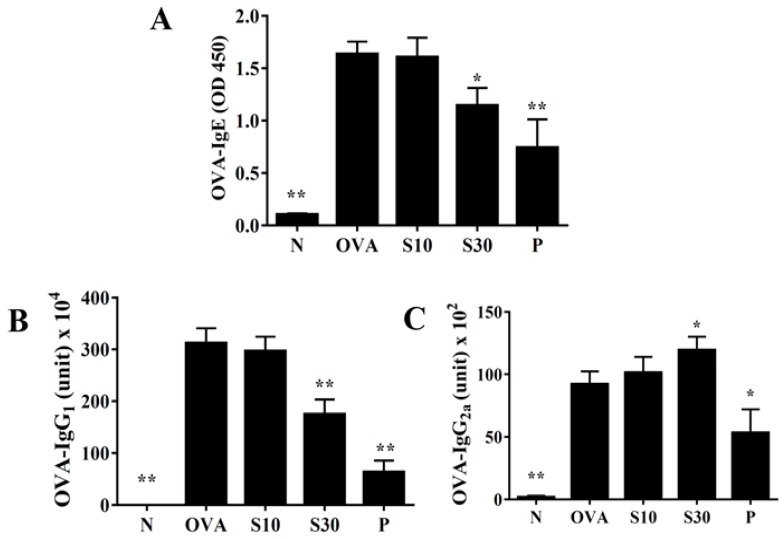
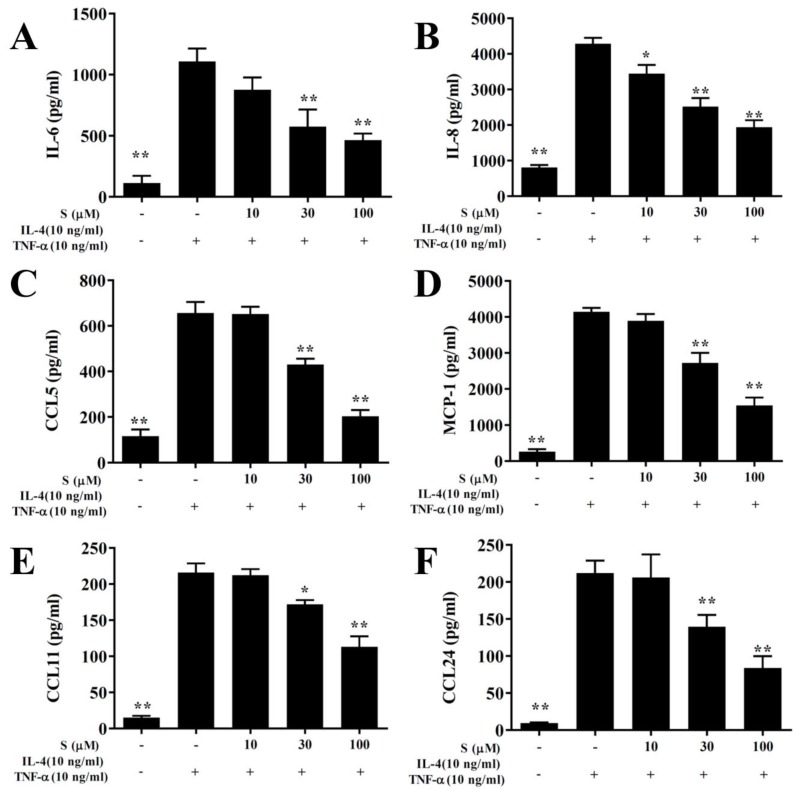
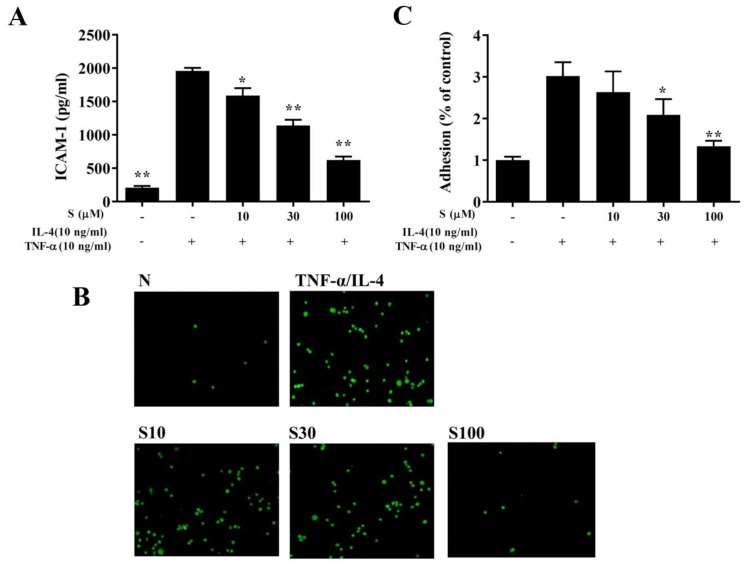
Sesamol, isolated from sesame seeds , was previously shown to have antioxidative, anti-inflammatory, and anti-tumor effects. Sesamol also inhibited lipopolysaccharide (LPS)-induced pulmonary inflammatory response in rats. However, it remains unclear how sesamol regulates airway inflammation and oxidative stress in asthmatic mice. This study aimed to investigate the efficacy of sesamol on oxidative stress and airway inflammation in asthmatic mice and tracheal epithelial cells. BALB/c mice were sensitized with ovalbumin, and received oral sesamol on days 14 to 27. Furthermore, BEAS-2B human bronchial epithelial cells were treated with sesamol to investigate inflammatory cytokine levels and oxidative responses in vitro. Our results demonstrated that oral sesamol administration significantly suppressed eosinophil infiltration in the lung, airway hyperresponsiveness, and T helper 2 cell-associated (Th2) cytokine expressions in bronchoalveolar lavage fluid and the lungs. Sesamol also significantly increased glutathione expression and reduced malondialdehyde levels in the lungs of asthmatic mice. We also found that sesamol significantly reduced proinflammatory cytokine levels and eotaxin in inflammatory BEAS-2B cells. Moreover, sesamol alleviated reactive oxygen species formation, and suppressed intercellular cell adhesion molecule-1 (ICAM-1) expression, which reduced monocyte cell adherence. We demonstrated that sesamol showed potential as a therapeutic agent for improving asthma.
芝麻酚是从芝麻籽中分离出来的,先前已证明它具有抗氧化、抗炎和抗肿瘤作用。芝麻酚还能抑制大鼠体内脂多糖(LPS)诱导的肺部炎症反应。然而,芝麻酚如何调节哮喘小鼠的气道炎症和氧化应激仍不清楚。本研究旨在探讨芝麻酚对哮喘小鼠和气管上皮细胞氧化应激及气道炎症的疗效。用卵清蛋白致敏BALB/c小鼠,并在第14至27天给予口服芝麻酚。此外,用芝麻酚处理BEAS-2B人支气管上皮细胞,以研究体外炎症细胞因子水平和氧化反应。我们的结果表明,口服芝麻酚可显著抑制肺部嗜酸性粒细胞浸润、气道高反应性以及支气管肺泡灌洗液和肺中辅助性T细胞2型(Th2)细胞相关细胞因子的表达。芝麻酚还能显著增加哮喘小鼠肺中谷胱甘肽的表达并降低丙二醛水平。我们还发现,芝麻酚能显著降低炎症性BEAS-2B细胞中促炎细胞因子水平和嗜酸性粒细胞趋化因子。此外,芝麻酚可减轻活性氧的形成,并抑制细胞间黏附分子-1(ICAM-1)的表达,从而减少单核细胞黏附。我们证明芝麻酚具有作为改善哮喘治疗药物的潜力。