Department of Nutrition and Health Sciences, Research Center for Chinese Herbal Medicine, Chang Gung University of Science and Technology, Taoyuan City 33303, Taiwan.
Aesthetic Medical Center, Department of Dermatology, Chang Gung Memorial Hospital, Linkou, Taoyuan City 33303, Taiwan.
Cells. 2021 May 25;10(6):1311. doi: 10.3390/cells10061311.
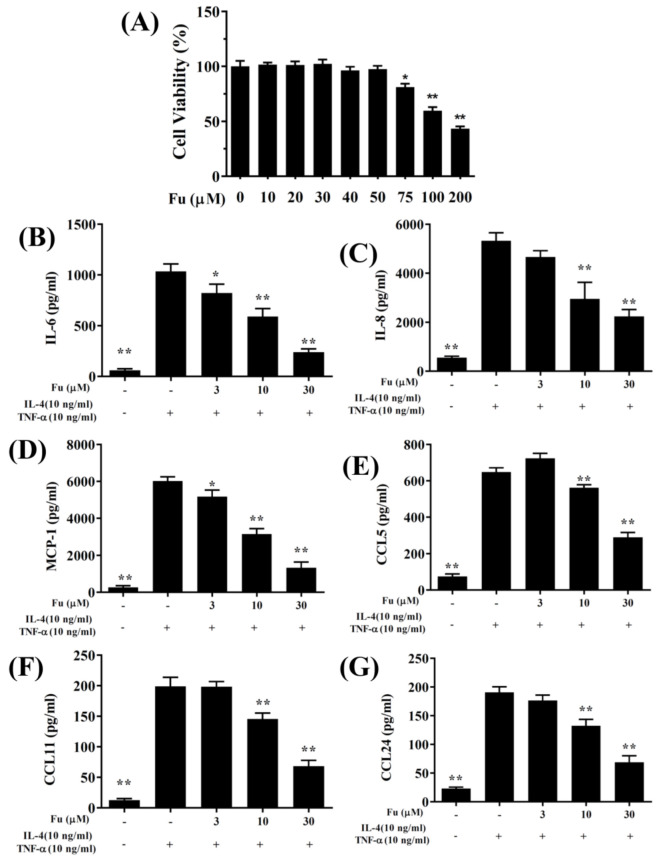
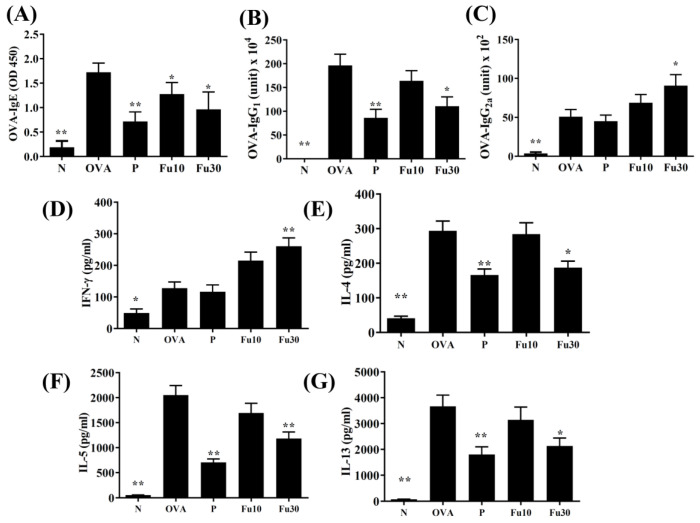
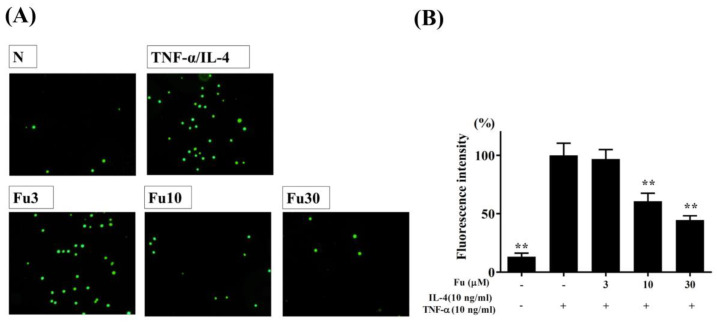
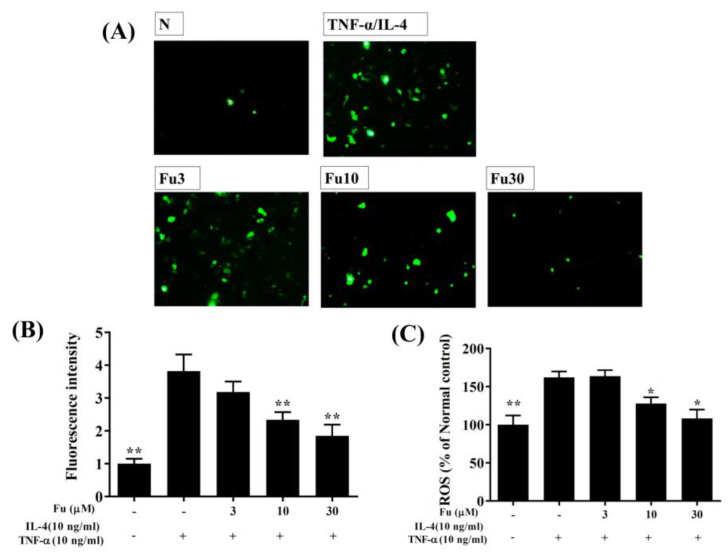
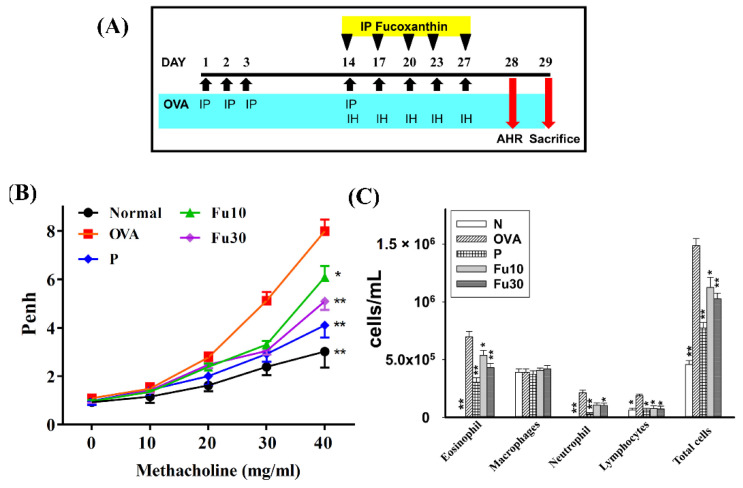
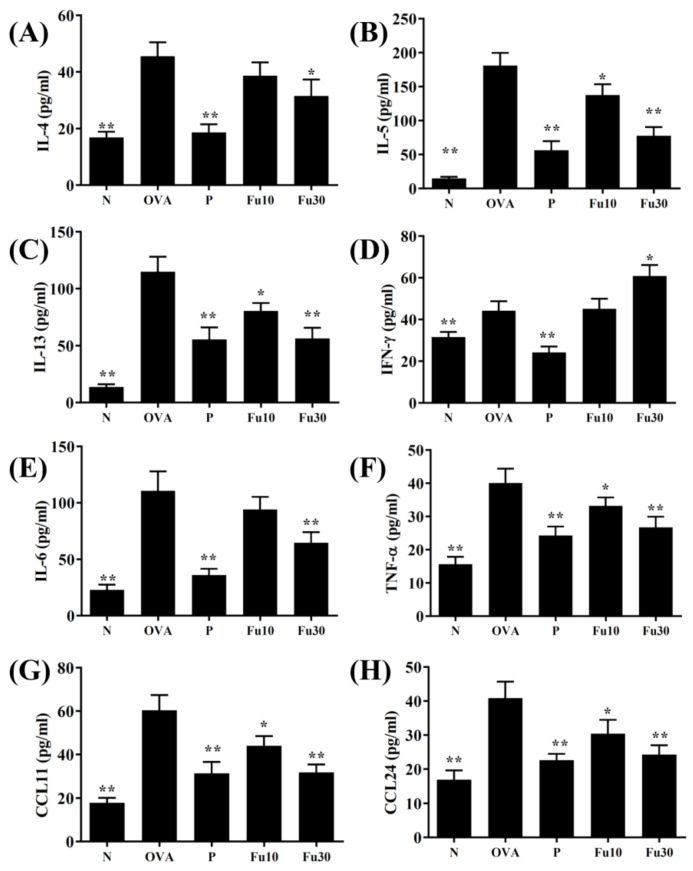
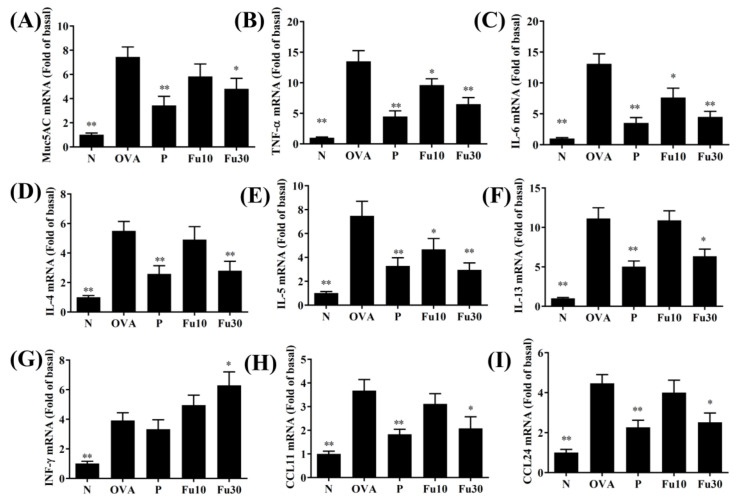
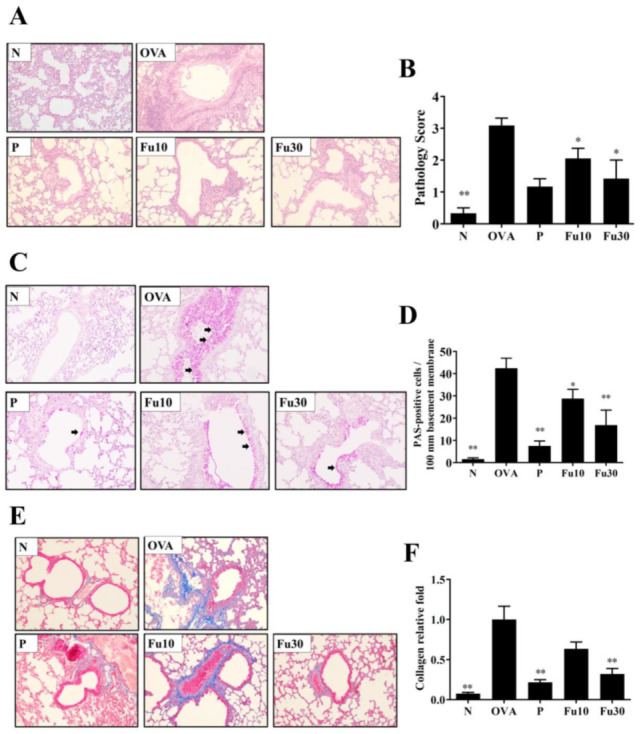
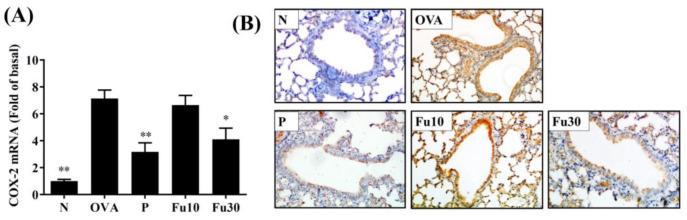
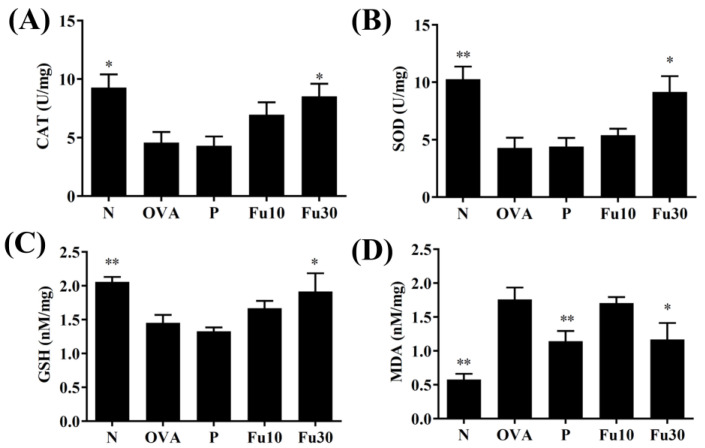
Fucoxanthin is isolated from brown algae and was previously reported to have multiple pharmacological effects, including anti-tumor and anti-obesity effects in mice. Fucoxanthin also decreases the levels of inflammatory cytokines in the bronchoalveolar lavage fluid (BALF) of asthmatic mice. The purpose of the present study was to investigate the effects of fucoxanthin on the oxidative and inflammatory responses in inflammatory human tracheal epithelial BEAS-2B cells and attenuated airway hyperresponsiveness (AHR), airway inflammation, and oxidative stress in asthmatic mice. Fucoxanthin significantly decreased monocyte cell adherence to BEAS-2B cells. In addition, fucoxanthin inhibited the production of pro-inflammatory cytokines, eotaxin, and reactive oxygen species in BEAS-2B cells. Ovalbumin (OVA)-sensitized mice were treated by intraperitoneal injections of fucoxanthin (10 mg/kg or 30 mg/kg), which significantly alleviated AHR, goblet cell hyperplasia and eosinophil infiltration in the lungs, and decreased Th2 cytokine production in the BALF. Furthermore, fucoxanthin significantly increased glutathione and superoxide dismutase levels and reduced malondialdehyde (MDA) levels in the lungs of asthmatic mice. These data demonstrate that fucoxanthin attenuates inflammation and oxidative stress in inflammatory tracheal epithelial cells and improves the pathological changes related to asthma in mice. Thus, fucoxanthin has therapeutic potential for improving asthma.
岩藻黄质从褐藻中分离得到,先前已有报道称其具有多种药理作用,包括在小鼠中具有抗肿瘤和抗肥胖作用。岩藻黄质还可降低哮喘小鼠支气管肺泡灌洗液(BALF)中炎性细胞因子的水平。本研究旨在探讨岩藻黄质对炎性人气管上皮 BEAS-2B 细胞的氧化和炎症反应的影响,并减轻哮喘小鼠的气道高反应性(AHR)、气道炎症和氧化应激。岩藻黄质可显著降低单核细胞对 BEAS-2B 细胞的黏附。此外,岩藻黄质可抑制 BEAS-2B 细胞中促炎细胞因子、嗜酸性粒细胞趋化因子和活性氧的产生。卵清蛋白(OVA)致敏的小鼠通过腹腔注射岩藻黄质(10mg/kg 或 30mg/kg)进行治疗,可显著缓解 AHR、肺部杯状细胞增生和嗜酸性粒细胞浸润,并降低 BALF 中的 Th2 细胞因子产生。此外,岩藻黄质可显著增加哮喘小鼠肺部的谷胱甘肽和超氧化物歧化酶水平,并降低丙二醛(MDA)水平。这些数据表明,岩藻黄质可减轻炎性气管上皮细胞中的炎症和氧化应激,并改善与哮喘相关的小鼠病理变化。因此,岩藻黄质具有改善哮喘的治疗潜力。