Nayak Bhukya P, Dolkart Oleg, Satwalekar Parth, Kumar Yeramala P, Chandrasekar Anam, Fromovich Ophir, Yakobson Elad, Barak Shlomo, Dayube Ulisses, Shibli Jamil A
SVS Institute of Dental Sciences, Mahabubnagar, Kaloji Narayana Rao University of Health Sciences, Telangana 509001, India.
Division of Orthopedic Surgery, Tel Aviv Sourasky Medical Center, Tel Aviv University Sackler Faculty of Medicine, Tel Aviv 6423906, Israel.
Materials (Basel). 2020 Apr 3;13(7):1667. doi: 10.3390/ma13071667.
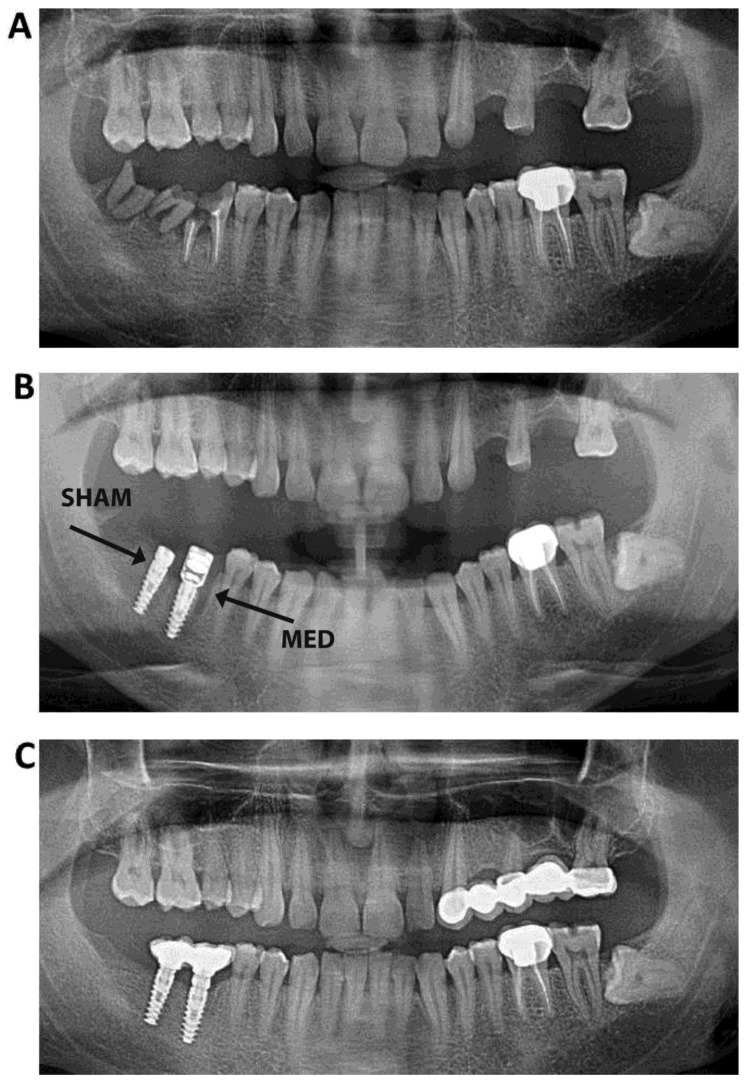
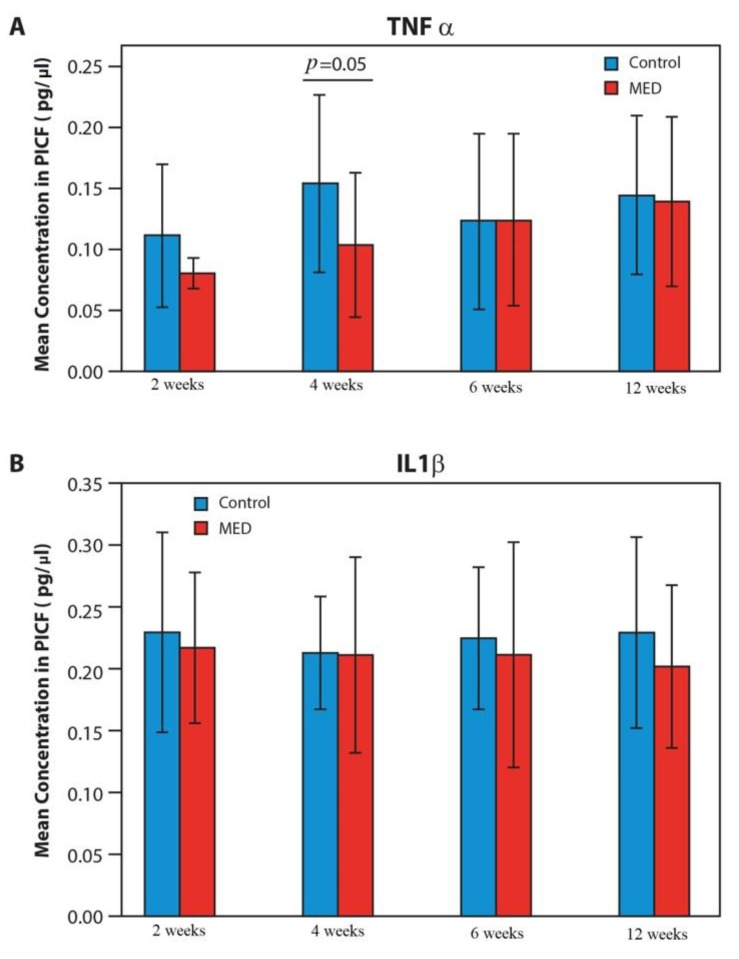
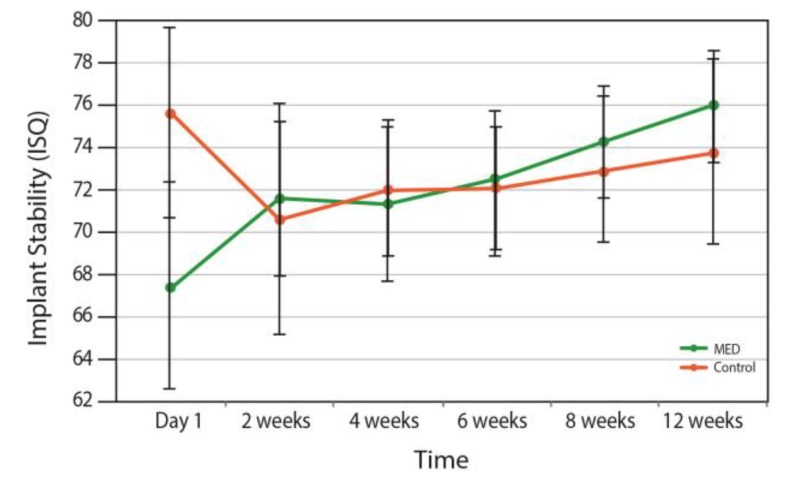
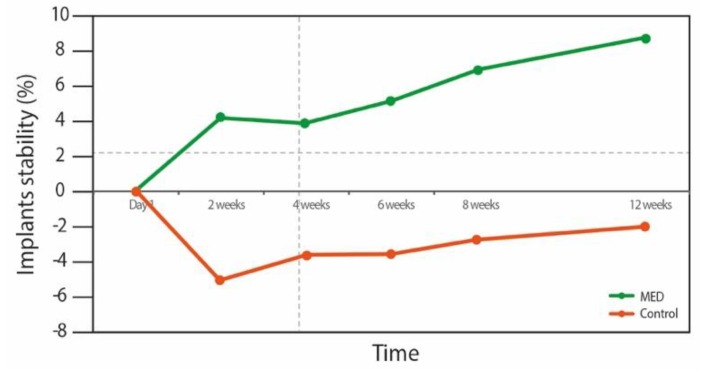
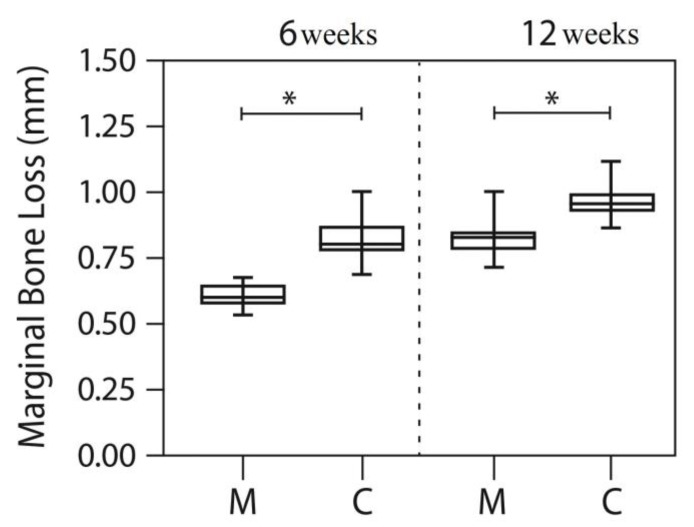
A pulsed electromagnetic field (PEMF) has been shown to contribute to heightening bone regeneration in a range of clinical areas, including dentistry. Due to the scarcity of studies using PEMF in oral implantology, the present experiment scrutinized the effect of PEMF can lead to improving the stability of the implant. A total of 19 subjects (40 implants in total) were selected to participate in the current study and were randomly allocated to either the PEMF group or control group. Subjects in the PEMF group received an activated miniaturized electromagnetic device (MED) while the control group received a sham healing cup. Implants stability was assessed by resonance frequency analyses (RFA) via implant stability quotient (ISQ) calculations. RFA were recorded as following: immediately after procedure, and then 2, 4, 6, 8 and 12 weeks later. Radiographic analysis was performed at baseline, 6 and 12 weeks after implant placement. Proinflammatory cytokines were evaluated in peri-implant crevicular fluid (PICF). The PEMF group presented higher ISQ mean values when compared to the control group. The primary stability time frame (the first 2 weeks) MED group depicted an increase in stability of 6.8%, compared to a decrease of 7.6% in the control group related to the baseline. An overall stability increase of 13% was found in MED treated group ( = 0.02), in contrast, the overall stability in the control group decreased by 2% ( = 0.008). TNF-α concentration during first 4 weeks was lower in the MED treated group. The data strongly suggests that MED generated continuing a PEMF may be considered as a new way to stimulate the stability of the implants at the early healing period.
脉冲电磁场(PEMF)已被证明有助于在包括牙科在内的一系列临床领域中促进骨再生。由于在口腔种植学中使用PEMF的研究较少,本实验研究了PEMF对提高种植体稳定性的影响。总共选择了19名受试者(共40颗种植体)参与本研究,并将他们随机分配到PEMF组或对照组。PEMF组的受试者接受了一个激活的小型电磁装置(MED),而对照组接受了一个假愈合杯。通过共振频率分析(RFA)和种植体稳定性商数(ISQ)计算来评估种植体稳定性。RFA记录如下:手术后立即记录,然后在术后2、4、6、8和12周记录。在种植体植入后的基线、6周和12周进行影像学分析。对种植体周围龈沟液(PICF)中的促炎细胞因子进行评估。与对照组相比,PEMF组的ISQ平均值更高。在最初的稳定期(前2周),MED组的稳定性增加了6.8%,而对照组与基线相比下降了7.6%。MED治疗组的总体稳定性增加了13%(P = 0.02),相比之下,对照组的总体稳定性下降了2%(P = 0.008)。在MED治疗组中,前4周的肿瘤坏死因子-α浓度较低。数据强烈表明,产生PEMF的MED可被视为在早期愈合期刺激种植体稳定性的一种新方法。