Avelar Roberto A, Ortega Javier Gómez, Tacutu Robi, Tyler Eleanor J, Bennett Dominic, Binetti Paolo, Budovsky Arie, Chatsirisupachai Kasit, Johnson Emily, Murray Alex, Shields Samuel, Tejada-Martinez Daniela, Thornton Daniel, Fraifeld Vadim E, Bishop Cleo L, de Magalhães João Pedro
Integrative Genomics of Ageing Group, Institute of Ageing and Chronic Disease, University of Liverpool, Liverpool, L7 8TX, UK.
School of Biological Sciences, Monash University, Melbourne, VIC, 3800, Australia.
Genome Biol. 2020 Apr 7;21(1):91. doi: 10.1186/s13059-020-01990-9.
Cellular senescence, a permanent state of replicative arrest in otherwise proliferating cells, is a hallmark of aging and has been linked to aging-related diseases. Many genes play a role in cellular senescence, yet a comprehensive understanding of its pathways is still lacking.
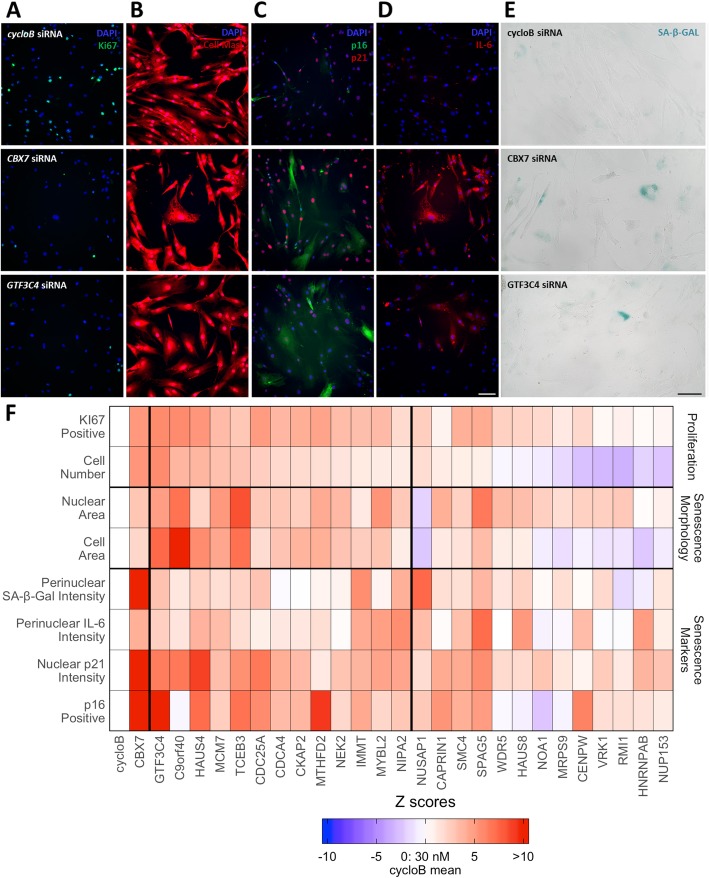
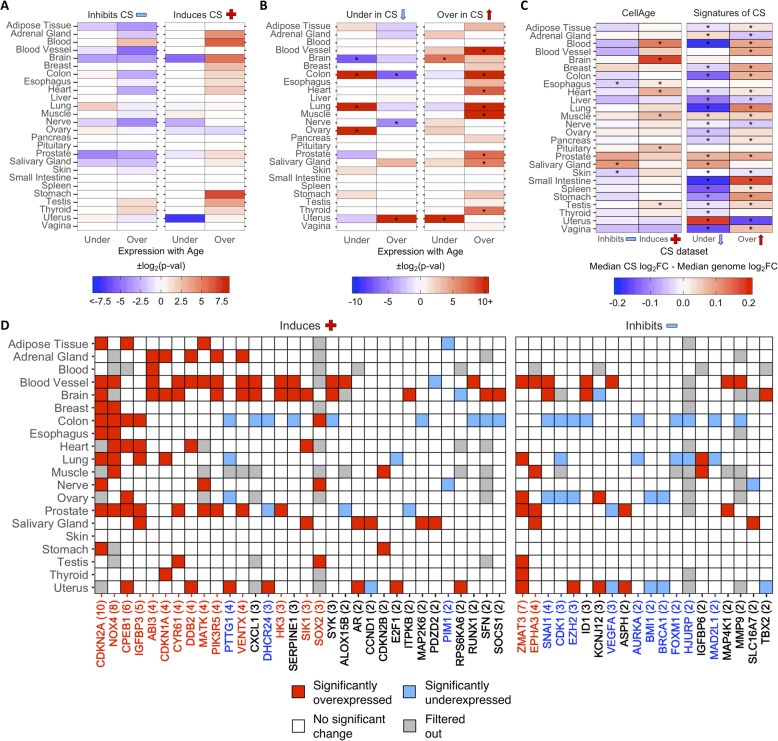
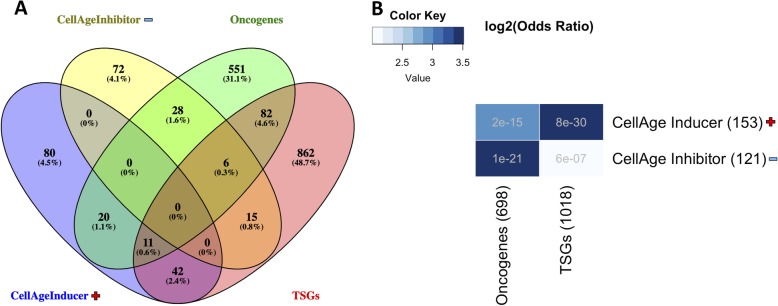
We develop CellAge (http://genomics.senescence.info/cells), a manually curated database of 279 human genes driving cellular senescence, and perform various integrative analyses. Genes inducing cellular senescence tend to be overexpressed with age in human tissues and are significantly overrepresented in anti-longevity and tumor-suppressor genes, while genes inhibiting cellular senescence overlap with pro-longevity and oncogenes. Furthermore, cellular senescence genes are strongly conserved in mammals but not in invertebrates. We also build cellular senescence protein-protein interaction and co-expression networks. Clusters in the networks are enriched for cell cycle and immunological processes. Network topological parameters also reveal novel potential cellular senescence regulators. Using siRNAs, we observe that all 26 candidates tested induce at least one marker of senescence with 13 genes (C9orf40, CDC25A, CDCA4, CKAP2, GTF3C4, HAUS4, IMMT, MCM7, MTHFD2, MYBL2, NEK2, NIPA2, and TCEB3) decreasing cell number, activating p16/p21, and undergoing morphological changes that resemble cellular senescence.
Overall, our work provides a benchmark resource for researchers to study cellular senescence, and our systems biology analyses reveal new insights and gene regulators of cellular senescence.
细胞衰老,即原本增殖的细胞进入永久性复制停滞状态,是衰老的一个标志,并且与衰老相关疾病有关。许多基因在细胞衰老中发挥作用,但对其通路仍缺乏全面的了解。
总体而言,我们的工作为研究细胞衰老的研究人员提供了一个基准资源,并且我们的系统生物学分析揭示了细胞衰老的新见解和基因调节因子。