1Foshan Maternal and Child Health Research Institute, South Medical University Affiliated Maternal & Child Health Hospital of Foshan, 11 Renmin Xi Street, Foshan, 528000 China.
2Department of Dermatology and Pheumatology, South Medical University Affiliated Maternal & Child Health Hospital of Foshan, 11 Renmin Xi Street, Foshan, 528000 China.
Cell Mol Biol Lett. 2020 Mar 31;25:25. doi: 10.1186/s11658-020-00218-9. eCollection 2020.
Cervical cancer remains the second leading cause of mortality in women in developing countries. While surgery, chemotherapy, radiotherapy, and vaccine therapy are being applied for its treatment, individually or in combination, the survival rate in advanced cervical cancer patients is still very low. Traditional Chinese medicine has been found to be effective in the treatment of cervical cancer. Astragaloside IV (AS-IV), a compound belonging to polysaccharides, shows anticancer activity through several cell signaling pathways. However, the detailed molecular mechanism governing the anticancer activity of AS-IV remains unknown.
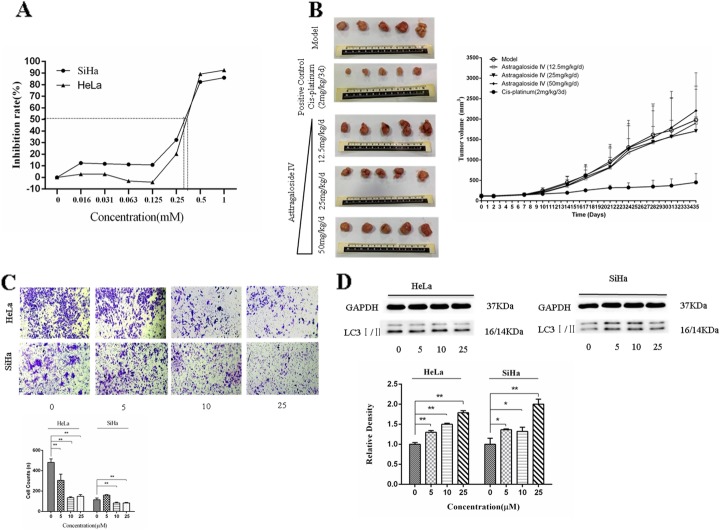
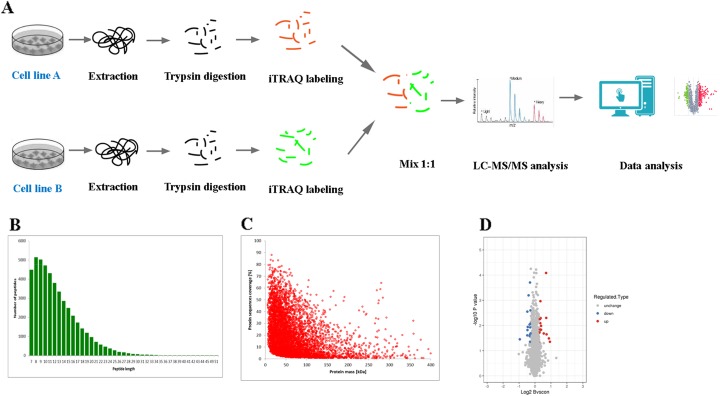
In our study, we performed tumor xenograft analysis, transwell cell migration and invasion assay, Western blot analysis, and iTRAQ combination by parallel reaction monitoring (PRM) analysis to study the molecular mechanism of AS-IV in the suppression of cervical cancer cell invasion.
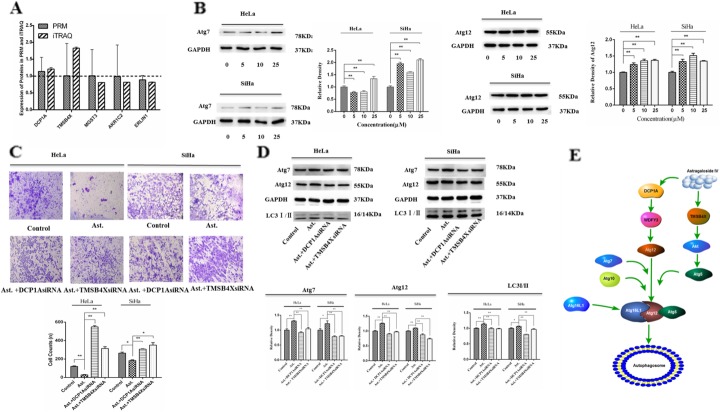
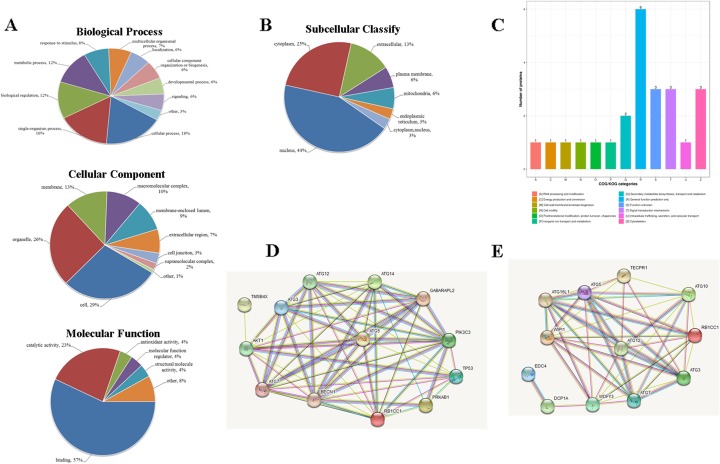
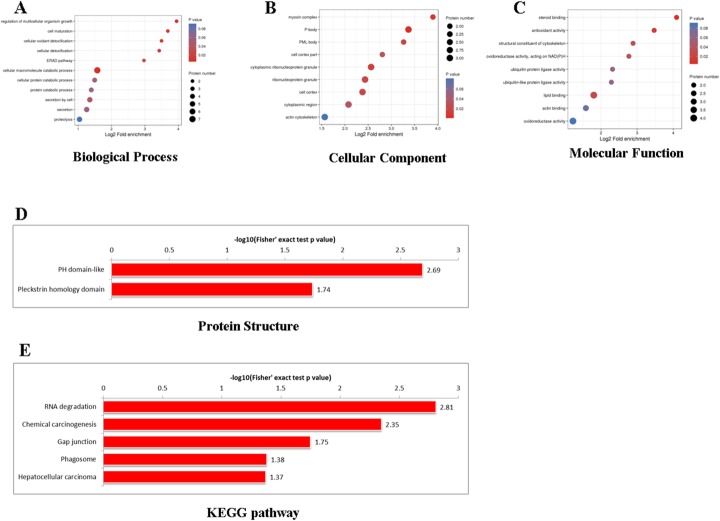
Our results showed that AS-IV suppressed cervical cancer cell invasion and induced autophagy in them, with the tumor growth curve increasing slowly. We also identified 32 proteins that were differentially expressed in the SiHa cells when treated with AS-IV, with 16 of them involved in the upregulation and 16 in the downregulation of these cells. These differentially expressed proteins, which were predominantly actin-myosin complexes, controlled cell proliferation and cell development by steroid binding and altering the composition of the cell cytoskeleton. DCP1A and TMSB4X, the two proteins regulating autophagy, increased in cervical cancer cells when treated with AS-IV.
We conclude that AS-IV could inhibit cervical cancer invasion by inducing autophagy in cervical cancer cells. Since iTRAQ combination by PRM has been observed to be useful in identifying macromolecular target compounds, it may be considered as a novel strategy in the screening of anticancer compounds used in the treatment of cervical cancer.
宫颈癌仍然是发展中国家女性死亡的第二大主要原因。虽然手术、化疗、放疗和疫苗治疗正在被应用于治疗,单独或联合应用,晚期宫颈癌患者的生存率仍然很低。中药已被证明在治疗宫颈癌方面有效。黄芪甲苷 IV(AS-IV),一种属于多糖的化合物,通过几种细胞信号通路显示出抗癌活性。然而,AS-IV 抗癌活性的详细分子机制尚不清楚。
在我们的研究中,我们进行了肿瘤异种移植分析、Transwell 细胞迁移和侵袭试验、Western blot 分析和 iTRAQ 组合通过平行反应监测(PRM)分析来研究 AS-IV 抑制宫颈癌细胞侵袭的分子机制。
我们的结果表明,AS-IV 抑制宫颈癌细胞侵袭并诱导其自噬,肿瘤生长曲线缓慢增加。我们还发现,当用 AS-IV 处理 SiHa 细胞时,有 32 种蛋白质的表达水平不同,其中 16 种上调,16 种下调。这些差异表达的蛋白质主要是肌动球蛋白复合物,通过类固醇结合和改变细胞细胞骨架的组成来控制细胞增殖和细胞发育。DCP1A 和 TMSB4X 这两种调节自噬的蛋白质,在 AS-IV 处理的宫颈癌细胞中增加。
我们得出结论,AS-IV 可以通过诱导宫颈癌细胞自噬来抑制宫颈癌的侵袭。由于 iTRAQ 组合通过 PRM 已被观察到可用于鉴定大分子靶化合物,因此它可能被认为是筛选用于治疗宫颈癌的抗癌化合物的一种新策略。