Sorbonne Université, UPMC, Paris, France.
INRA, UMR ECOSYS, INRA, AgroParisTech, Université Paris-Saclay, 78850, Thiverval-Grignon, France.
Sci Rep. 2020 Apr 8;10(1):6104. doi: 10.1038/s41598-020-63091-8.
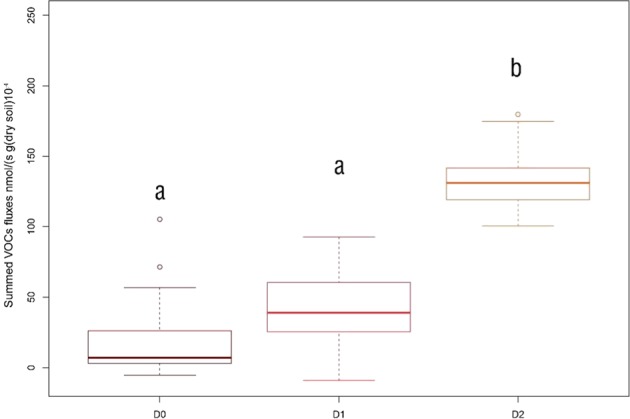
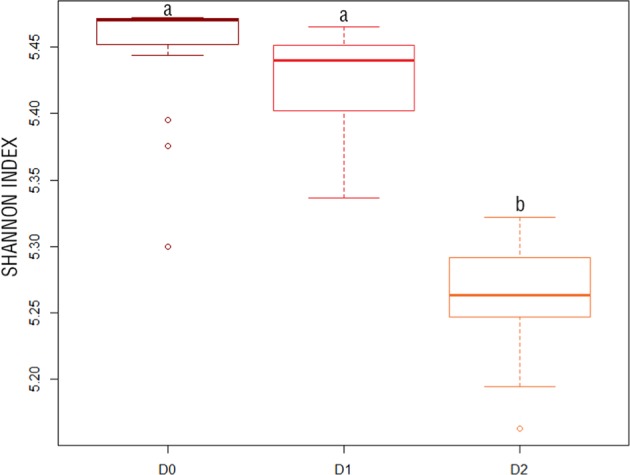
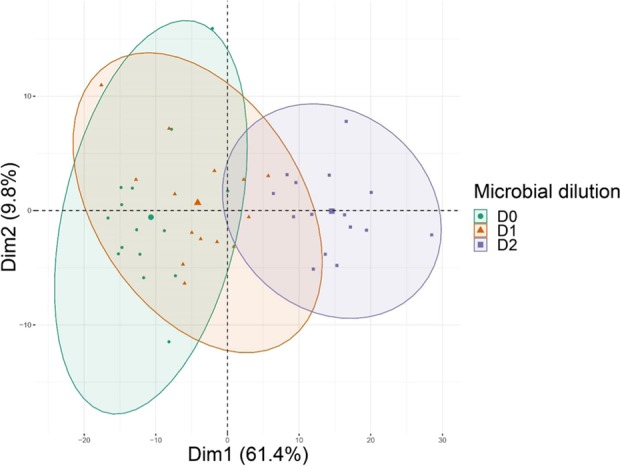
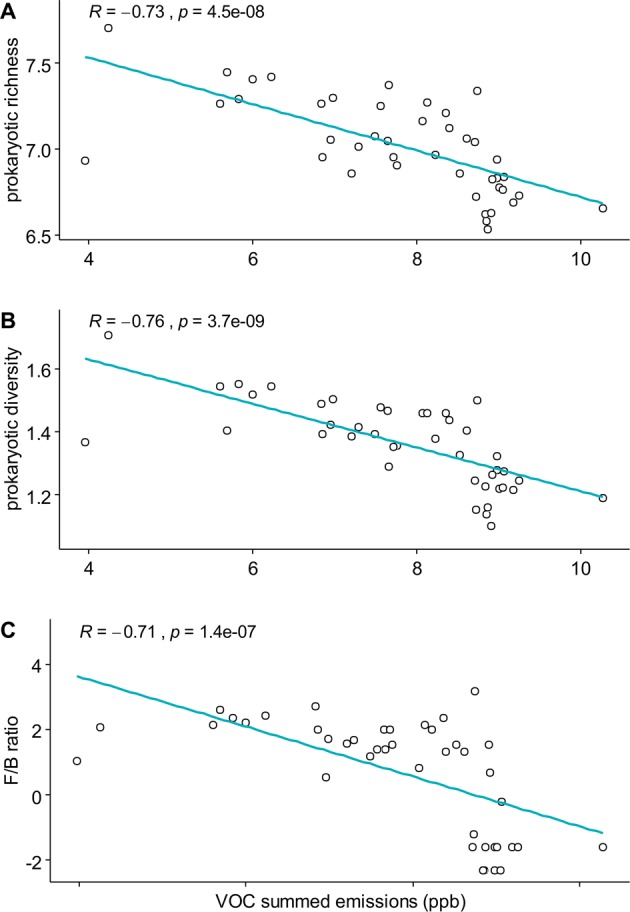
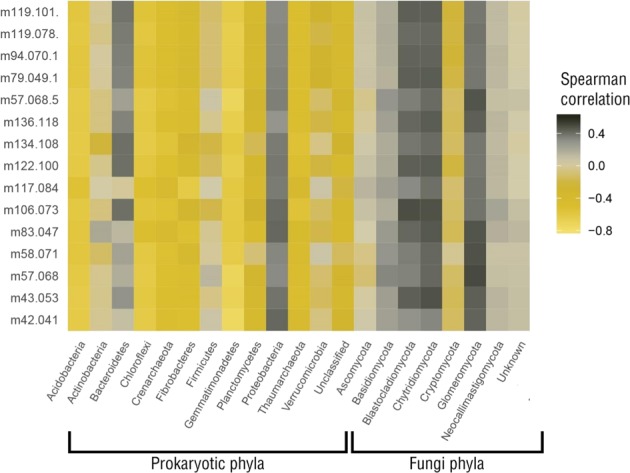
Microorganisms in soil are known to be a source and a sink of volatile organic compounds (VOCs). The role of the microbial VOCs on soil ecosystem regulation has been increasingly demonstrated in the recent years. Nevertheless, little is known about the influence of the microbial soil community structure and diversity on VOC emissions. This novel study analyzed the effect of reduced microbial diversity in soil on VOC emissions. We found that reduced levels of microbial diversity in soil increased VOC emissions from soils, while the number of different VOCs emitted decreased. Furthermore, we found that Proteobacteria, Bacteroidetes and fungi phyla were positively correlated to VOC emissions, and other prokaryotic phyla were either negatively correlated or very slightly positively correlated to VOCs emissions. Our interpretation is that Proteobacteria, Bacteroidetes and fungi were VOC producers while the other prokaryotic phyla were consumers. Finally, we discussed the possible role of VOCs as mediators of microbial interactions in soil.
土壤中的微生物被认为是挥发性有机化合物(VOCs)的源和汇。近年来,微生物 VOCs 对土壤生态系统调节的作用越来越受到重视。然而,关于微生物土壤群落结构和多样性对 VOC 排放的影响知之甚少。本研究分析了土壤微生物多样性降低对 VOC 排放的影响。我们发现,土壤微生物多样性降低会增加土壤 VOC 的排放,而排放的 VOC 种类减少。此外,我们发现变形菌门、拟杆菌门和真菌门与 VOC 排放呈正相关,而其他原核生物门与 VOC 排放呈负相关或相关性很小。我们的解释是,变形菌门、拟杆菌门和真菌是 VOC 的产生者,而其他原核生物门是 VOC 的消费者。最后,我们讨论了 VOCs 作为土壤微生物相互作用介质的可能作用。