Division of Rheumatology, University of California - San Francisco, San Francisco, California.
San Francisco VA Medical Center, San Francisco, California.
Health Expect. 2020 Aug;23(4):846-859. doi: 10.1111/hex.13057. Epub 2020 Apr 9.
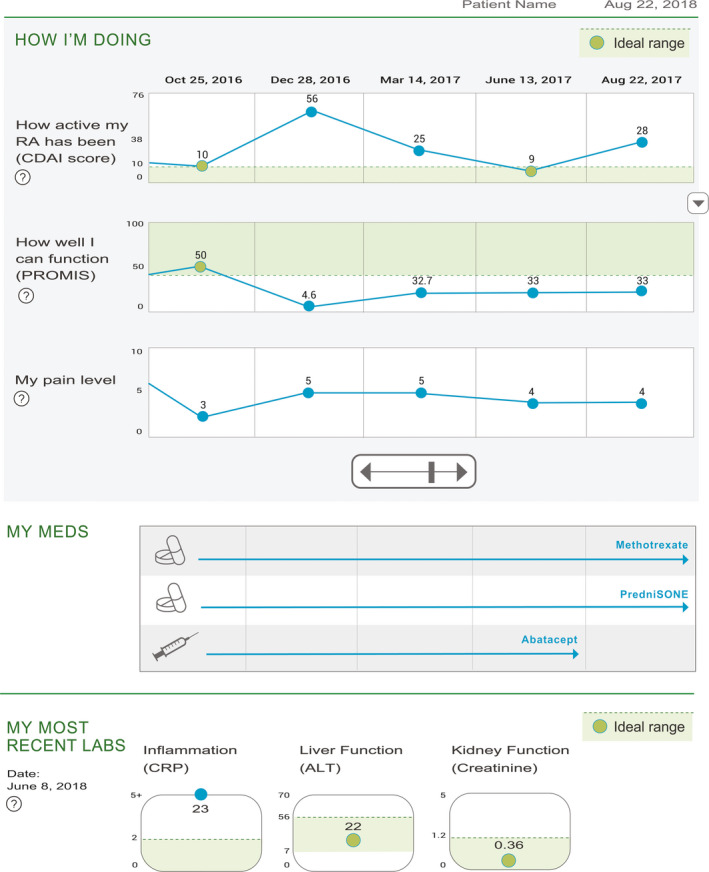
Poor patient-clinician communication around patient-reported outcomes (PROs) is a barrier to the effective management of rheumatoid arthritis (RA). We aimed to develop an RA 'dashboard' that could facilitate conversations about PROs and that would be acceptable to a wide range of patients, including English and Spanish speakers and patients with adequate or limited health literacy.
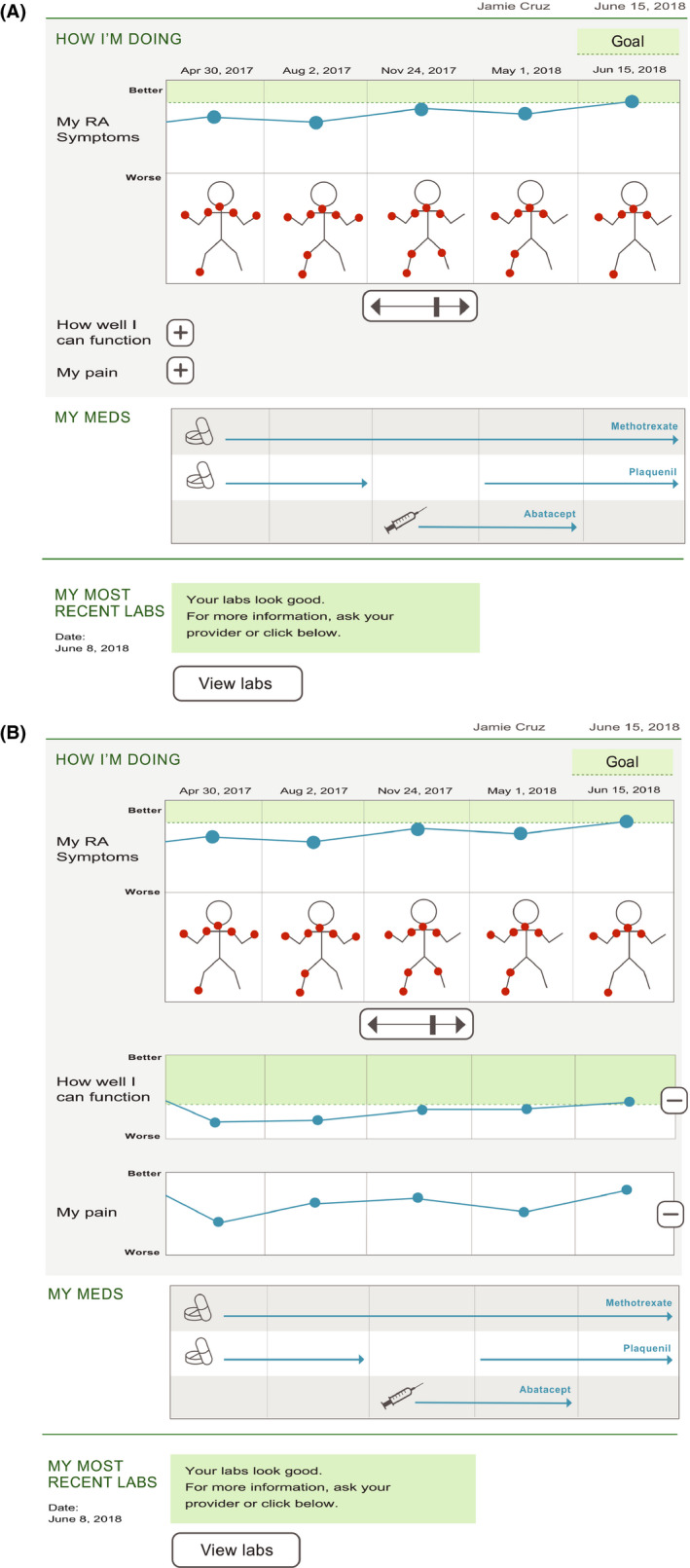
A diverse group of RA patients along with clinicians from two academic rheumatology clinics joined separate focus groups. We solicited feedback and made iterative changes to mock-ups of an RA dashboard that visualized PROs using a human-centred design process. We used the thematic analysis method to identify and characterize themes from the focus groups and used these insights to refine the dashboard.
We conducted six focus groups involving 25 RA patients and three groups with 11 clinicians. Patients and clinicians agreed that the dashboard could enhance communication about PROs and RA disease activity and could promote patient self-management. Patients varied in their (a) comprehension, (b) preferences for the display and features of the dashboard, and (c) desired uses for the dashboard. Clinicians expressed significant concerns about the logistics of using the dashboard in clinical practice.
Using principles of human-centred design, we created an RA dashboard that was well-accepted among patients and clinicians. The ability to customize the data display is important for tailoring the dashboard to patients with diverse needs and preferences. Special attention should be given to feasibility concerns voiced by clinicians.
医患之间在报告患者结果(PROs)方面沟通不畅,是类风湿关节炎(RA)管理效果不佳的一个障碍。我们旨在开发一个 RA“仪表盘”,以促进有关 PROs 的对话,并且能被包括讲英语和西班牙语的患者以及健康素养不同的患者在内的广泛患者群体所接受。
来自两个学术性风湿病诊所的一组多样化的 RA 患者和临床医生参加了单独的焦点小组。我们使用以人为中心的设计过程,针对使用 PROs 的 RA 仪表盘模型,征求反馈意见并进行迭代更改。我们使用主题分析方法从焦点小组中识别和描述主题,并利用这些见解来改进仪表盘。
我们进行了 6 次焦点小组讨论,涉及 25 名 RA 患者和 3 组共 11 名临床医生。患者和临床医生均认为,仪表盘能够增强 PROs 和 RA 疾病活动的沟通,并能促进患者自我管理。患者对仪表盘的(a)理解、(b)对仪表盘的显示和功能的偏好,以及(c)对仪表盘的期望用途存在差异。临床医生对在临床实践中使用仪表盘的后勤工作表示极大的关注。
我们使用以人为中心的设计原则,创建了一个 RA 仪表盘,在患者和临床医生中都得到了很好的认可。能够自定义数据显示对于根据患者的不同需求和偏好来定制仪表盘非常重要。应特别关注临床医生提出的可行性问题。