Moros Maria, Di Maria Francesca, Dardano Principia, Tommasini Giuseppina, Castillo-Michel Hiram, Kovtun Alessandro, Zangoli Mattia, Blasio Martina, De Stefano Luca, Tino Angela, Barbarella Giovanna, Tortiglione Claudia
Istituto di Scienze Applicate e Sistemi Intelligenti "E.Caianiello", Consiglio Nazionale delle Ricerche, Via Campi Flegrei, 34, 80078 Pozzuoli, Italy.
Istituto per la Sintesi Organica e Fotoreattività, Consiglio Nazionale delle Ricerche, Via Piero Gobetti, 101, 40129 Bologna, Italy; Istituto di Nanotecnologia, Consiglio Nazionale delle Ricerche, c/o Campus Ecotekne - Università del Salento, via Monteroni, 73100 Lecce, Italy.
iScience. 2020 Apr 24;23(4):101022. doi: 10.1016/j.isci.2020.101022. Epub 2020 Mar 30.
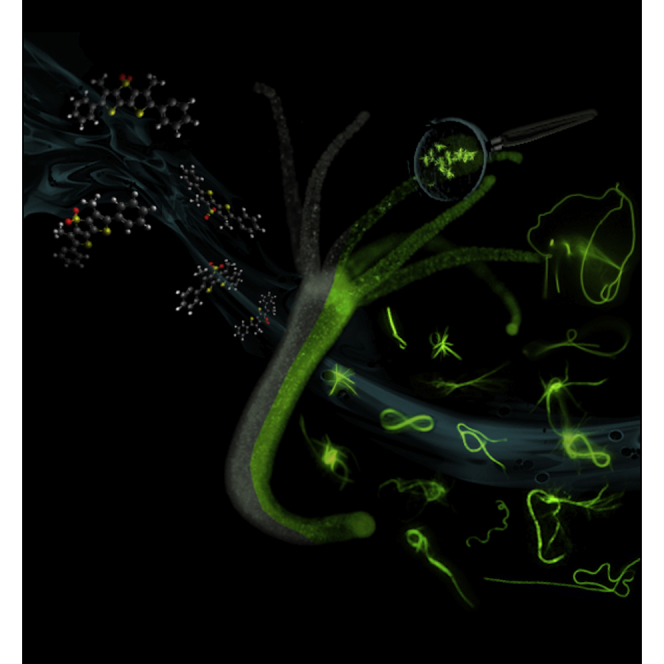
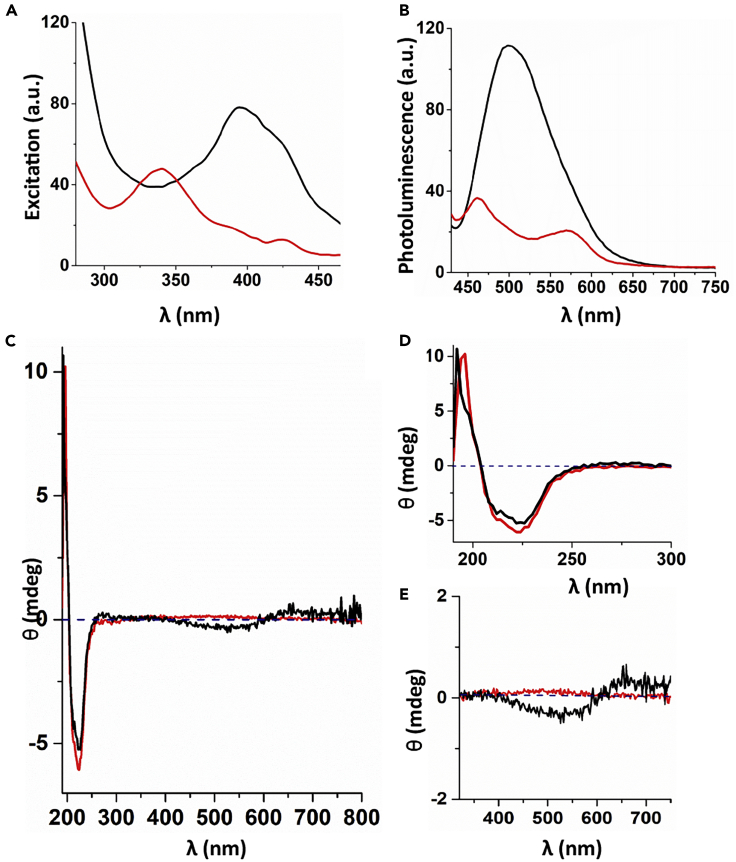
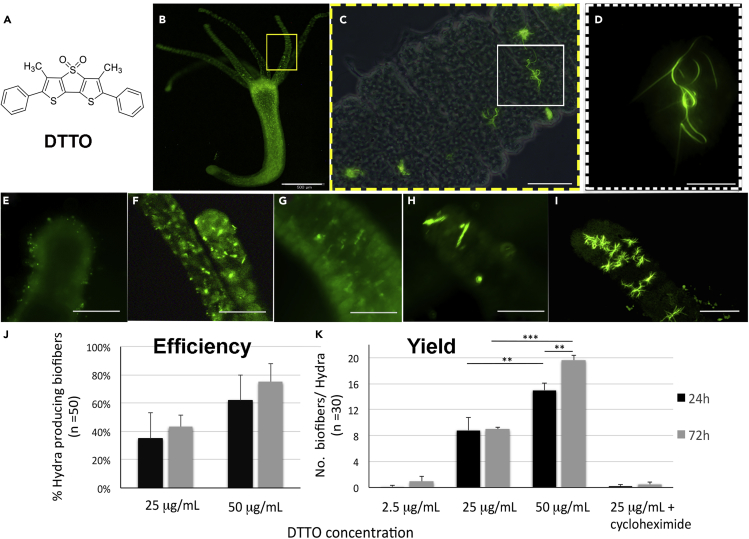
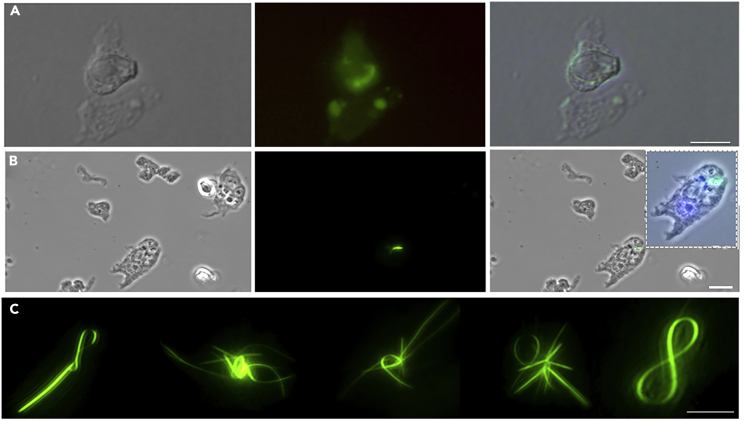
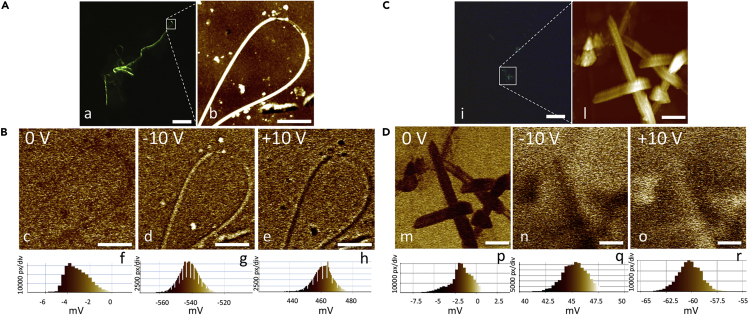
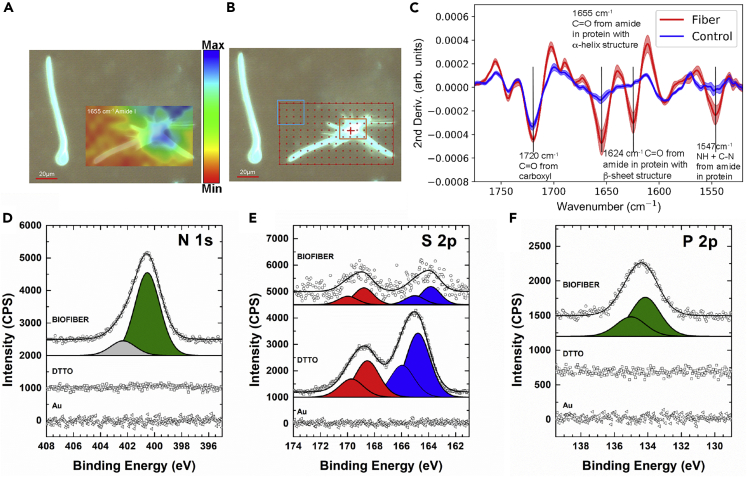
Engineering protein-based biomaterials is extremely challenging in bioelectronics, medicine, and materials science, as mechanical, electrical, and optical properties need to be merged to biocompatibility and resistance to biodegradation. An effective strategy is the engineering of physiological processes in situ, by addition of new properties to endogenous components. Here we show that a green fluorescent semiconducting thiophene dye, DTTO, promotes, in vivo, the biogenesis of fluorescent conductive protein microfibers via metabolic pathways. By challenging the simple freshwater polyp Hydra vulgaris with DTTO, we demonstrate the stable incorporation of the dye into supramolecular protein-dye co-assembled microfibers without signs of toxicity. An integrated multilevel analysis including morphological, optical, spectroscopical, and electrical characterization shows electrical conductivity of biofibers, opening the door to new opportunities for augmenting electronic functionalities within living tissue, which may be exploited for the regulation of cell and animal physiology, or in pathological contexts to enhance bioelectrical signaling.
在生物电子学、医学和材料科学领域,基于蛋白质的生物材料工程极具挑战性,因为机械、电学和光学特性需要与生物相容性和抗生物降解性相结合。一种有效的策略是通过向内源成分添加新特性来原位设计生理过程。在这里,我们展示了一种绿色荧光半导体噻吩染料DTTO,在体内通过代谢途径促进荧光导电蛋白微纤维的生物合成。通过用DTTO处理简单的淡水水螅,我们证明了该染料能稳定地掺入超分子蛋白-染料共组装微纤维中,且没有毒性迹象。包括形态学、光学、光谱学和电学表征在内的综合多层次分析表明生物纤维具有导电性,为增强活组织内的电子功能带来了新机遇,这可用于调节细胞和动物生理,或在病理情况下增强生物电信号传导。