Hang Jian, Li Yuguo, Ching W H, Wei Jianjian, Jin Ruiqiu, Liu Li, Xie Xiaojian
Department of Atmospheric Sciences, School of Environmental Science and Engineering, Sun Yat-Sen University, Guangzhou, PR China.
Department of Mechanical Engineering, The University of Hong Kong, Hong Kong.
Build Environ. 2015 Jul;89:264-278. doi: 10.1016/j.buildenv.2015.03.004. Epub 2015 Mar 13.
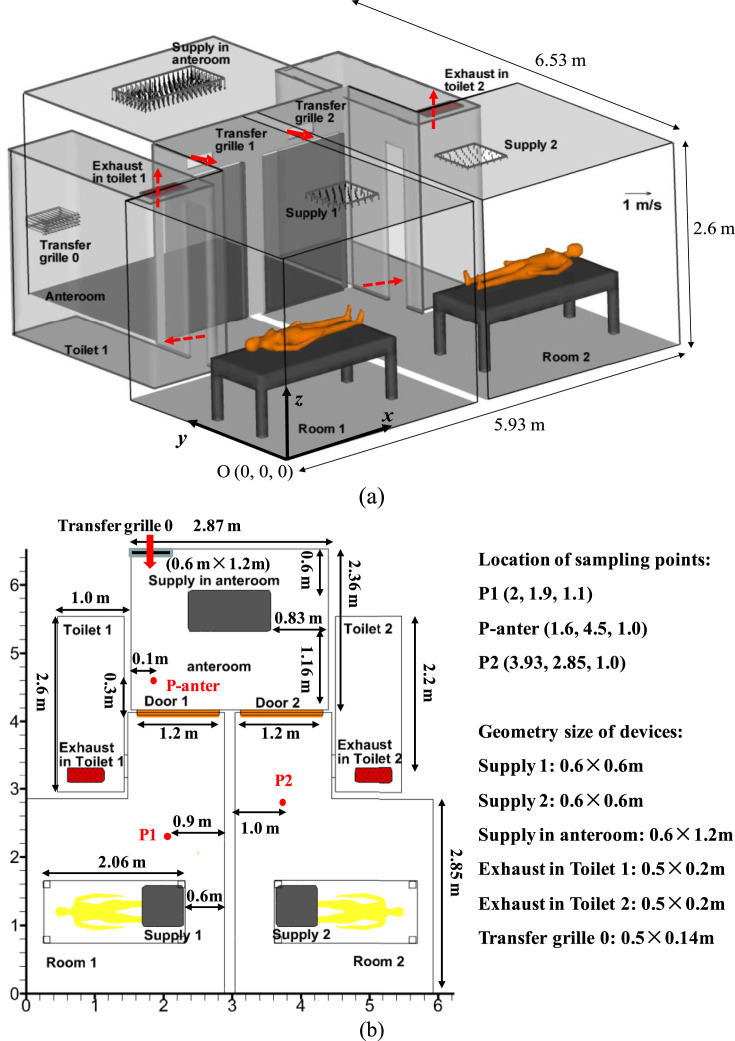
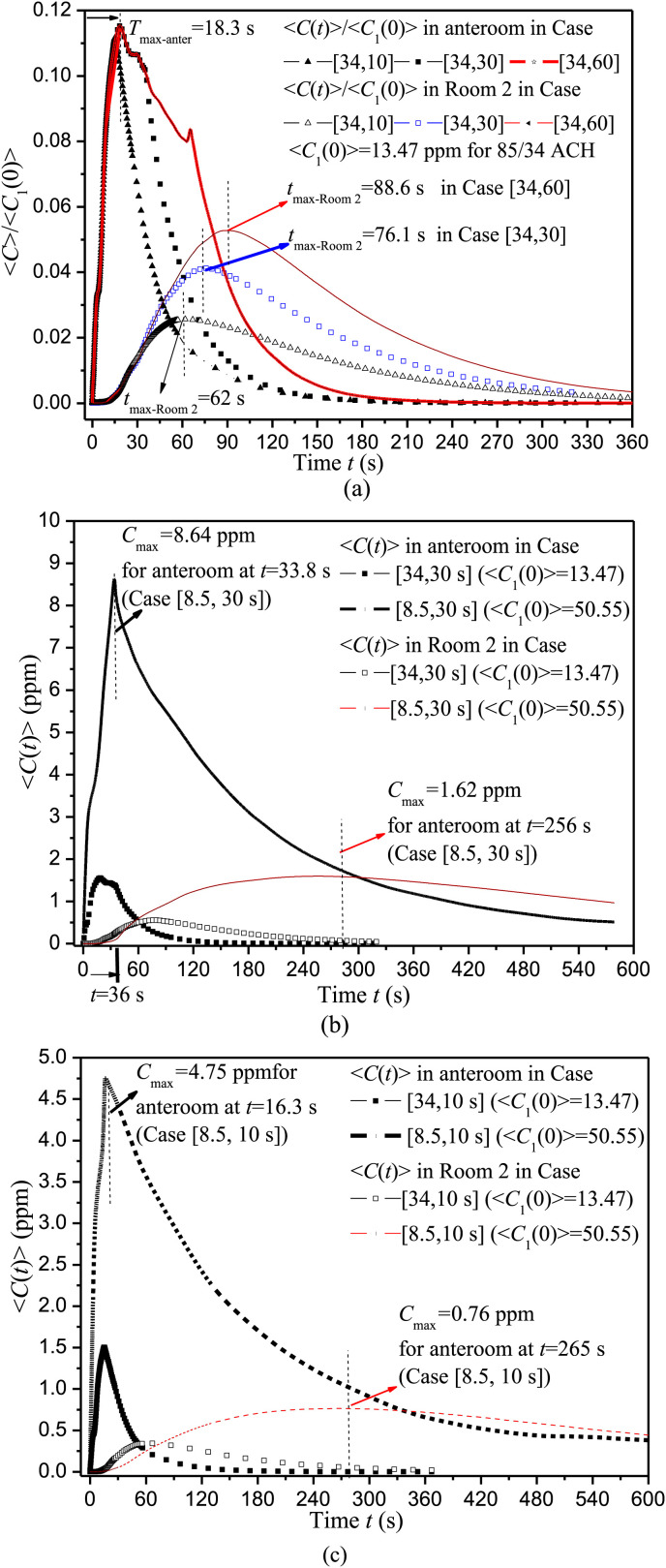
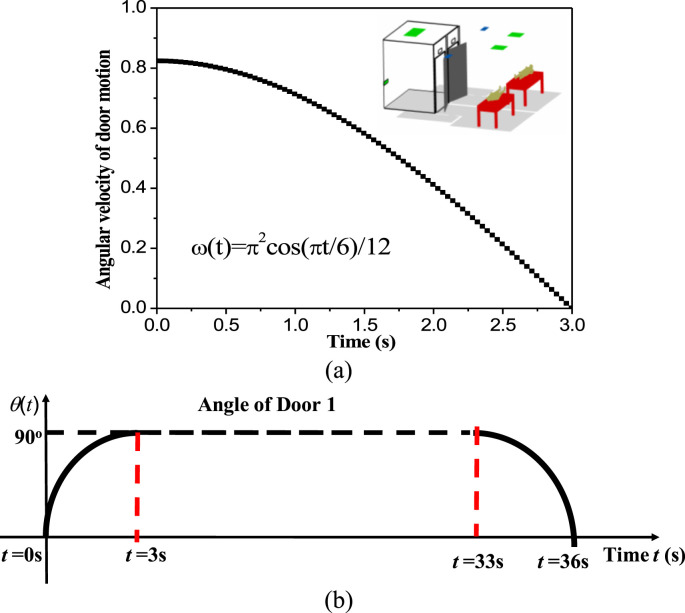
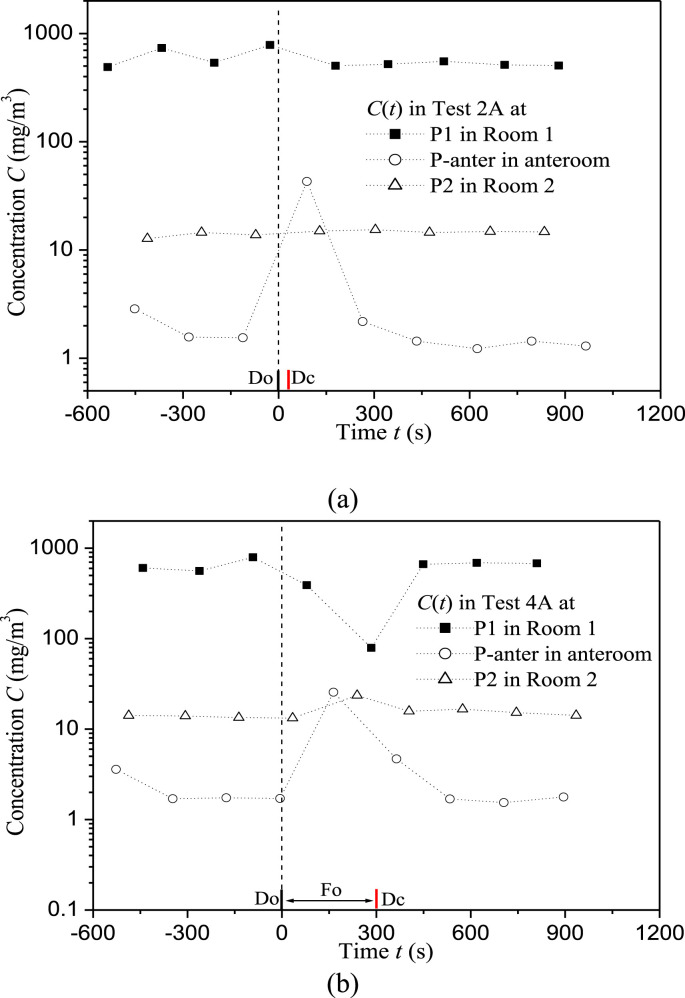
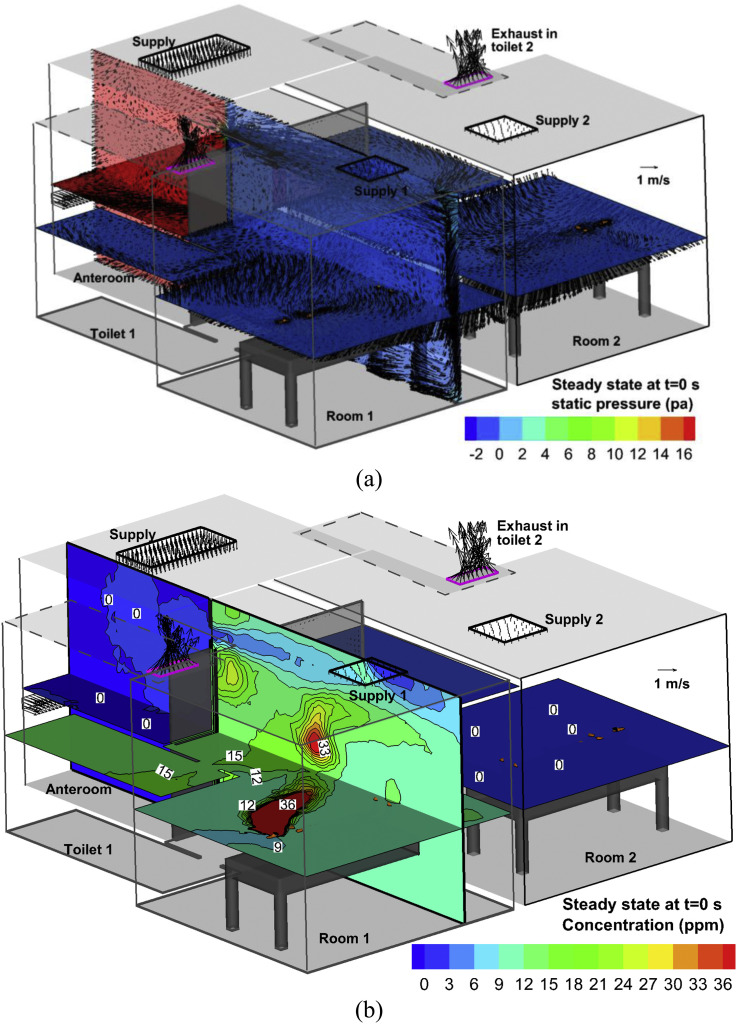
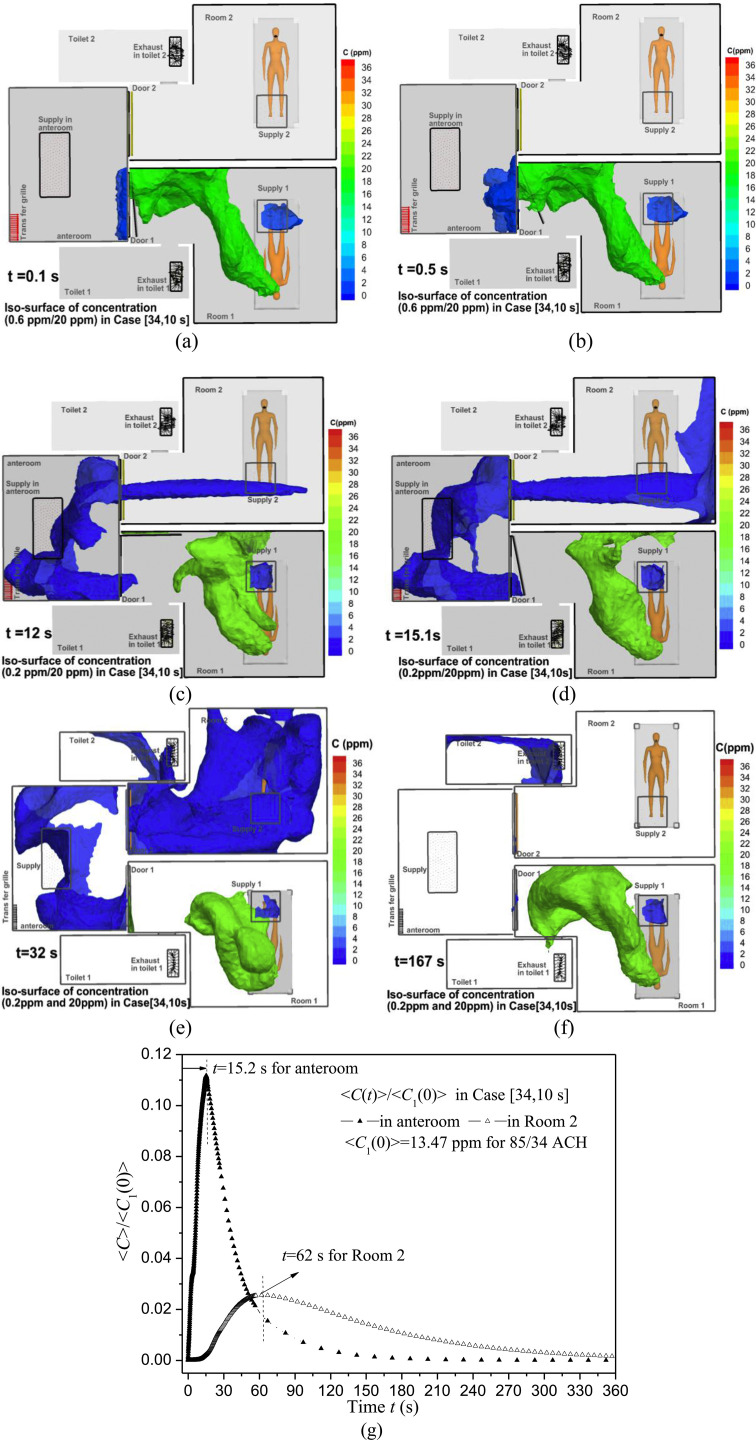
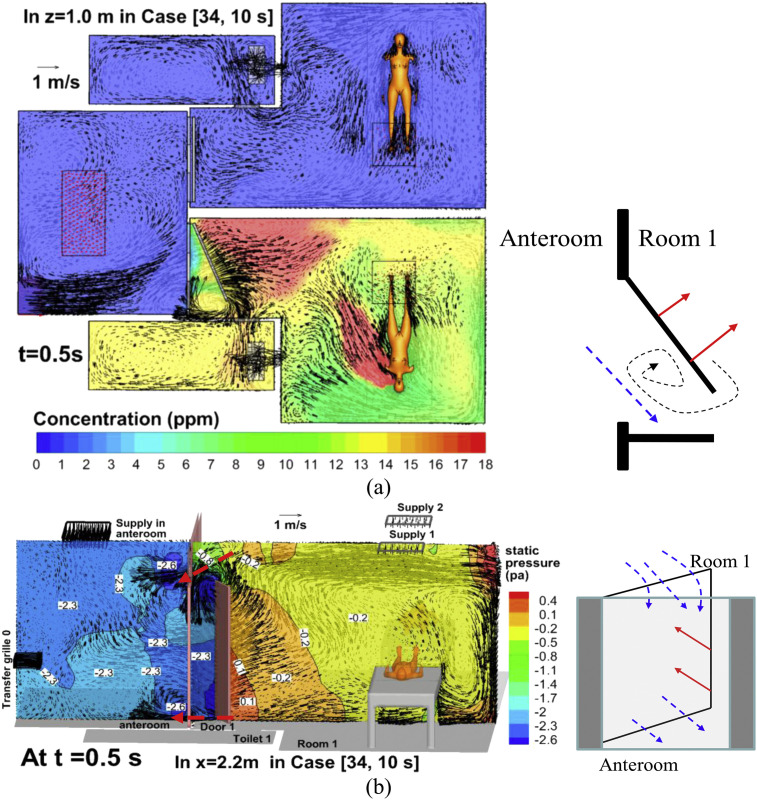
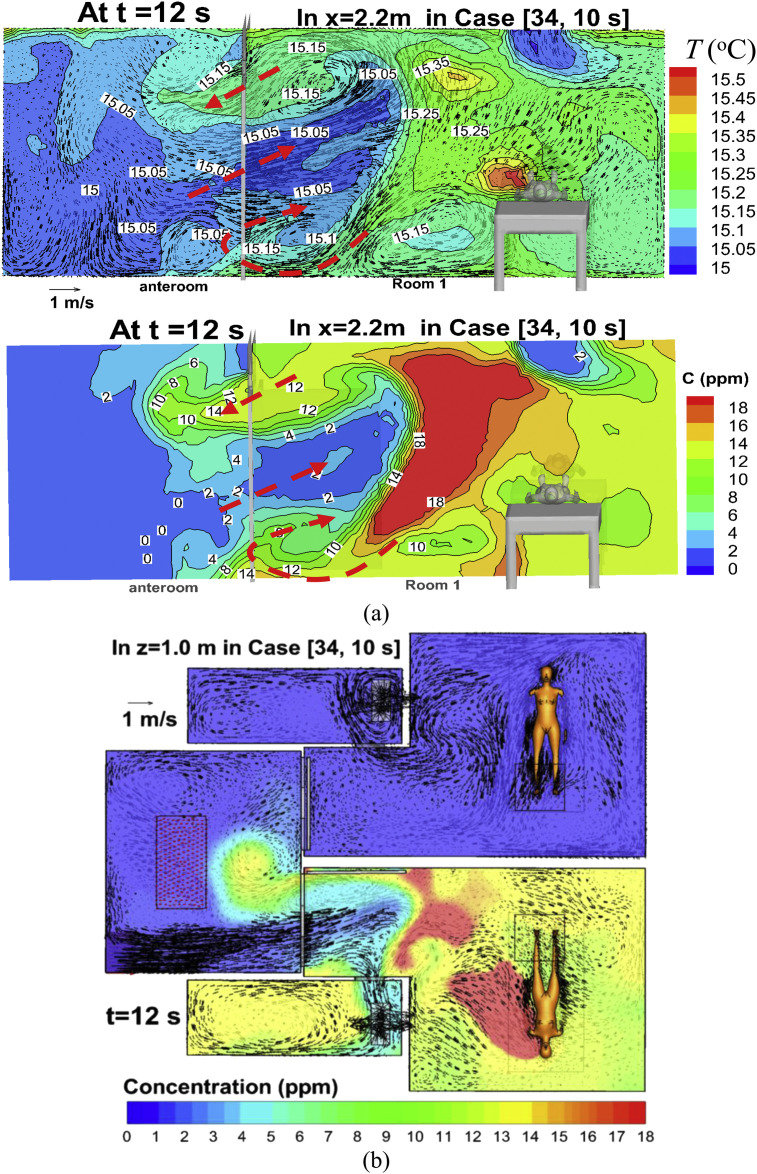
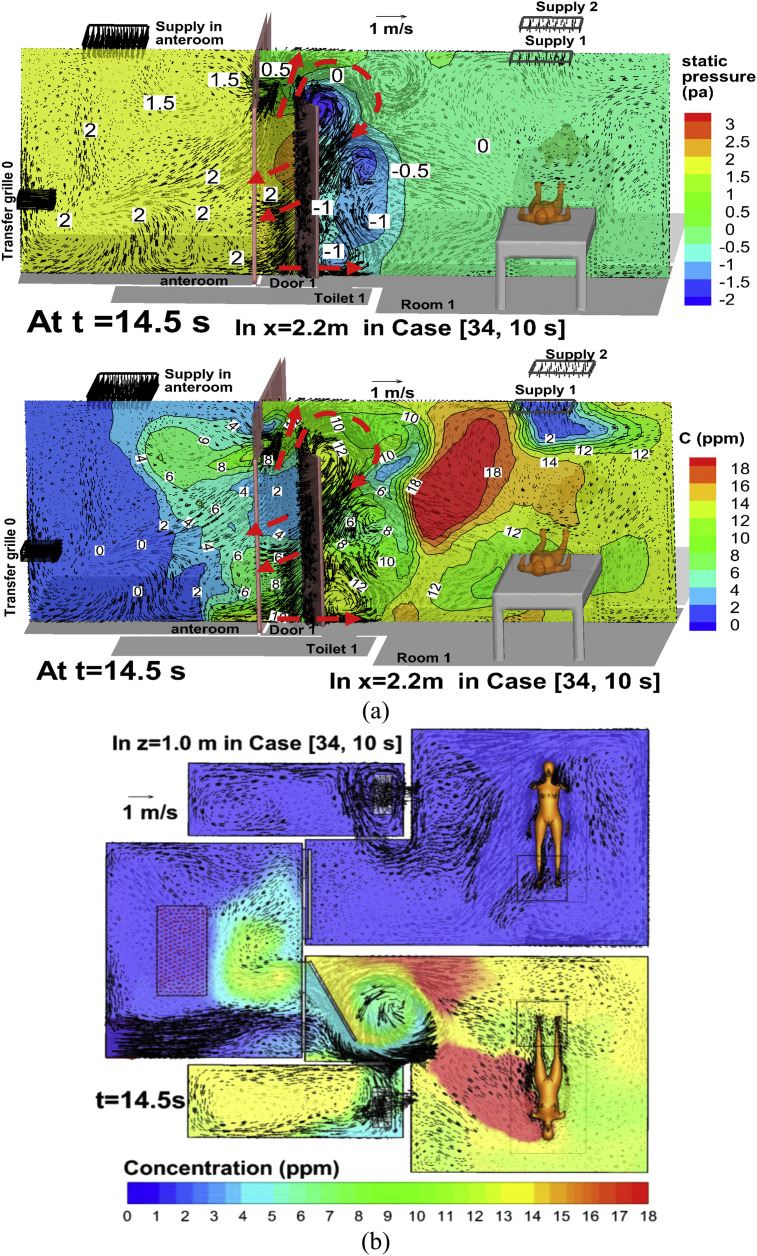
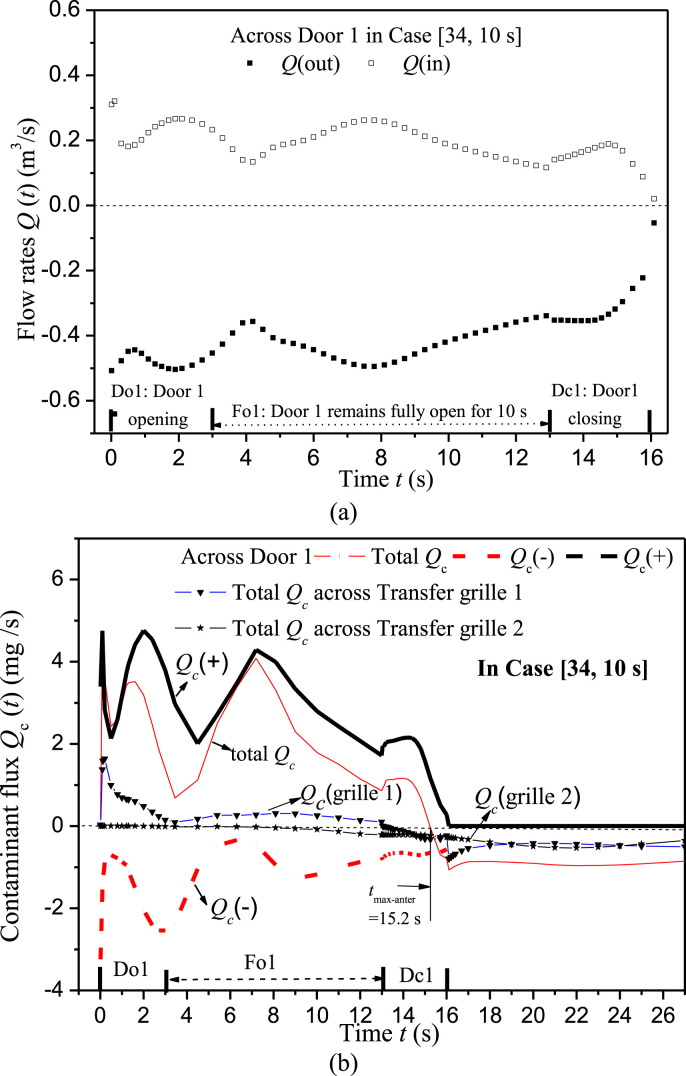
Full-scale experiments and CFD simulations were performed to study potential inter-cubicle airborne transmissions through a shared anteroom due to the hinged door opening. When doors are closed, current negative pressure designs are effective for the containment of airborne pathogens in the 'dirty' cubicle with an index patient. When the 'dirty' cubicle door is open, airborne agents can move into the other 'clean' cubicle via the shared anteroom. As the door being opened or closed, the door sweeping effect is the main source of the two-way airflow and contaminant exchange through the doorway. When the dirty cubicle door remains fully open, temperature difference and concentration gradient across the doorway induce the two-way buoyancy-driven flow and transport of airborne agents across the doorway. The longer the dirty cubicle door remains fully open (10 s, 30 s or 60 s) or the smaller the air change rate (34-8.5 ACH for each cubicle), the more airborne pathogens are being transported into the 'clean' cubicle and the longer time it takes to remove them after the door is closed. Keeping the door completely open is potentially responsible for the majority of inter-cubicle transmissions if its duration is much longer than the duration of door motion (only 3 s). Our analyses suggest a potential inter-cubicle infection risk if the shared anteroom is used for multiple isolation cubicles. Decreasing the duration of door opening, raising air change rate or using a curtain at the doorway are recommended to reduce inter-cubicle exposure hazards.
进行了全尺寸实验和计算流体动力学(CFD)模拟,以研究由于铰链门打开,通过共用前厅在隔间间可能发生的空气传播。当门关闭时,当前的负压设计对于在有索引患者的“污染”隔间中控制空气传播病原体是有效的。当“污染”隔间的门打开时,空气传播因子可通过共用前厅进入另一个“清洁”隔间。随着门的打开或关闭,门的扫掠效应是通过门口的双向气流和污染物交换的主要来源。当污染隔间的门保持完全打开时,门口的温差和浓度梯度会引发双向浮力驱动的气流,并使空气传播因子通过门口传输。污染隔间的门保持完全打开的时间越长(10秒、30秒或60秒),或者每个隔间的换气率越小(34 - 8.5次/小时),进入“清洁”隔间的空气传播病原体就越多,并且在门关闭后清除它们所需的时间就越长。如果门完全打开的持续时间比门运动的持续时间(仅3秒)长得多,那么门完全打开可能是隔间间传播的主要原因。我们的分析表明,如果共用前厅用于多个隔离隔间,存在潜在的隔间间感染风险。建议缩短开门时间、提高换气率或在门口使用帘子,以减少隔间间的暴露风险。