International Clinical Research Center, St Anne's University Hospital, Brno, Czechia.
Department of Medical and Surgical Sciences and Advanced Technologies "GF Ingrassia", University of Catania, Catania, Italy.
Front Public Health. 2020 Apr 8;8:108. doi: 10.3389/fpubh.2020.00108. eCollection 2020.
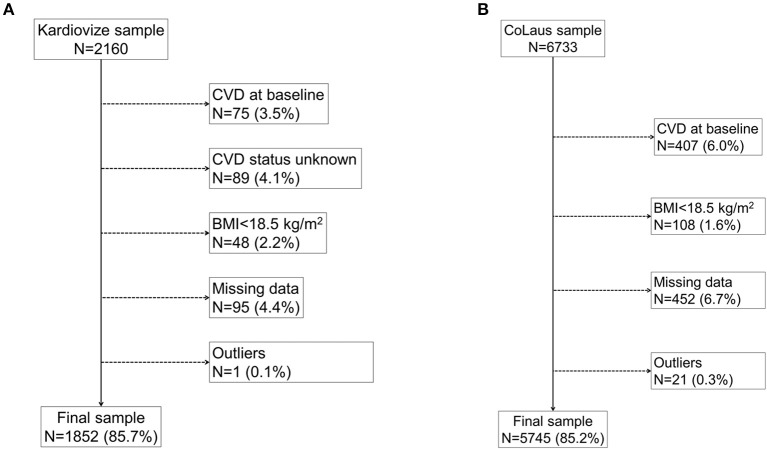
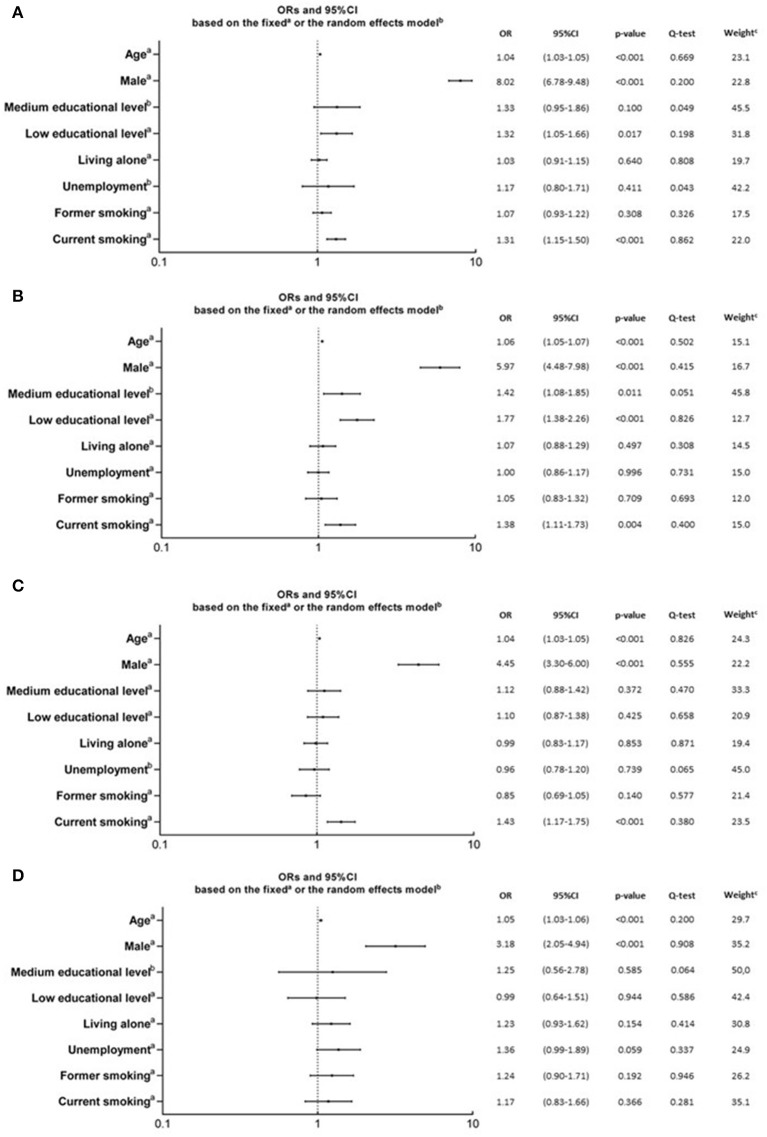
Comparisons among countries can help to identify opportunities for the reduction of inequalities in cardiometabolic health. The present cross-sectional analysis and meta-analysis aim to address to what extent obesity traits, socioeconomic, and behavioral factors determine poor metabolic health across body mass index (BMI) categories in two urban population-based samples from Central Europe. Data from the CoLaus (6,000 participants; Lausanne, Switzerland) and the Kardiovize Brno 2030 (2,000 participants; Brno, Czech Republic) cohorts. For each cohort, logistic regression analyses were performed to identify the main determinants of poor metabolic health overall and stratified by body mass index (BMI) categories. The results of each cohort were then combined in a meta-analysis. We first observed that waist circumference and body fat mass were associated with metabolic health, especially in non-obese individuals. Moreover, increasing age, being male, having low-medium educational level, abdominal obesity, and high body fat mass were the main determinants of the metabolically unhealthy profile in both cohorts. Meta-analysis stratified by BMI categories confirmed the previous results with slight differences across BMI categories. In fact, increasing age and being male were the main determinants of poor metabolic health independent of obesity status. In contrast, low educational level and current smoking were associated with poor metabolic health only in non-obese individuals. In line, public health strategies against obesity and related comorbidities should aim to improve social conditions and to promote healthy lifestyles before the progression of metabolic disorders.
国家间的比较有助于发现减少心血管代谢健康不平等的机会。本横断面分析和荟萃分析旨在确定肥胖特征、社会经济和行为因素在多大程度上决定了中欧两个城市人群基础样本中不同体重指数 (BMI) 类别下的代谢健康状况不佳。数据来自 CoLaus(6000 名参与者;瑞士洛桑)和 Kardiovize Brno 2030(2000 名参与者;捷克布尔诺)队列。对于每个队列,我们都进行了逻辑回归分析,以确定总体代谢健康状况以及按 BMI 类别分层的主要决定因素。然后,我们将每个队列的结果合并进行荟萃分析。我们首先观察到腰围和体脂肪量与代谢健康有关,尤其是在非肥胖个体中。此外,年龄增长、男性、中低教育水平、腹部肥胖和高体脂肪量是两个队列中代谢不健康特征的主要决定因素。按 BMI 类别分层的荟萃分析证实了之前的结果,在 BMI 类别之间略有差异。事实上,年龄增长和男性是独立于肥胖状态的代谢健康状况不佳的主要决定因素。相反,低教育水平和当前吸烟与非肥胖个体的代谢健康状况不佳有关。因此,针对肥胖和相关合并症的公共卫生策略应旨在改善社会条件,并在代谢紊乱进展之前促进健康的生活方式。