Department of Forest Genetics and Plant physiology, Umeå Plant Science Centre, Swedish University of Agricultural Sciences, SE-901 83, Umeå, Sweden.
RISE Bioeconomy, Box 5604, SE-114 86, Stockholm, Sweden.
BMC Genomics. 2020 Apr 25;21(1):323. doi: 10.1186/s12864-020-6737-3.
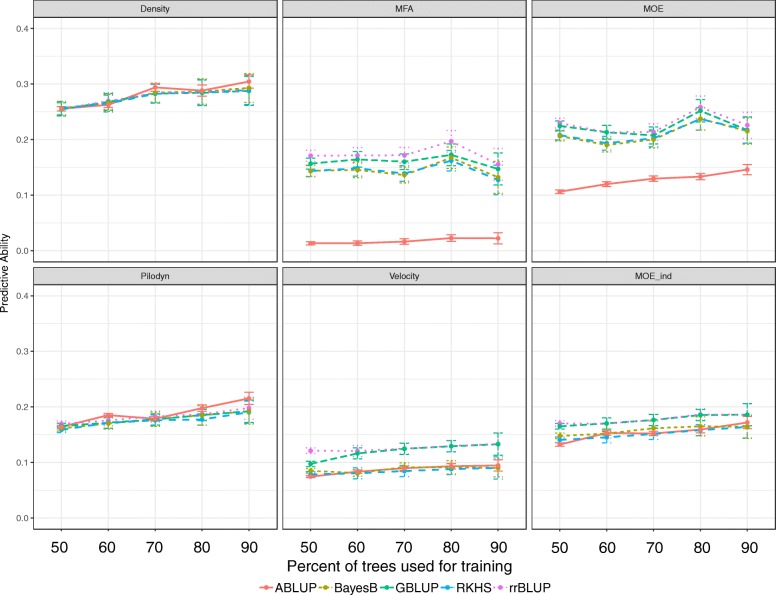
Genomic selection (GS) or genomic prediction is considered as a promising approach to accelerate tree breeding and increase genetic gain by shortening breeding cycle, but the efforts to develop routines for operational breeding are so far limited. We investigated the predictive ability (PA) of GS based on 484 progeny trees from 62 half-sib families in Norway spruce (Picea abies (L.) Karst.) for wood density, modulus of elasticity (MOE) and microfibril angle (MFA) measured with SilviScan, as well as for measurements on standing trees by Pilodyn and Hitman instruments.
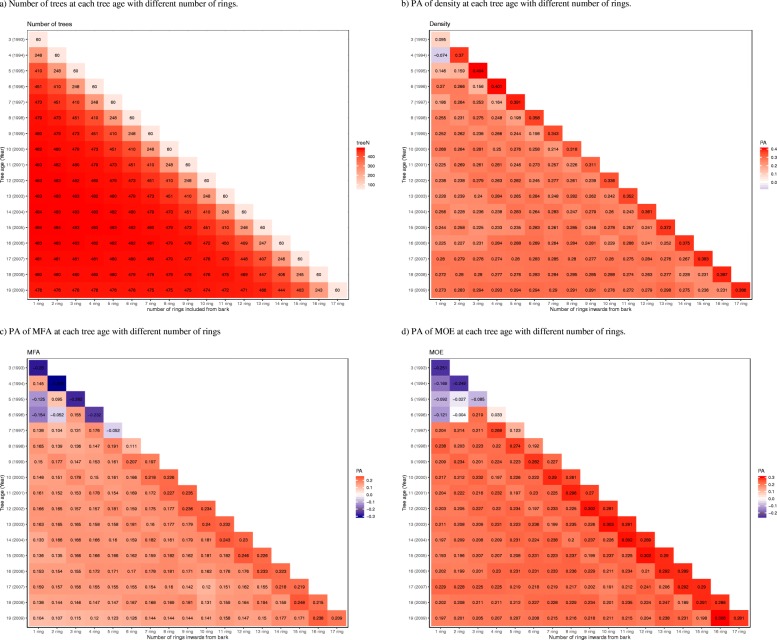
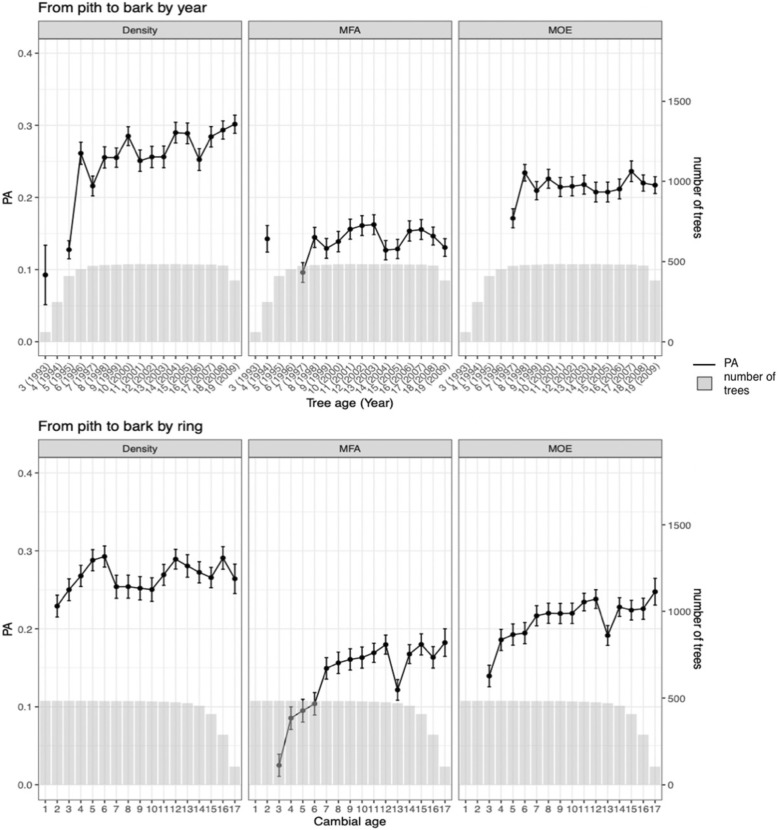
GS predictive abilities were comparable with those based on pedigree-based prediction. Marker-based PAs were generally 25-30% higher for traits density, MFA and MOE measured with SilviScan than for their respective standing tree-based method which measured with Pilodyn and Hitman. Prediction accuracy (PC) of the standing tree-based methods were similar or even higher than increment core-based method. 78-95% of the maximal PAs of density, MFA and MOE obtained from coring to the pith at high age were reached by using data possible to obtain by drilling 3-5 rings towards the pith at tree age 10-12.
This study indicates standing tree-based measurements is a cost-effective alternative method for GS. PA of GS methods were comparable with those pedigree-based prediction. The highest PAs were reached with at least 80-90% of the dataset used as training set. Selection for trait density could be conducted at an earlier age than for MFA and MOE. Operational breeding can also be optimized by training the model at an earlier age or using 3 to 5 outermost rings at tree age 10 to 12 years, thereby shortening the cycle and reducing the impact on the tree.
基因组选择(GS)或基因组预测被认为是一种有前途的方法,可以通过缩短育种周期来加速树木育种并增加遗传增益,但迄今为止,开发用于常规育种的常规方法的努力还很有限。我们调查了基于 62 个挪威云杉(Picea abies(L.)Karst.)半同胞家系的 484 个后代树木的 GS 预测能力(PA),用于测量木材密度、弹性模量(MOE)和微纤丝角(MFA)SilviScan,以及使用 Pilodyn 和 Hitman 仪器对站立树木的测量。
GS 的预测能力与基于系谱预测的预测能力相当。基于标记的 PA 通常比 SilviScan 测量的密度、MFA 和 MOE 高 25-30%,而基于 Pilodyn 和 Hitman 测量的相应站立树木方法则要低。站立树木方法的预测准确性(PC)与增量芯基方法相似,甚至更高。通过在树木 10-12 岁时向髓心钻 3-5 圈获得的数据,达到了从髓心钻取高年龄时密度、MFA 和 MOE 的最大 PA 的 78-95%。
本研究表明,基于站立树木的测量是 GS 的一种具有成本效益的替代方法。GS 方法的 PA 与基于系谱的预测相当。使用至少 80-90%的数据集作为训练集可以达到最高的 PA。与 MFA 和 MOE 相比,可以更早地对性状密度进行选择。通过在更早的年龄训练模型或在树木 10 到 12 岁时使用 3 到 5 个最外层的环,可以优化常规育种,从而缩短周期并减少对树木的影响。