Krysiak Zuzanna J, Gawlik Małgorzata Z, Knapczyk-Korczak Joanna, Kaniuk Łukasz, Stachewicz Urszula
International Center of Electron Microscopy for Material Science, Faculty of Metals Engineering and Industrial Computer Science, AGH University of Science and Technology, 30-059 Cracow, Poland.
Materials (Basel). 2020 Apr 23;13(8):1974. doi: 10.3390/ma13081974.
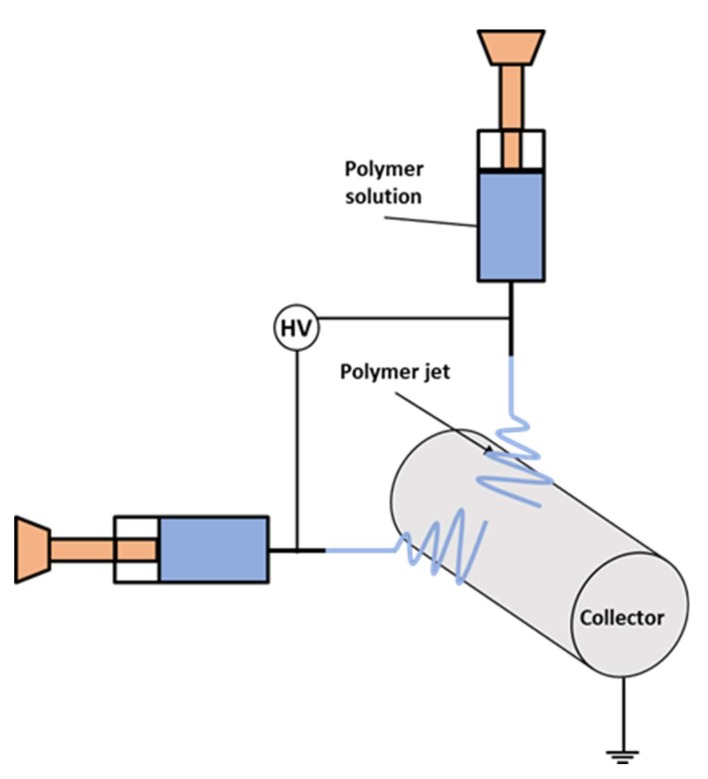
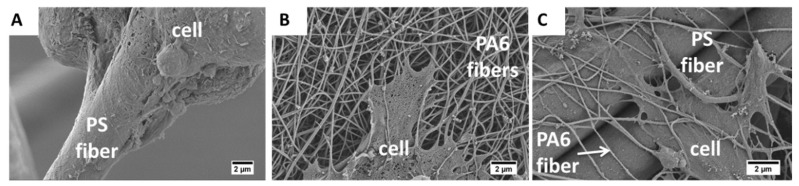
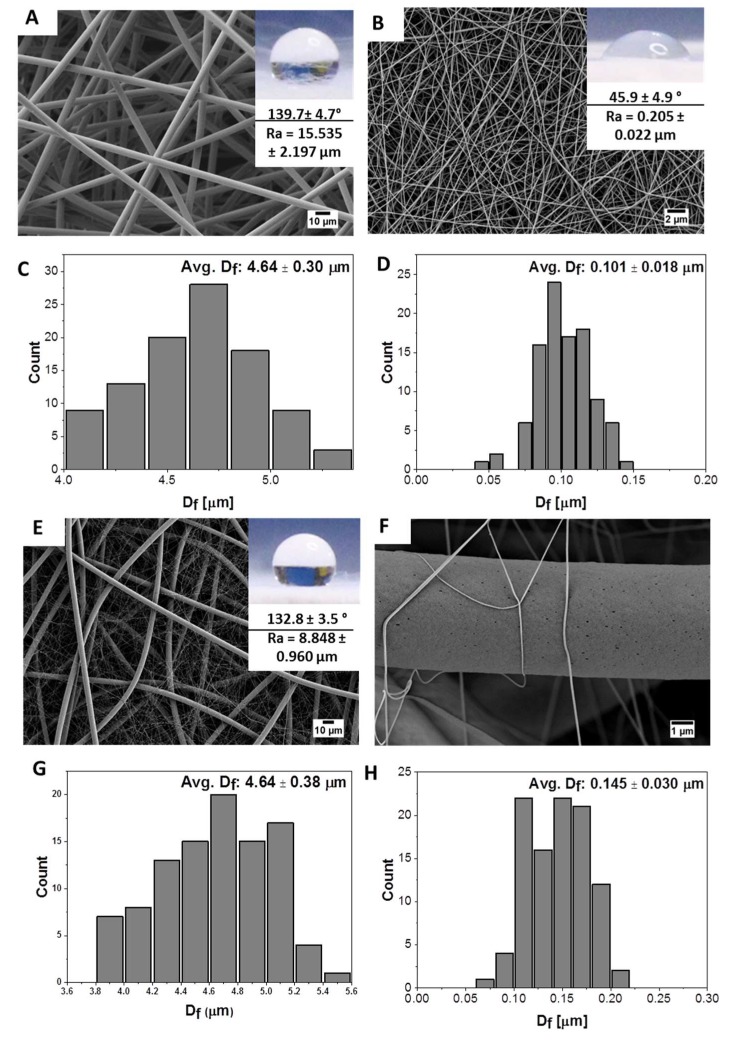
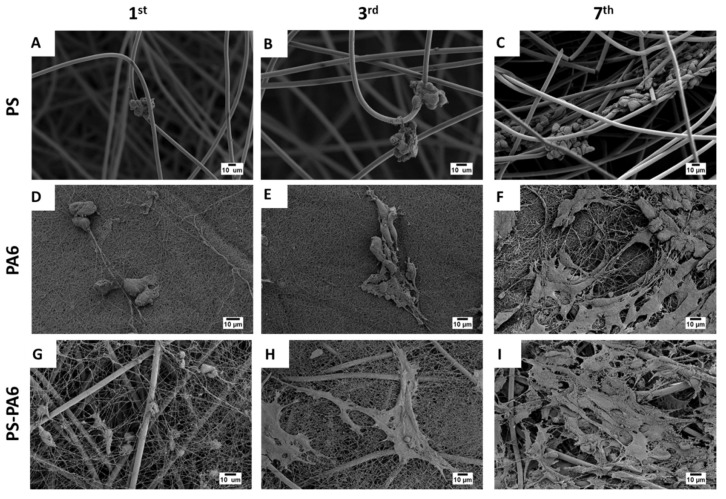
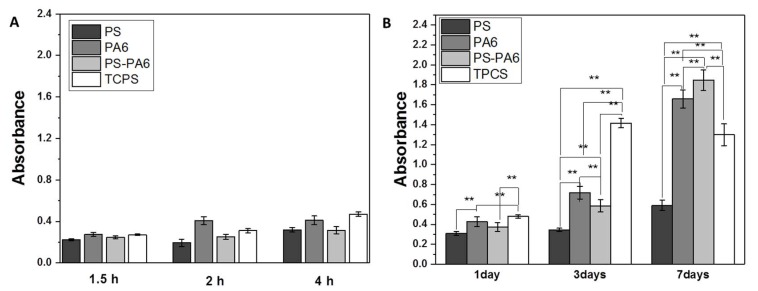
One of the most frequently applied polymers in regenerative medicine is polystyrene (PS), which is commonly used as a flat surface and requires surface modifications for cell culture study. Here, hierarchical composite meshes were fabricated via electrospinning PS with nylon 6 (PA6) to obtain enhanced cell proliferation, development, and integration with nondegradable polymer fibers. The biomimetic approach of designed meshes was verified with a scanning electron microscope (SEM) and MTS assay up to 7 days of cell culture. In particular, adding PA6 nanofibers changes the fibroblast attachment to meshes and their development, which can be observed by cell flattening, filopodia formation, and spreading. The proposed single-step manufacturing of meshes controlled the surface properties and roughness of produced composites, allowing governing cell behavior. Within this study, we show the alternative engineering of nondegradable meshes without post-treatment steps, which can be used in various applications in regenerative medicine.
聚苯乙烯(PS)是再生医学中应用最频繁的聚合物之一,它通常用作平面,在细胞培养研究中需要进行表面改性。在此,通过将PS与尼龙6(PA6)进行静电纺丝制备了分级复合网,以增强细胞增殖、发育以及与不可降解聚合物纤维的整合。通过扫描电子显微镜(SEM)和MTS分析对设计网的仿生方法进行了长达7天的细胞培养验证。特别地,添加PA6纳米纤维改变了成纤维细胞与网的附着及其发育,这可以通过细胞扁平化、丝状伪足形成和铺展来观察。所提出的网的一步制造控制了所制备复合材料的表面性质和粗糙度,从而能够调控细胞行为。在本研究中,我们展示了无需后处理步骤的不可降解网的替代工程方法,其可用于再生医学的各种应用中。