Department of Zoology, Faculty of Science, University of Mansoura, Mansoura, 35516, Egypt.
Department of Surgery, Charles R. Drew University of Medicine and Science, Los Angeles, California, USA.
BMC Complement Med Ther. 2020 Apr 28;20(1):127. doi: 10.1186/s12906-020-02901-y.
The popularity of fermented foods such as kefir, kuniss, and tofu has been greatly increasing over the past several decades, and the ability of probiotic bacteria to exert anticancer effects has recently become the focus of research. While we have recently demonstrated the ability of the novel kefir product PFT (Probiotics Fermentation Technology) to exert anticancer effects in vitro, here we demonstrate its ability to inhibit Ehrlich ascites carcinoma (EAC) in mice.
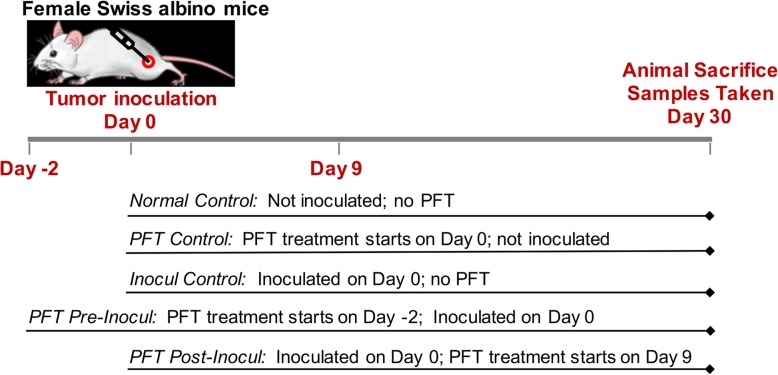
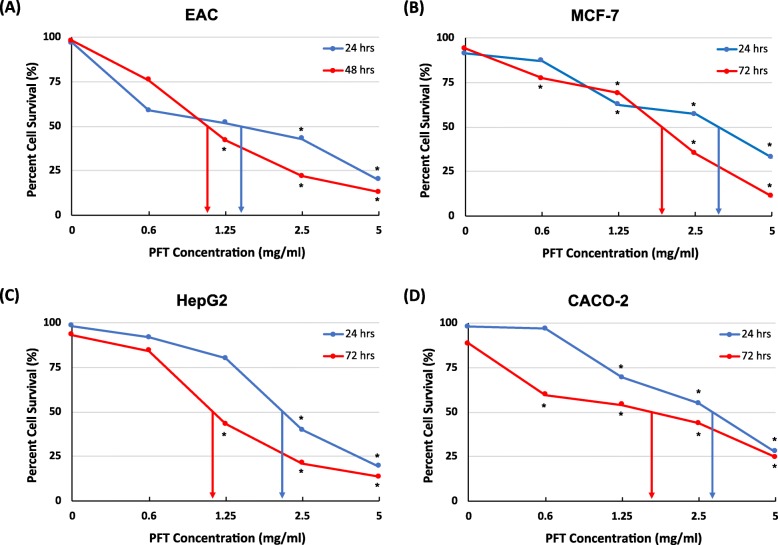
Mice were inoculated intramuscularly with EAC cells to develop solid tumors. PFT was administered orally (2 g/kg/day) to mice 6 days/week, either 2 days before tumor cell inoculation or 9 days after inoculation to mice bearing solid tumors. Tumor growth, blood lymphocyte levels, cell cycle progression, apoptosis, apoptotic regulator expression, TNF-α expression, changes in mitochondrial membrane potential (MMP), PCNA, and CD4+ and CD8+ T cells in tumor cells were quantitatively evaluated by flow cytometry or RT-PCR. Further studies in vitro were carried out where EAC cells along with several other human cancer cell lines were cultured in the presence of PFT (0-5 mg/mL). Percent cell viability and IC was estimated by MTT assay.
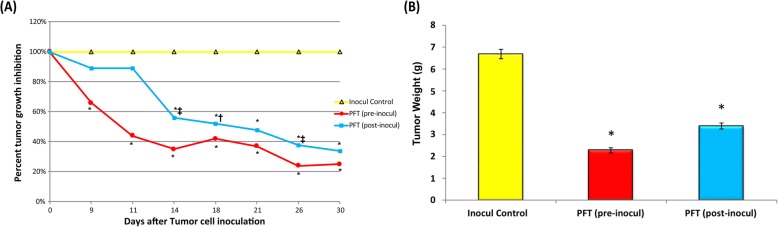
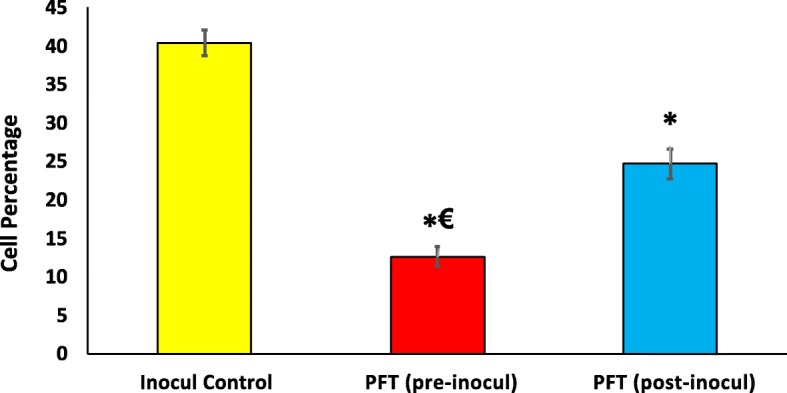
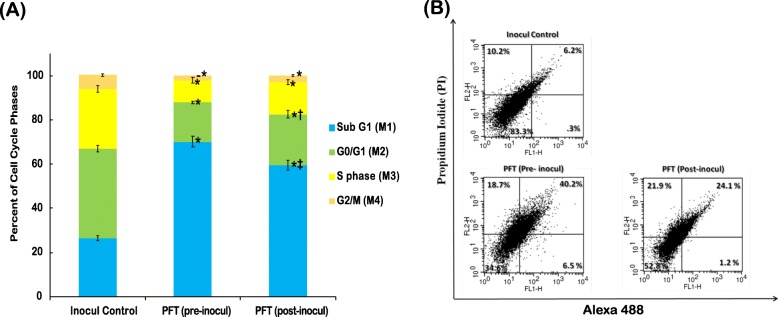
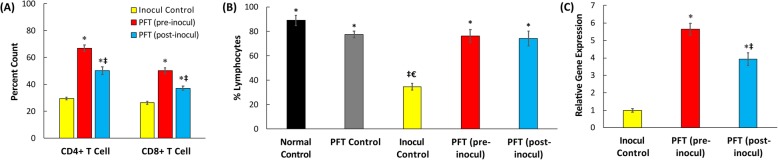
Our data shows that PFT exerts the following: 1) inhibition of tumor incidence and tumor growth; 2) inhibition of cellular proliferation via a marked decrease in the expression of tumor marker PCNA; 3) arrest of the tumor cell cycle in the sub-G0/G1 phase, signifying apoptosis; 4) induction of apoptosis in cancer cells via a mitochondrial-dependent pathway as indicated by the up-regulation of p53 expression, increased Bax/Bcl-2 ratio, decrease in the polarization of MMP, and caspase-3 activation; and 5) immunomodulation with an increase in the number of infiltrating CD4 and CD8 T cells and an enhancement of TNF-α expression within the tumor.
PFT reduces tumor incidence and tumor growth in mice with EAC by inducing apoptosis in EAC cells via the mitochondrial-dependent pathway, suppressing cancer cell proliferation, and stimulating the immune system. PFT may be a useful agent for cancer prevention.
过去几十年来,发酵食品(如开菲尔、库尼什和豆腐)的受欢迎程度大幅上升,益生菌发挥抗癌作用的能力最近成为研究的焦点。虽然我们最近已经证明了新型开菲尔产品 PFT(益生菌发酵技术)具有体外抗癌作用,但在这里我们证明了它在抑制艾氏腹水癌(EAC)方面的能力。
通过肌肉内接种 EAC 细胞在小鼠中建立实体瘤。PFT 每天口服给药(2g/kg/天),每周 6 天,在肿瘤细胞接种前 2 天或接种后 9 天给接种有实体瘤的小鼠。通过流式细胞术或 RT-PCR 定量评估肿瘤生长、血液淋巴细胞水平、细胞周期进程、细胞凋亡、凋亡调节因子表达、TNF-α表达、肿瘤细胞中线粒体膜电位(MMP)、PCNA 和 CD4+和 CD8+T 细胞的变化。进一步的体外研究是在存在 PFT(0-5mg/mL)的情况下培养 EAC 细胞以及其他几种人类癌细胞系进行的。通过 MTT 测定法估计细胞存活率和 IC。
我们的数据表明,PFT 具有以下作用:1)抑制肿瘤发生率和肿瘤生长;2)通过显著降低肿瘤标志物 PCNA 的表达来抑制细胞增殖;3)通过使肿瘤细胞周期在 sub-G0/G1 期停滞,表明细胞凋亡;4)通过线粒体依赖性途径诱导癌细胞凋亡,如 p53 表达上调、Bax/Bcl-2 比值增加、MMP 极化减少、caspase-3 激活;5)通过增加浸润性 CD4 和 CD8 T 细胞的数量和增强肿瘤内 TNF-α的表达进行免疫调节。
PFT 通过线粒体依赖性途径诱导 EAC 细胞凋亡、抑制癌细胞增殖、刺激免疫系统,降低 EAC 小鼠的肿瘤发生率和肿瘤生长。PFT 可能是一种用于癌症预防的有用药物。