Morozov Sergey, Sergunova Kristina, Petraikin Alexey, Akhmad Ekaterina, Kivasev Stanislav, Semenov Dmitry, Blokhin Ivan, Karpov Igor, Vladzymyrskyy Anton, Morozov Alexander
Research and Practical Clinical Center of Diagnostics and Telemedicine Technologies, Department of Health Care of Moscow, 28-1, ul. Srednyaya Kalitnikovskaya, Moscow, 109029, Russia.
Hospital center of polyclinics AO, 1-3, ul. Bakuninskaya, Moscow, 105005, Russia.
Insights Imaging. 2020 Apr 28;11(1):60. doi: 10.1186/s13244-020-00863-w.
The paper covers modern approaches to the evaluation of neoplastic processes with diffusion-weighted imaging (DWI) and proposes a physical model for monitoring the primary quantitative parameters of DWI and quality assurance. Models of hindered and restricted diffusion are studied.
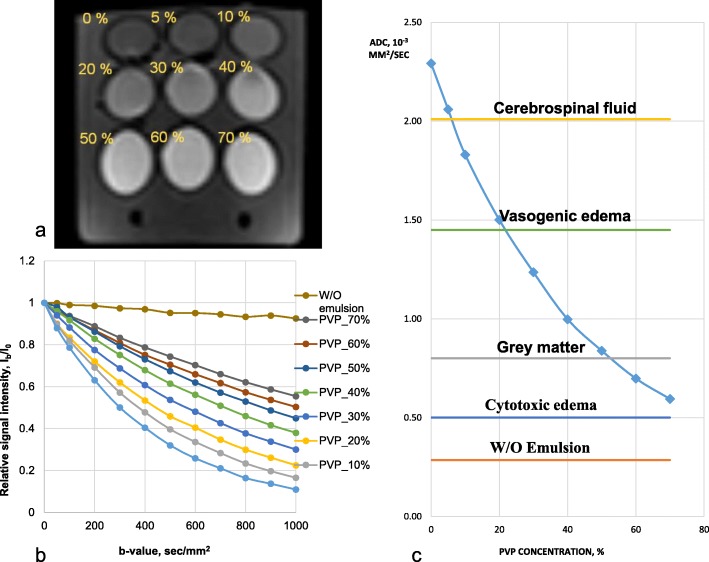
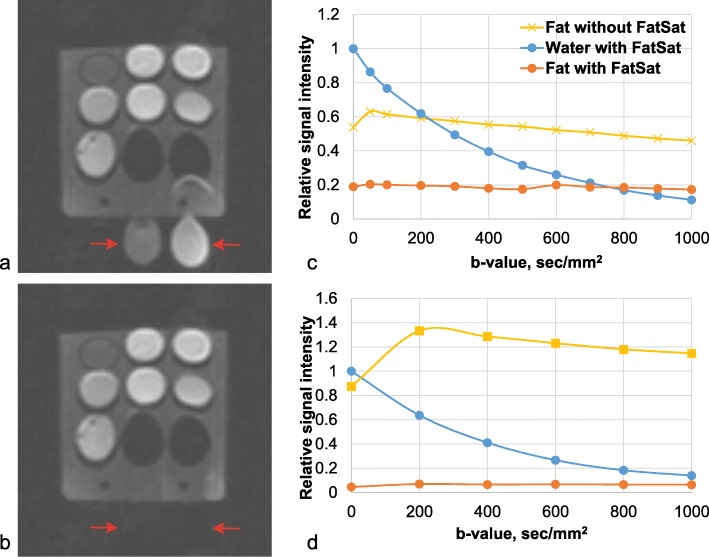
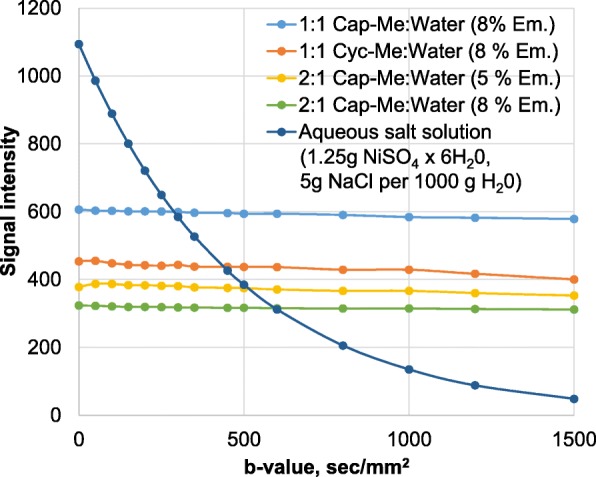
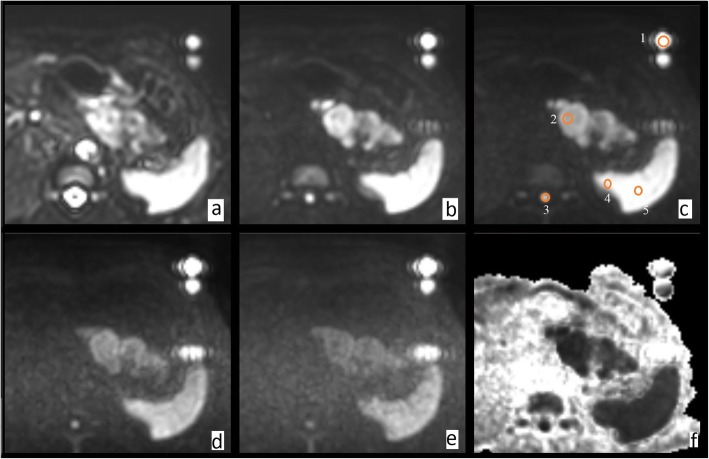
To simulate hindered diffusion, we used aqueous solutions of polyvinylpyrrolidone with concentrations of 0 to 70%. We created siloxane-based water-in-oil emulsions that simulate restricted diffusion in the intracellular space. To obtain a high signal on DWI in the broadest range of b values, we used silicon oil with high T: cyclomethicone and caprylyl methicone. For quantitative assessment of our phantom, we performed DWI on 1.5T magnetic resonance scanner with various fat suppression techniques. We assessed water-in-oil emulsion as an extracorporeal source signal by simultaneously scanning a patient in whole-body DWI sequence.
We developed phantom with control substances for apparent diffusion coefficient (ADC) measurements ranging from normal tissue to benign and malignant lesions: from 2.29 to 0.28 mm/s. The ADC values of polymer solutions are well relevant to the mono-exponential equation with the mean relative difference of 0.91%.
The phantom can be used to assess the accuracy of the ADC measurements, as well as the effectiveness of fat suppression. The control substances (emulsions) can be used as a body marker for quality assurance in whole-body DWI with a wide range of b values.
本文涵盖了利用扩散加权成像(DWI)评估肿瘤过程的现代方法,并提出了一个用于监测DWI主要定量参数和质量保证的物理模型。研究了受限扩散和阻碍扩散模型。
为模拟阻碍扩散,我们使用了浓度为0%至70%的聚乙烯吡咯烷酮水溶液。我们制备了基于硅氧烷的油包水乳液,以模拟细胞内空间的受限扩散。为在最广泛的b值范围内获得DWI上的高信号,我们使用了具有高T值的硅油:环甲硅油和辛酰甲基硅油。为对我们的体模进行定量评估,我们在1.5T磁共振扫描仪上采用各种脂肪抑制技术进行DWI。通过在全身DWI序列中同时扫描患者,我们将油包水乳液评估为体外源信号。
我们开发了一种体模,其含有用于测量表观扩散系数(ADC)的对照物质,范围从正常组织到良性和恶性病变:从2.29至0.28mm²/s。聚合物溶液的ADC值与单指数方程高度相关,平均相对差异为0.91%。
该体模可用于评估ADC测量的准确性以及脂肪抑制的效果。对照物质(乳液)可作为具有广泛b值的全身DWI质量保证的身体标记物。