Institute for Health Metrics and Evaluation, University of Washington, Seattle, WA, USA.
Center for Social Medicine and Humanities, University of California Los Angeles, Los Angeles, CA, USA.
Nature. 2020 Apr;580(7805):636-639. doi: 10.1038/s41586-020-2198-8. Epub 2020 Apr 15.
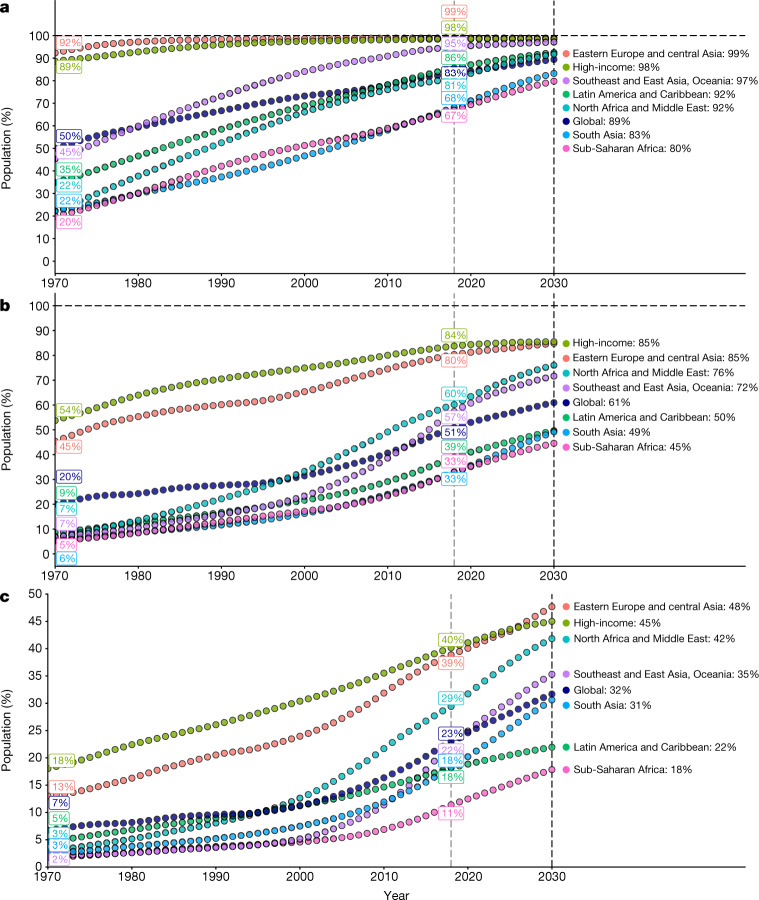
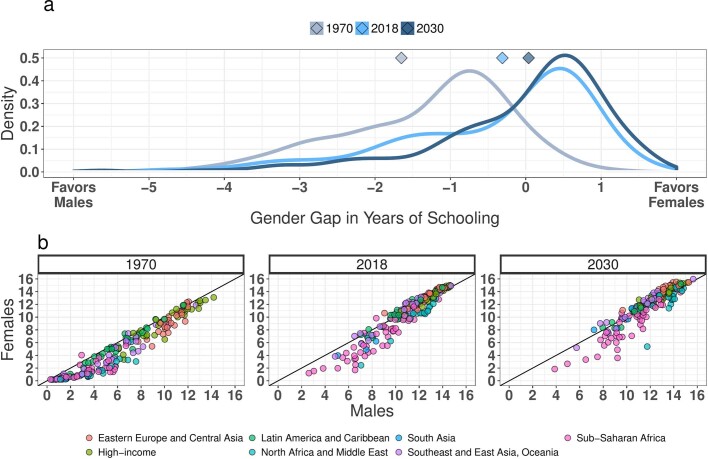
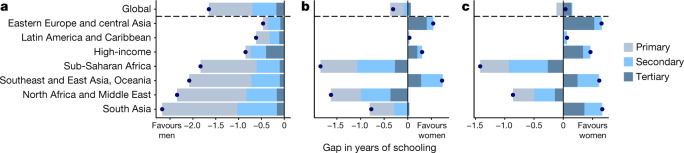
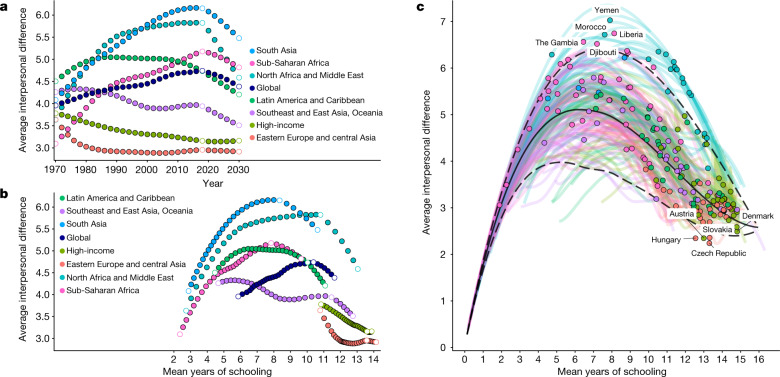
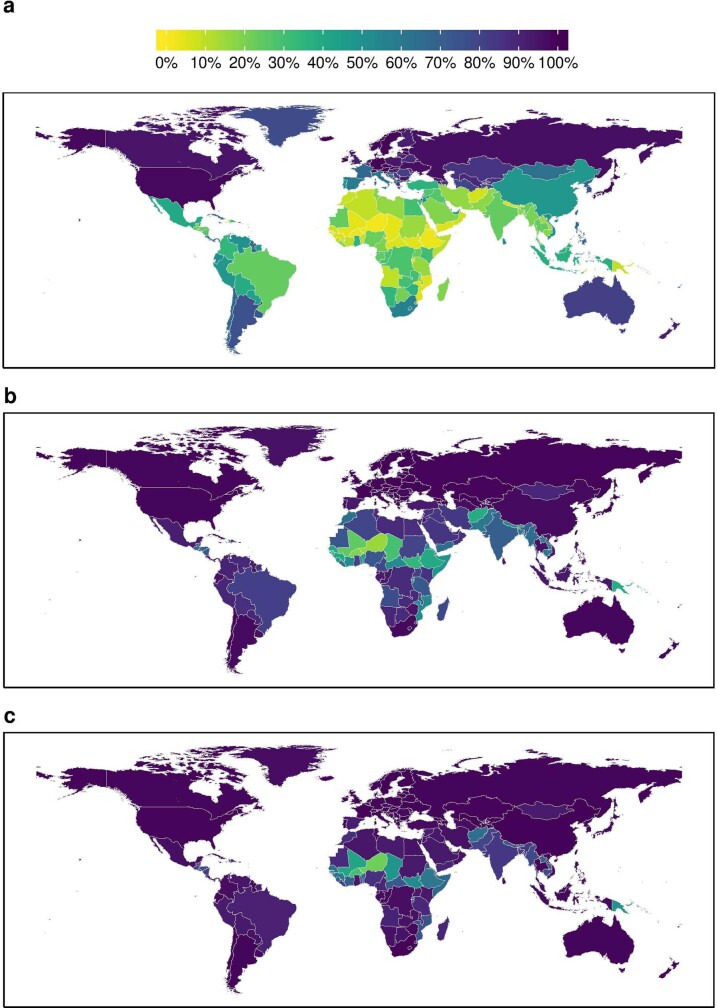
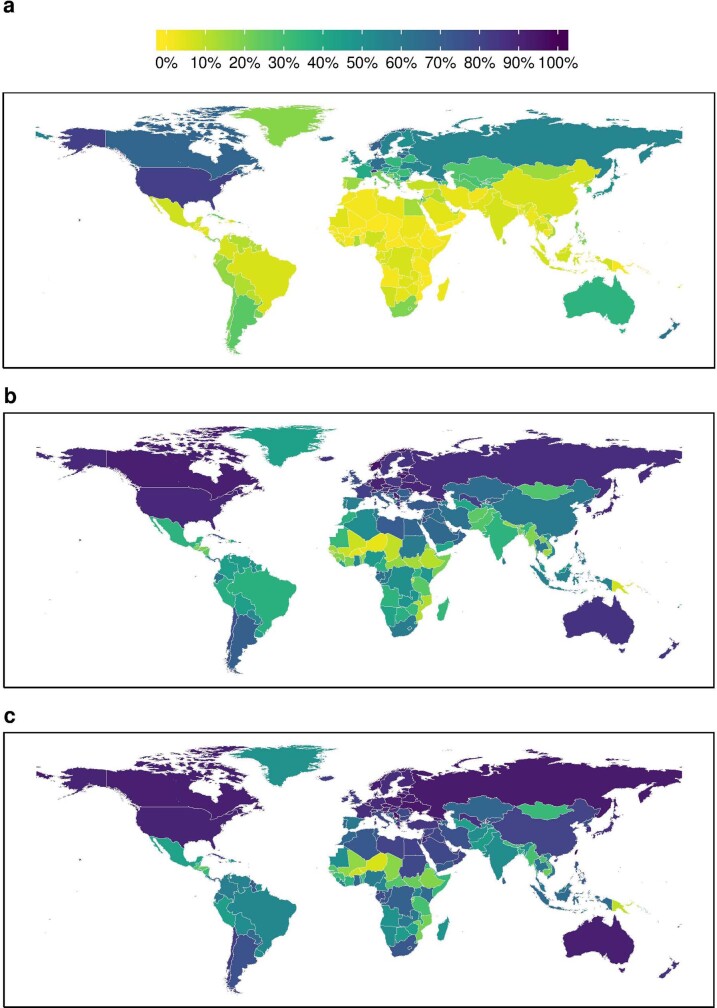
Education is a key dimension of well-being and a crucial indicator of development. The Sustainable Development Goals (SDGs) prioritize progress in education, with a new focus on inequality. Here we model the within-country distribution of years of schooling, and use this model to explore educational inequality since 1970 and to forecast progress towards the education-related 2030 SDG targets. We show that although the world is largely on track to achieve near-universal primary education by 2030, substantial challenges remain in the completion rates for secondary and tertiary education. Globally, the gender gap in schooling had nearly closed by 2018 but gender disparities remained acute in parts of sub-Saharan Africa, and North Africa and the Middle East. It is predicted that, by 2030, females will have achieved significantly higher educational attainment than males in 18 countries. Inequality in education reached a peak globally in 2017 and is projected to decrease steadily up to 2030. The distributions and inequality metrics presented here represent a framework that can be used to track the progress of each country towards the SDG targets and the level of inequality over time. Reducing educational inequality is one way to promote a fairer distribution of human capital and the development of more equitable human societies.
教育是幸福感的关键维度,也是发展的重要指标。可持续发展目标(SDGs)优先考虑教育方面的进展,新的重点是不平等。在这里,我们构建了国家内部教育年限的分布模型,并利用该模型来探讨自 1970 年以来的教育不平等问题,并预测实现与教育相关的 2030 年 SDG 目标的进展情况。我们发现,尽管世界在实现 2030 年普及小学教育的目标方面基本处于正轨,但在完成中等和高等教育的比例方面仍面临巨大挑战。在全球范围内,到 2018 年,学校教育方面的性别差距已经接近关闭,但在撒哈拉以南非洲部分地区以及北非和中东地区,性别差距仍然很明显。预计到 2030 年,在 18 个国家中,女性的教育程度将显著高于男性。教育不平等在 2017 年达到全球峰值,预计到 2030 年将稳步下降。这里呈现的分布和不平等指标代表了一个框架,可以用来跟踪每个国家在实现可持续发展目标方面的进展情况以及不平等程度随时间的变化情况。减少教育不平等是促进人力资本更公平分配和建立更公平的人类社会的一种途径。