Moura Carla, Trindade Daniela, Vieira Milena, Francisco Luís, Ângelo David Faustino, Alves Nuno
Centre for Rapid and Sustainable Product Development, Polytechnic Institute of Leiria, Leiria, Portugal.
ESTG - School of Technology and Management, Polytechnic Institute of Leiria, Leiria, Portugal.
Front Bioeng Biotechnol. 2020 Apr 21;8:342. doi: 10.3389/fbioe.2020.00342. eCollection 2020.
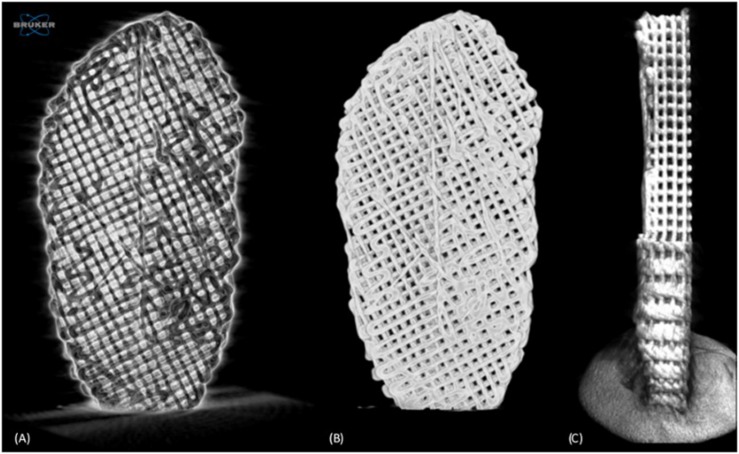
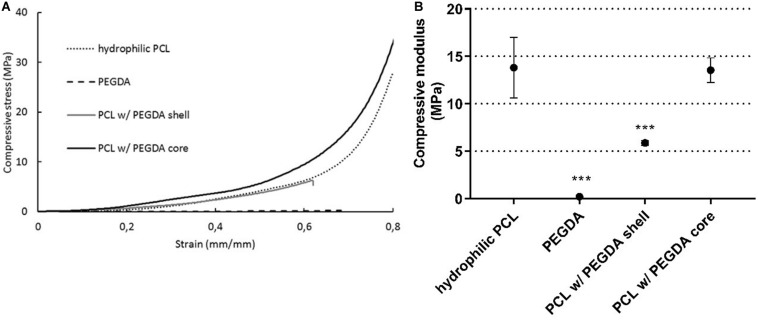
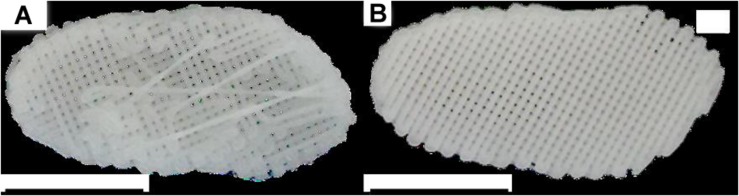
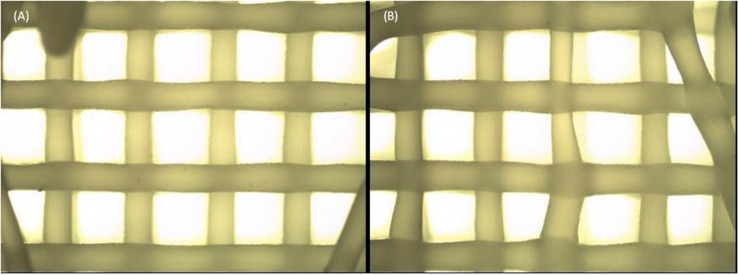
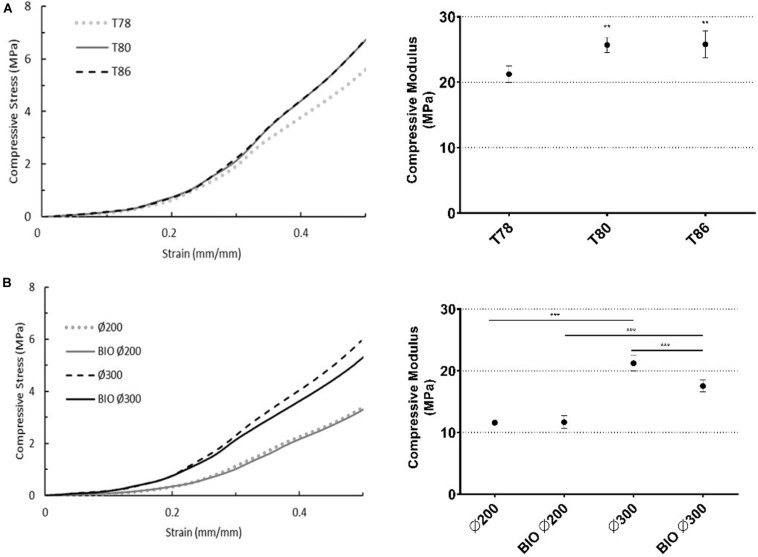
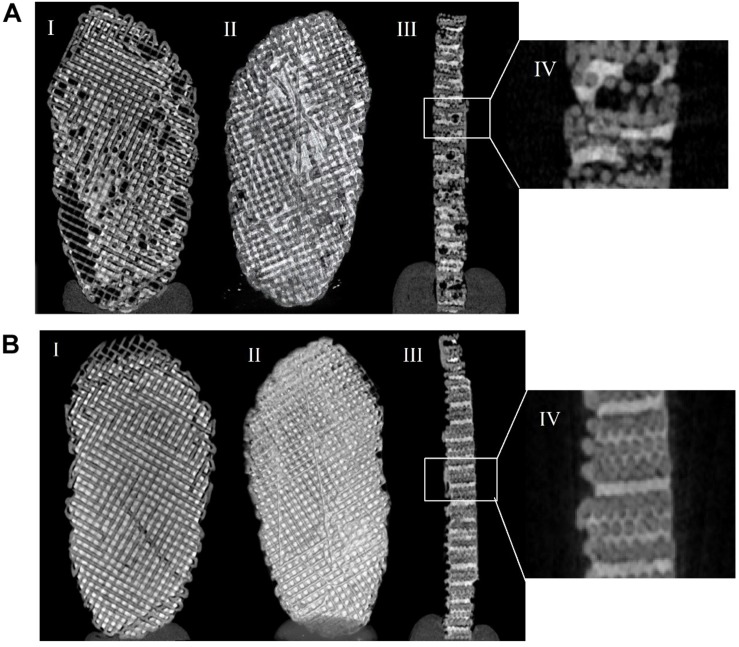
Temporomandibular disorders (TMD) affect a substantial percentage of the population, and the resources spent on their treatment are considerable. Despite the worldwide efforts around Tissue Engineering of the temporomandibular joint (TMJ) disc, a proper implant offering a long-term solution for TMD was not yet developed. To contribute to these efforts, this work is focused on the research and development of implants for TMJ disc regeneration. Scaffolds and hydrogels mimicking the TMJ disc of black Merino sheep were produced using different materials, poly(ε-caprolactone) (PCL) and poly(ethylene glycol) diacrylate (PEGDA), and as a multi-material structure. Different parameters of the scaffold manufacturing were assessed: the influence of processing temperatures, filament diameter, and biological environment. Moreover, two multi-material approaches were also assessed, scaffold with a hydrogel shell and scaffold with a hydrogel core. It was found that increasing temperature, the scaffolds' porosity decreases, increasing their compressive modulus. Decreasing the filament size (300 to 200 μm) decreases the compressive modulus to almost half of the initial value. Scaffolds with 200 μm filaments are the ones with a closer modulus to the native disc and their properties are maintained under hydrated conditions. The introduction of a hydrogel core in these scaffolds presented better mechanical properties to TMJ disc substitution.
颞下颌关节紊乱病(TMD)影响着相当大比例的人群,用于其治疗的资源相当可观。尽管全球围绕颞下颌关节(TMJ)盘的组织工程开展了诸多努力,但尚未开发出一种能为TMD提供长期解决方案的合适植入物。为助力这些努力,本研究聚焦于TMJ盘再生植入物的研发。使用不同材料聚(ε-己内酯)(PCL)和聚(乙二醇)二丙烯酸酯(PEGDA)制作了模仿黑色美利奴羊TMJ盘的支架和水凝胶,并将其制成多材料结构。评估了支架制造的不同参数:加工温度、细丝直径和生物环境的影响。此外,还评估了两种多材料方法,即带有水凝胶外壳的支架和带有水凝胶核心的支架。研究发现,随着温度升高,支架的孔隙率降低,其压缩模量增加。细丝尺寸减小(从300μm至200μm)会使压缩模量降至初始值的近一半。细丝尺寸为200μm的支架具有与天然盘更接近的模量,且其性能在水合条件下得以保持。在这些支架中引入水凝胶核心对TMJ盘置换表现出更好的力学性能。