Byrne Frances L, Martin Amy R, Kosasih Melidya, Caruana Beth T, Farrell Rhonda
School of Biotechnology & Biomolecular Sciences, Faculty of Science, University of New South Wales, Sydney 2052, Australia.
School of Women's and Children's Health, Faculty of Medicine, University of New South Wales, Sydney 2052, Australia.
Cancers (Basel). 2020 May 8;12(5):1191. doi: 10.3390/cancers12051191.
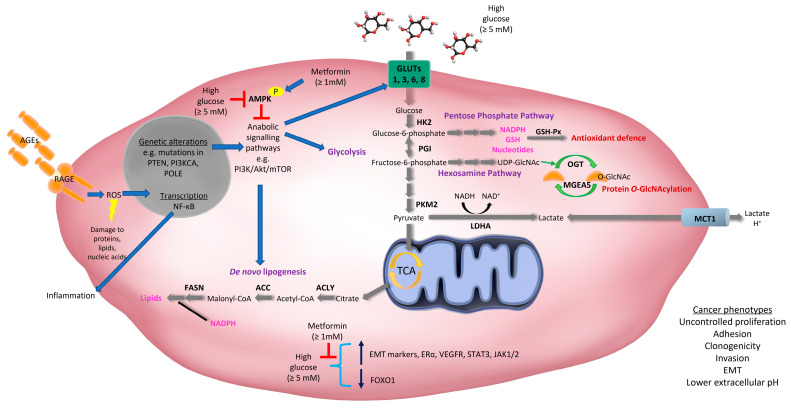
Endometrial cancer is one of the most common cancers in women worldwide and its incidence is increasing. Epidemiological evidence shows a strong association between endometrial cancer and obesity, and multiple mechanisms linking obesity and cancer progression have been described. However, it remains unclear which factors are the main drivers of endometrial cancer development. Hyperglycemia and type 2 diabetes mellitus are common co-morbidities of obesity, and there is evidence that hyperglycemia is a risk factor for endometrial cancer independent of obesity. This review aims to explore the association between hyperglycemia and endometrial cancer, and discuss the evidence supporting a role for increased glucose metabolism in endometrial cancer and how this phenotype may contribute to endometrial cancer growth and progression. Finally, the potential role of blood glucose lowering strategies, including drugs and bariatric surgery, for the treatment of this malignancy will be discussed.
子宫内膜癌是全球女性中最常见的癌症之一,其发病率正在上升。流行病学证据表明子宫内膜癌与肥胖之间存在密切关联,并且已经描述了多种将肥胖与癌症进展联系起来的机制。然而,尚不清楚哪些因素是子宫内膜癌发展的主要驱动因素。高血糖和2型糖尿病是肥胖常见的合并症,并且有证据表明高血糖是独立于肥胖的子宫内膜癌危险因素。本综述旨在探讨高血糖与子宫内膜癌之间的关联,并讨论支持糖代谢增加在子宫内膜癌中作用的证据,以及这种表型如何促进子宫内膜癌的生长和进展。最后,将讨论包括药物和减肥手术在内的降血糖策略在治疗这种恶性肿瘤中的潜在作用。