Schoos Ann-Marie Malby, Kragh Marie, Ahrens Peter, Kuhn Katrin Gaardbo, Rasmussen Morten Arendt, Chawes Bo Lund, Jensen Jørgen Skov, Brix Susanne, Bisgaard Hans, Stokholm Jakob
COPSAC, Copenhagen Prospective Studies on Asthma in Childhood, Herlev and Gentofte Hospital, University of Copenhagen, Ledreborg Alle 34, 2820 Gentofte, Denmark.
Department of Biotechnology and Biomedicine, Technical University of Denmark, 2800 Lyngby, Denmark.
Children (Basel). 2020 May 11;7(5):45. doi: 10.3390/children7050045.
: Pathogenic airway bacteria colonizing the neonatal airway increase the risk of childhood asthma, but little is known about the determinants of the establishment and dynamics of the airway microbiota in early life. We studied associations between perinatal risk factors and bacterial richness of the commensal milieu in the neonatal respiratory tract. : Three hundred and twenty-eight children from the Copenhagen Prospective Studies on Asthma in the Childhood2000 (COPSAC2000) at-risk birth cohort were included in this study. The bacterial richness in each of the nasopharynxes of the 1-month old, asymptomatic neonates was analyzed by use of a culture-independent technique (T-RFLP). Information on perinatal risk factors included predisposition to asthma, allergy and eczema; social status of family; maternal exposures during pregnancy; mode of delivery; and postnatal exposures. The risk factor analysis was done by conventional statistics and partial least square discriminant analysis (PLSDA). : The nasopharyngeal bacterial community at 1-month displayed an average of 35 (IQR: 14-55, range 1-161) phylogenetically different bacteria groups. Season of birth was associated with nasopharyngeal bacterial richness at 1-month of age with a higher bacterial richness (p = 0.003) and more abundant specific bacterial profiles representing Gram-negative alpha-proteobacteria and Gram-positive Bacilli in the nasopharynx of summer-born children. Early postnatal bacterial colonization of the upper airways is significantly affected by birth season, emphasizing a future focus on the seasonality aspect in modelling the impact of early dynamic changes in airway bacterial communities in relation to later disease development.
定植于新生儿气道的致病性气道细菌会增加儿童患哮喘的风险,但对于生命早期气道微生物群的建立和动态变化的决定因素知之甚少。我们研究了围产期危险因素与新生儿呼吸道共生环境中细菌丰富度之间的关联。
来自哥本哈根儿童哮喘前瞻性研究2000(COPSAC2000)高危出生队列的328名儿童纳入了本研究。采用非培养技术(T-RFLP)分析了1个月大无症状新生儿每个鼻咽部的细菌丰富度。围产期危险因素的信息包括哮喘、过敏和湿疹的易感性;家庭社会地位;孕期母亲的暴露情况;分娩方式;以及产后暴露情况。危险因素分析采用传统统计学方法和偏最小二乘判别分析(PLSDA)。
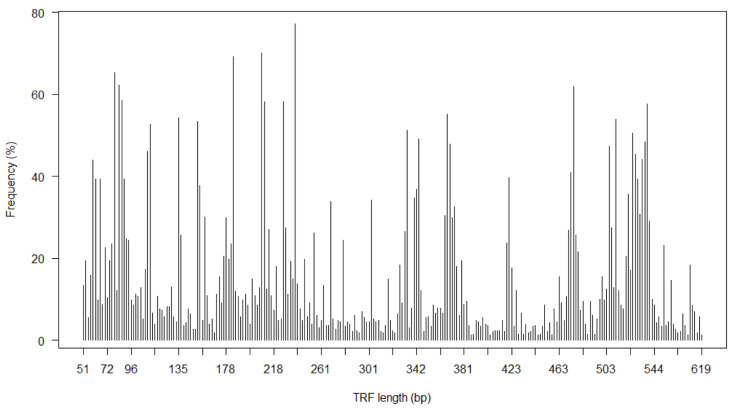
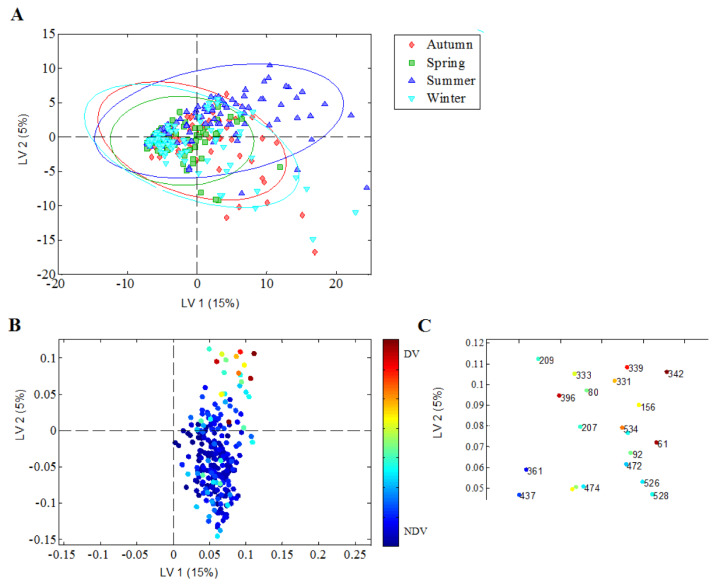
1个月时的鼻咽部细菌群落平均显示出35种(四分位间距:14 - 55,范围1 - 161)系统发育不同的细菌群。出生季节与1个月大时的鼻咽部细菌丰富度相关,夏季出生儿童的鼻咽部细菌丰富度更高(p = 0.003),且代表革兰氏阴性α-变形菌和革兰氏阳性芽孢杆菌的特定细菌谱更为丰富。出生季节对上呼吸道的早期产后细菌定植有显著影响,这强调了未来在模拟气道细菌群落早期动态变化对后期疾病发展的影响时,要关注季节性方面。