From the Normandy University, UniRouen, Inserm (Institut National de la Santé et de la Recherche Médicale) UMR1096 (EnVI Laboratory), FHU REMOD-VHF, Rouen, France (H.M., A.D., V.T., I.B., J.P.H., S.R., J.R., S.F., V.R., P.M.).
Wihuri Research Institute and Translational Cancer Biology Program, Research Programs Unit, Faculty of Medicine, University of Helsinki, Finland (R.K., K.A.H., K.A.).
Arterioscler Thromb Vasc Biol. 2020 Jul;40(7):1722-1737. doi: 10.1161/ATVBAHA.120.314370. Epub 2020 May 14.
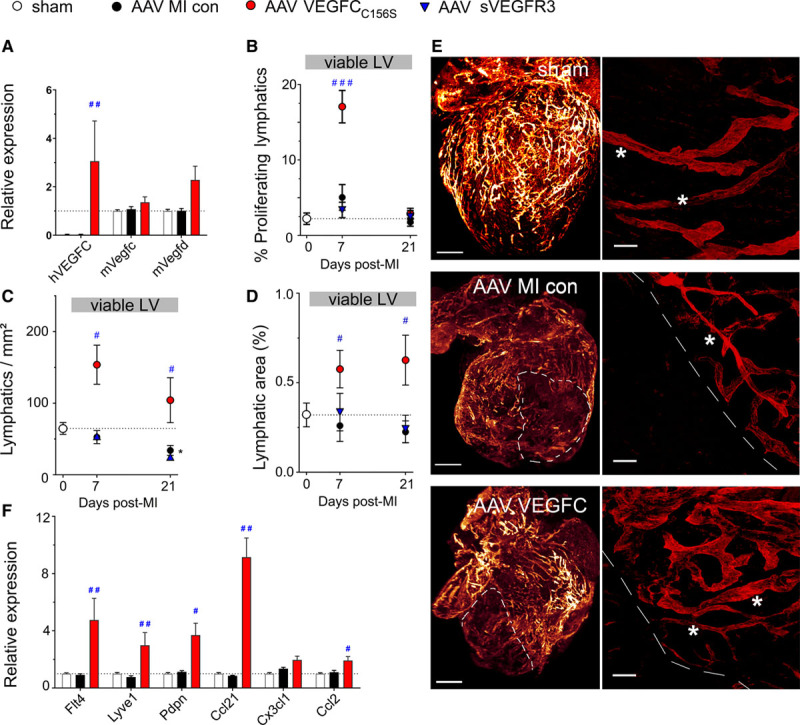
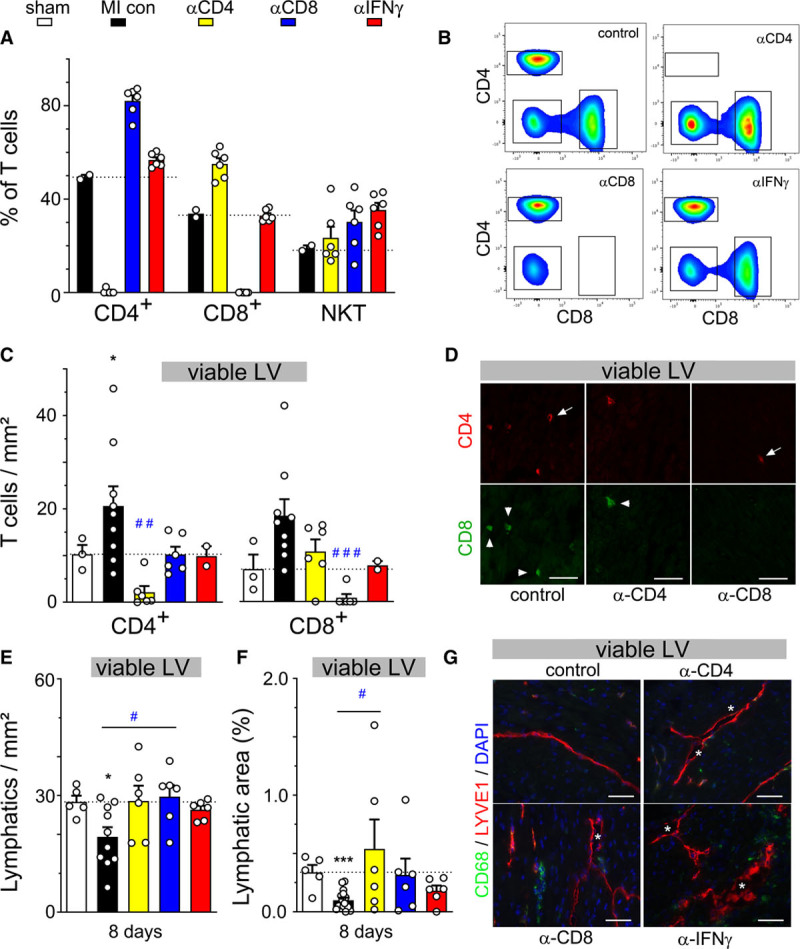
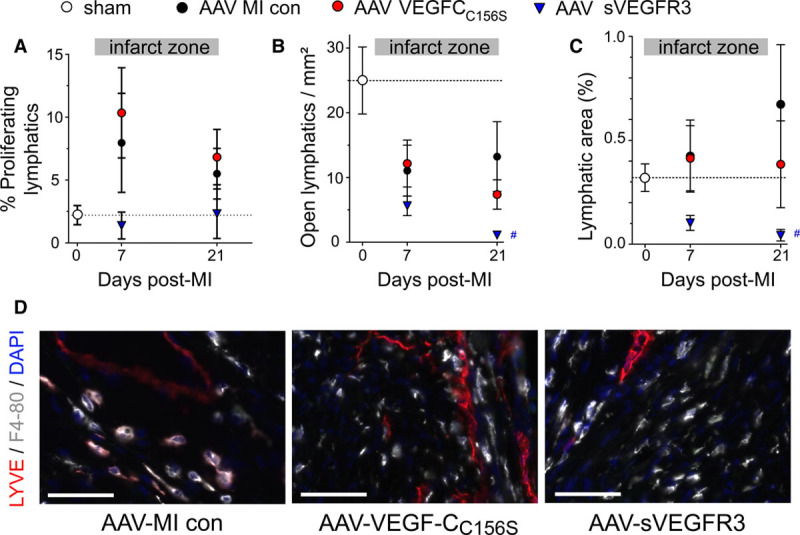
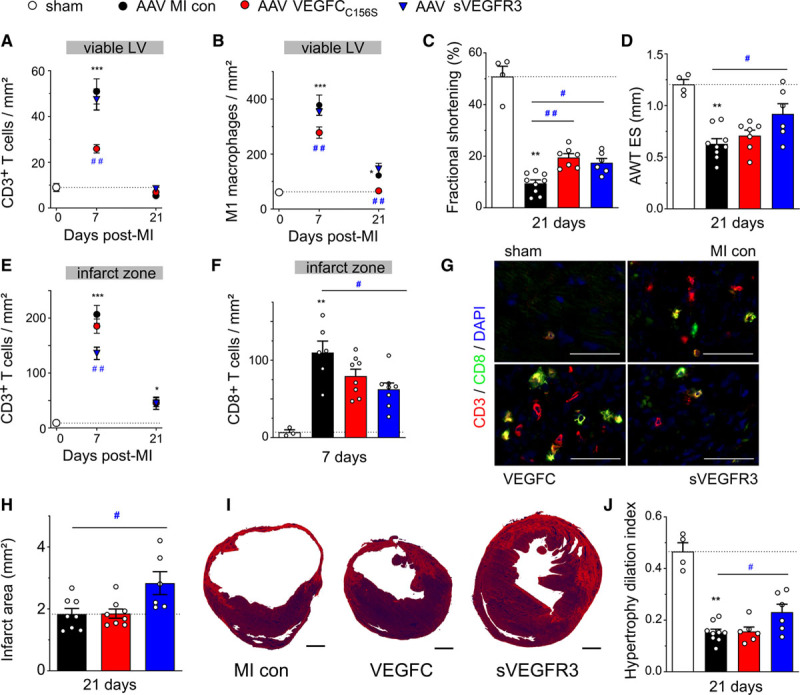
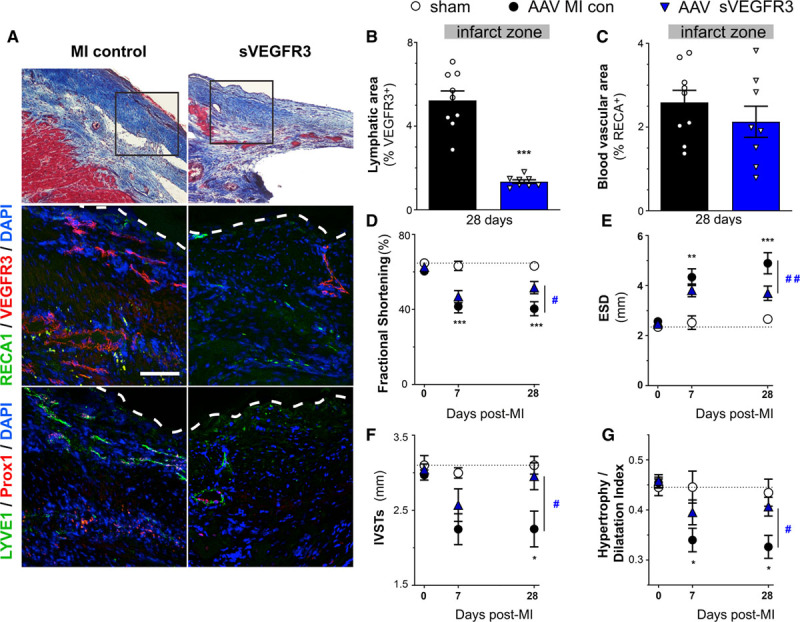
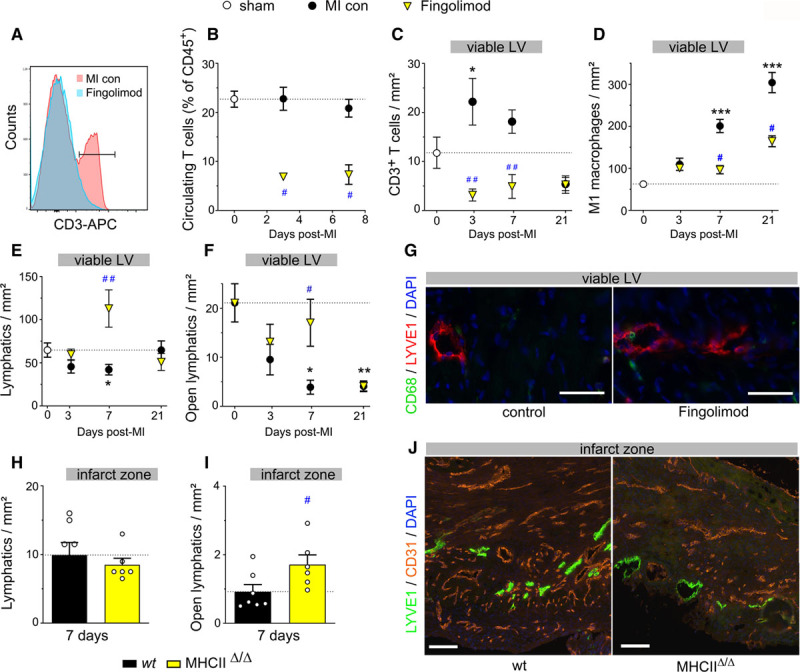
Lymphatics play an essential pathophysiological role in promoting fluid and immune cell tissue clearance. Conversely, immune cells may influence lymphatic function and remodeling. Recently, cardiac lymphangiogenesis has been proposed as a therapeutic target to prevent heart failure after myocardial infarction (MI). We investigated the effects of gene therapy to modulate cardiac lymphangiogenesis post-MI in rodents. Second, we determined the impact of cardiac-infiltrating T cells on lymphatic remodeling in the heart. Approach and Results: Comparing adenoviral versus adeno-associated viral gene delivery in mice, we found that only sustained VEGF (vascular endothelial growth factor)-C therapy, achieved by adeno-associated viral vectors, increased cardiac lymphangiogenesis, and led to reduced cardiac inflammation and dysfunction by 3 weeks post-MI. Conversely, inhibition of VEGF-C/-D signaling, through adeno-associated viral delivery of soluble VEGFR3 (vascular endothelial growth factor receptor 3), limited infarct lymphangiogenesis. Unexpectedly, this treatment improved cardiac function post-MI in both mice and rats, linked to reduced infarct thinning due to acute suppression of T-cell infiltration. Finally, using pharmacological, genetic, and antibody-mediated prevention of cardiac T-cell recruitment in mice, we discovered that both CD4 and CD8 T cells potently suppress, in part through interferon-γ, cardiac lymphangiogenesis post-MI.
We show that resolution of cardiac inflammation after MI may be accelerated by therapeutic lymphangiogenesis based on adeno-associated viral gene delivery of VEGF-C. Conversely, our work uncovers a major negative role of cardiac-recruited T cells on lymphatic remodeling. Our results give new insight into the interconnection between immune cells and lymphatics in orchestration of cardiac repair after injury.
淋巴管在促进液体和免疫细胞组织清除方面发挥着重要的病理生理作用。相反,免疫细胞可能影响淋巴管功能和重塑。最近,心脏淋巴管生成被认为是预防心肌梗死后心力衰竭的治疗靶点。我们研究了调节心肌梗死后心脏淋巴管生成的基因治疗方法在啮齿动物中的作用。其次,我们确定了心脏浸润 T 细胞对心脏淋巴管重塑的影响。
在小鼠中比较腺病毒与腺相关病毒基因传递,我们发现只有通过腺相关病毒载体实现的持续 VEGF(血管内皮生长因子)-C 治疗才能增加心脏淋巴管生成,并在心肌梗死后 3 周导致心脏炎症和功能障碍减少。相反,通过腺相关病毒递送可溶性 VEGFR3(血管内皮生长因子受体 3)抑制 VEGF-C/-D 信号通路,限制梗死区淋巴管生成。出乎意料的是,这种治疗在小鼠和大鼠中均改善了心肌梗死后的心功能,这与急性抑制 T 细胞浸润导致梗死变薄减少有关。最后,通过在小鼠中使用药理学、遗传学和抗体介导的预防心脏 T 细胞募集的方法,我们发现 CD4 和 CD8 T 细胞强烈抑制心肌梗死后的心脏淋巴管生成,部分通过干扰素-γ。
我们表明,基于腺相关病毒基因传递 VEGF-C 的治疗性淋巴管生成可能会加速心肌梗死后的心脏炎症消退。相反,我们的工作揭示了心脏募集的 T 细胞对淋巴管重塑的主要负面影响。我们的结果为免疫细胞和淋巴管在损伤后心脏修复中的相互作用提供了新的见解。