Animal Nutrition and Welfare Service. Animal and Food Science Department, Universitat Autònoma de Barcelona, Bellaterra, 08193 Barcelona, Spain.
IRTA, Centre de Recerca en Sanitat Animal (CReSA, UAB-IRTA), Campus de la Universitat Autònoma de Barcelona, 08193 Bellaterra, Spain.
Poult Sci. 2020 Jan;99(1):235-245. doi: 10.3382/ps/pez466. Epub 2019 Dec 30.
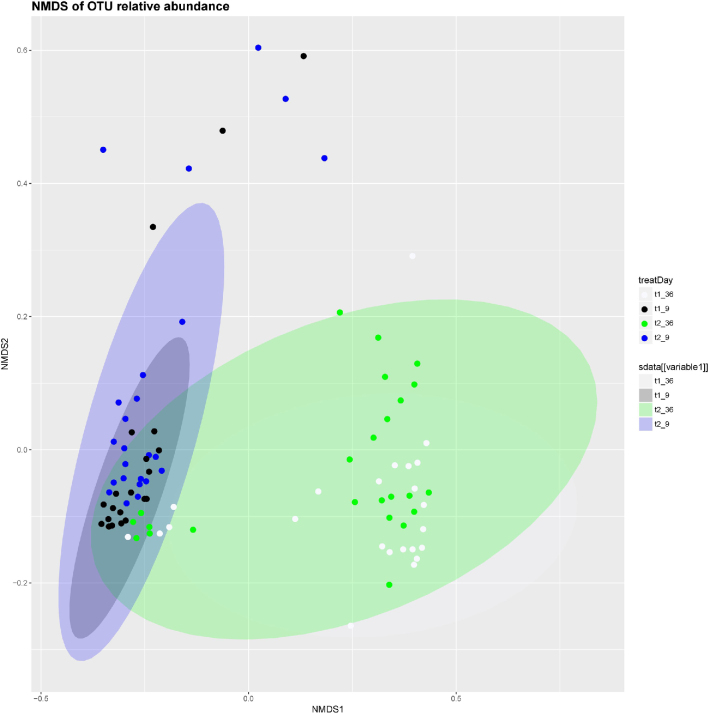
This study was conducted to assess the effect of dietary supplementation of Muramidase 007 to broiler chickens on gastrointestinal functionality, evaluating growth performance, apparent ileal digestibility, intestinal histomorphology, vitamin A in plasma and cecal microbiota. A total of 480 one-day male chicks (Ross 308) were distributed in 16 pens allocated in 2 experimental diets: the control diet (CTR) without feed enzymes, coccidiostat or growth promoters, and the experimental diet (MUR): CTR supplemented with 35,000 units (LSU(F))/kg of the Muramidase 007. Digesta and tissue samples were obtained on days 9 and 36 of the study. A lower feed conversion ratio was observed in the MUR treatment. Apparent ileal digestibility of DM, organic matter and energy were improved by Muramidase 007. It was also observed that MUR improved digestibility of total fatty acids, mono-unsaturated fatty acids and poly-unsaturated fatty acids, and content of vitamin A in plasma at day 9 (P < 0.05). Histomorphological analysis of jejunum samples revealed no differences in the villus height or crypt depth; but a higher number of goblet cells and intraepithelial lymphocytes at day 36 with MUR. No differences were observed in plate counts of enterobacteria or Lactobacillus along the gastrointestinal tract, neither on the cecal short-chain fatty acids. An statistical trend was observed for reduction of cecal clostridia at day 9 for MUR. Analysis of cecal microbiota structure by 16S rRNA gene sequencing revealed relevant changes correlated to age. At day 9, broilers receiving MUR showed decreased alpha diversity compared to CTR that was not detected at day 36. Changes in specific taxonomic groups with an increase in Lactobacillus genus were identified. In conclusion, evaluation of the variables in this study indicates that dietary Muramidase 007 contributes to improve feed conversation ratio and gastrointestinal function in broiler chickens. Effects could have been mediated by slight shifts observed in the intestinal microbiota. More studies are guaranteed to fully understand the mechanisms involved.
本研究旨在评估日粮添加 Muramidase 007 对肉鸡胃肠道功能的影响,评估生长性能、表观回肠消化率、肠道组织形态学、血浆维生素 A 和盲肠微生物群。将 480 只 1 日龄雄性小鸡(罗斯 308)随机分为 16 个栏,分配到 2 种实验日粮中:对照日粮(CTR)不含饲料酶、抗球虫药或生长促进剂,实验日粮(MUR):CTR 中添加 35000 单位(LSU(F))/kg 的 Muramidase 007。在研究的第 9 天和第 36 天采集食糜和组织样本。MUR 处理组的饲料转化率较低。Muramidase 007 提高了 DM、有机物和能量的表观回肠消化率。还观察到 MUR 提高了总脂肪酸、单不饱和脂肪酸和多不饱和脂肪酸的消化率,以及血浆中维生素 A 的含量在第 9 天(P<0.05)。空肠样本的组织形态学分析显示,绒毛高度或隐窝深度没有差异;但 MUR 处理组第 36 天的杯状细胞和上皮内淋巴细胞数量较高。沿胃肠道的肠杆菌或乳酸杆菌平板计数没有差异,盲肠短链脂肪酸也没有差异。MUR 处理组在第 9 天观察到盲肠梭菌数量减少的趋势。通过 16S rRNA 基因测序对盲肠微生物群落结构进行分析,发现与年龄相关的相关变化。在第 9 天,与 CTR 相比,接受 MUR 的肉鸡的 alpha 多样性降低,但在第 36 天没有检测到。确定了特定分类群的变化,其中乳杆菌属的数量增加。综上所述,本研究评估的变量表明,日粮添加 Muramidase 007 有助于提高肉鸡的饲料转化率和胃肠道功能。这些影响可能是通过观察到的肠道微生物群的轻微变化介导的。需要更多的研究来充分了解所涉及的机制。