Poon Carmen C Y, Jiang Yuqi, Zhang Ruikai, Lo Winnie W Y, Cheung Maggie S H, Yu Ruoxi, Zheng Yali, Wong John C T, Liu Qing, Wong Sunny H, Mak Tony W C, Lau James Y W
1Division of Biomedical Engineering Research, Department of Surgery, The Chinese University of Hong Kong, Hong Kong SAR, People's Republic of China.
2Division of Vascular and General Surgery, Department of Surgery, Prince of Wales Hospital, The Chinese University of Hong Kong, Hong Kong SAR, People's Republic of China.
NPJ Digit Med. 2020 May 18;3:73. doi: 10.1038/s41746-020-0281-z. eCollection 2020.
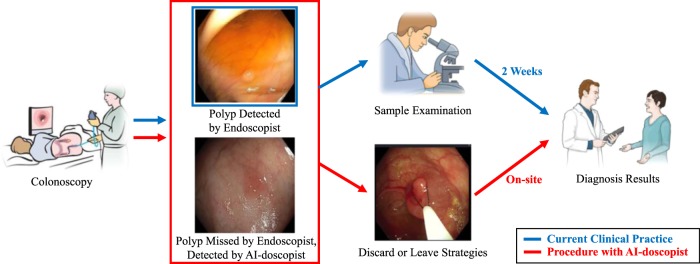
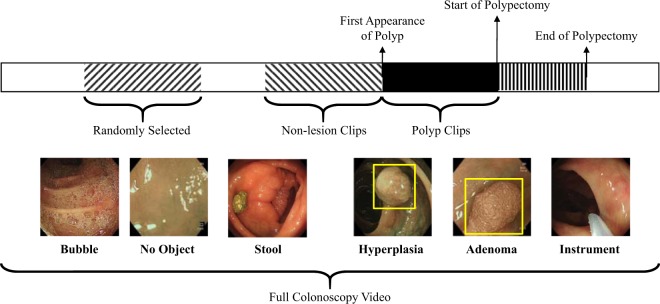
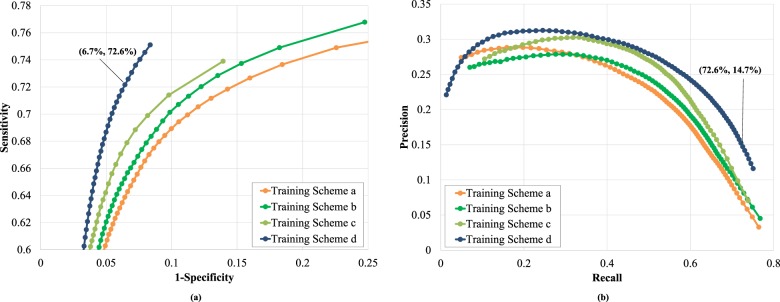
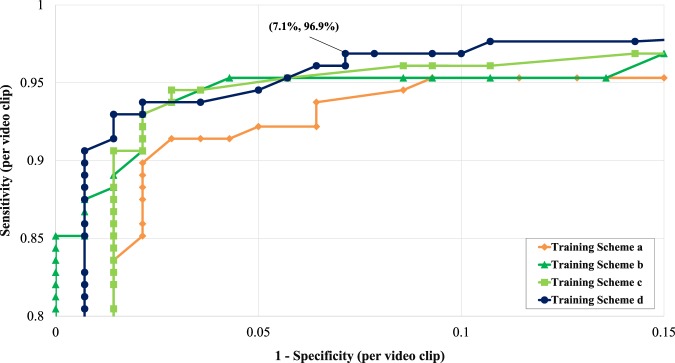
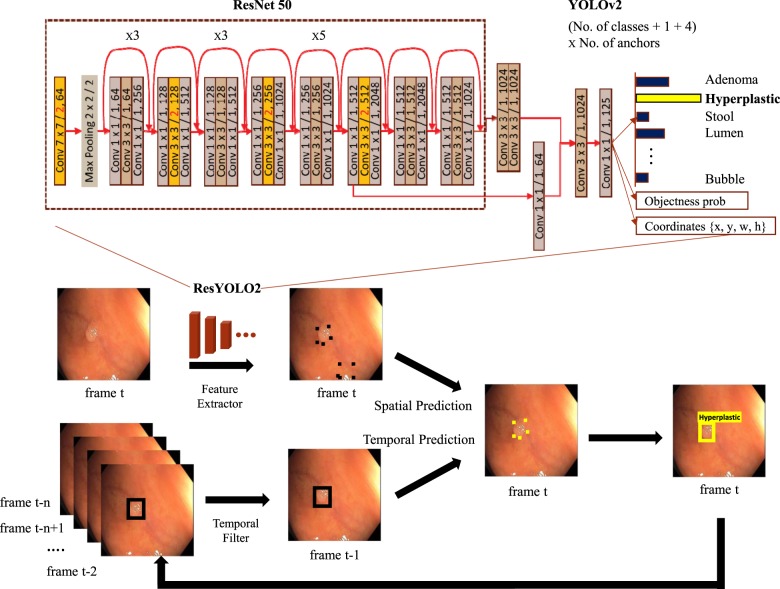
We have designed a deep-learning model, an "Artificial Intelligent Endoscopist (a.k.a. AI-doscopist)", to localise colonic neoplasia during colonoscopy. This study aims to evaluate the agreement between endoscopists and AI-doscopist for colorectal neoplasm localisation. AI-doscopist was pre-trained by 1.2 million non-medical images and fine-tuned by 291,090 colonoscopy and non-medical images. The colonoscopy images were obtained from six databases, where the colonoscopy images were classified into 13 categories and the polyps' locations were marked image-by-image by the smallest bounding boxes. Seven categories of non-medical images, which were believed to share some common features with colorectal polyps, were downloaded from an online search engine. Written informed consent were obtained from 144 patients who underwent colonoscopy and their full colonoscopy videos were prospectively recorded for evaluation. A total of 128 suspicious lesions were resected or biopsied for histological confirmation. When evaluated image-by-image on the 144 full colonoscopies, the specificity of AI-doscopist was 93.3%. AI-doscopist were able to localise 124 out of 128 polyps (polyp-based sensitivity = 96.9%). Furthermore, after reviewing the suspected regions highlighted by AI-doscopist in a 102-patient cohort, an endoscopist has high confidence in recognizing four missed polyps in three patients who were not diagnosed with any lesion during their original colonoscopies. In summary, AI-doscopist can localise 96.9% of the polyps resected by the endoscopists. If AI-doscopist were to be used in real-time, it can potentially assist endoscopists in detecting one more patient with polyp in every 20-33 colonoscopies.
我们设计了一种深度学习模型,即“人工智能内镜医师(又名AI内镜医师)”,用于在结肠镜检查期间定位结肠肿瘤。本研究旨在评估内镜医师与AI内镜医师在结直肠肿瘤定位方面的一致性。AI内镜医师先用120万张非医学图像进行预训练,再用291,090张结肠镜检查图像和非医学图像进行微调。结肠镜检查图像来自六个数据库,其中结肠镜检查图像被分为13类,息肉位置通过最小边界框逐图像标记。从在线搜索引擎下载了七类被认为与结直肠息肉有一些共同特征的非医学图像。获得了144例接受结肠镜检查患者的书面知情同意书,并前瞻性记录了他们的全结肠镜检查视频用于评估。共切除或活检了128个可疑病变以进行组织学确认。在对144例全结肠镜检查逐图像评估时,AI内镜医师的特异性为93.3%。AI内镜医师能够定位128个息肉中的124个(基于息肉的敏感性=96.9%)。此外,在回顾AI内镜医师在102例患者队列中突出显示的可疑区域后,一名内镜医师对识别出三名在最初结肠镜检查期间未被诊断出任何病变的患者中的四个漏诊息肉有很高的信心。总之,AI内镜医师可以定位内镜医师切除的96.9%的息肉。如果将AI内镜医师用于实时检查,它有可能在每20 - 33例结肠镜检查中帮助内镜医师多检测出一名有息肉的患者。