Center for Systems Medicine, Institute of Basic Medical Sciences, Chinese Academy of Medical Sciences and Peking Union Medical College, Beijing, China; Suzhou Institute of Systems Medicine, Suzhou, Jiangsu, China.
Division of Gastroenterology, Union Hospital, Tongji Medical College, Huazhong University of Science and Technology, Wuhan, China.
Can J Cardiol. 2020 Jun;36(6):915-930. doi: 10.1016/j.cjca.2020.04.010. Epub 2020 Apr 17.
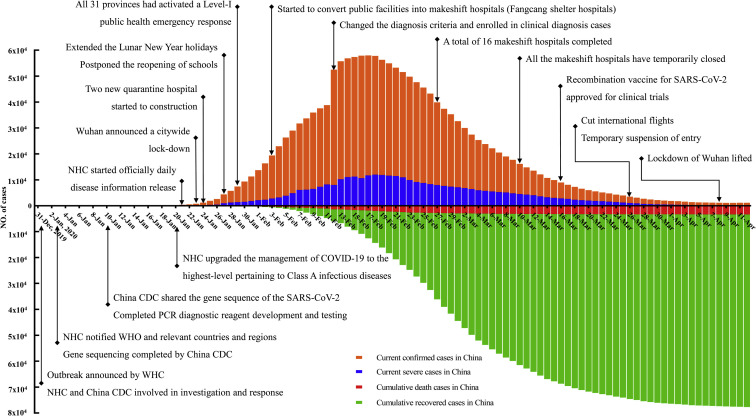
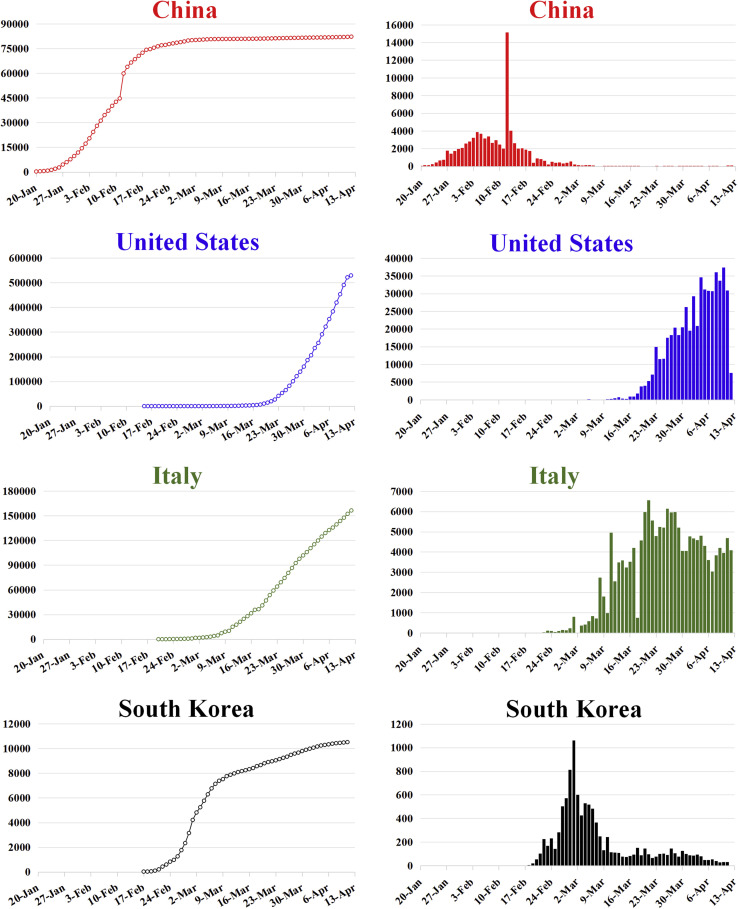
With more than 1,800,000 cases and 110,000 deaths globally, COVID-19 is one of worst infectious disease outbreaks in history. This paper provides a critical review of the available evidence regarding the lessons learned from the Chinese experience with COVID-19 prevention and management. The steps that have led to a near disappearance of new cases in China included rapid sequencing of the virus to establish testing kits, which allowed tracking of infected persons in and out of Wuhan. In addition, aggressive quarantine measures included the complete isolation of Wuhan and then later Hubei Province and the rest of the country, as well as closure of all schools and nonessential businesses. Other measures included the rapid construction of two new hospitals and the establishment of "Fangcang" shelter hospitals. In the absence of a vaccine, the management of COVID-19 included antivirals, high-flow oxygen, mechanical ventilation, corticosteroids, hydroxychloroquine, tocilizumab, interferons, intravenous immunoglobulin, and convalescent plasma infusions. These measures appeared to provide only moderate success. Although some measures have been supported by weak descriptive data, their effectiveness is still unclear pending well controlled clinical trials. In the end, it was the enforcement of drastic quarantine measures that stopped SARS-CoV-2 from spreading. The earlier the implementation, the less likely resources will be depleted. The most critical factors in stopping a pandemic are early recognition of infected individuals, carriers, and contacts and early implementation of quarantine measures with an organised, proactive, and unified strategy at a national level. Delays result in significantly higher death tolls.
全球有超过 180 万例病例和 11 万人死亡,COVID-19 是历史上最严重的传染病之一。本文对中国在 COVID-19 预防和管理方面的经验教训进行了批判性回顾。中国采取了一系列措施,使得境内新增病例近乎消失,这些措施包括:快速对病毒进行测序以建立检测试剂盒,从而可以追踪武汉及武汉以外的感染者;实施严格的隔离措施,包括对武汉、湖北省以及全国其他地区的全面隔离,以及关闭所有学校和非必要的商业场所;此外还包括迅速建设两所新医院和设立“方舱”收容医院。在没有疫苗的情况下,COVID-19 的治疗方法包括使用抗病毒药物、高流量吸氧、机械通气、皮质类固醇、羟氯喹、托珠单抗、干扰素、静脉注射免疫球蛋白和恢复期血浆输注。这些措施似乎只取得了中等程度的成功。虽然一些措施得到了弱描述性数据的支持,但在进行良好对照的临床试验之前,其有效性仍不清楚。最终,是严格的隔离措施阻止了 SARS-CoV-2 的传播。隔离措施实施得越早,资源耗尽的可能性就越小。阻止大流行的最关键因素是早期识别感染者、携带者和接触者,并在国家层面上采取有组织、积极主动和统一的策略来实施隔离措施。延迟会导致更高的死亡率。